
Category Technology/Electronics

Engineering the World’s Smallest Nanocrystal with 19 atoms

Proteins use biomineralization to incorporate metallic elements into tissues, using it to create diverse materials such as seashells, teeth, and bones. However, the way proteins actually do this is not well understood.

Now RIKEN CLST & Yokohama City U scientists have used an artificially designed protein to create a cadmium chloride nanocrystal – the smallest crystal reported so far, made up of just 19 atoms – sandwiched b/n 2 copies of the protein.

In 2014, the groups announced development of an artificial protein, called Pizza6, which looks a lot like a pizza cut into 6 identical slices...

Read More
Ingenious way of Creating Therapeutic Heat in a Light, Flexible Design for Sore Muscles


Other teams have come up with similar devices before, although no one was able to create something that didn’t rely on exotic materials or a complex fabrication process. IBS team stayed away from carbon nanotubes and gold and looked at a more utilitarian option for their build material: thin slivers of silver nanowires ∼150 nm in diameter and ∼30 μm in length (a human hair ranges from 17 – 181 µm). The nanowires were mixed into a liquid elastic material which is both soft and stretchy when dry.

To ensure that the material remains tight on the target area while heating, the team devised a 2D interlocking coil pattern for the mesh structure. To make the mesh, the liquid mixture was poured into a shaped mold...

Read More

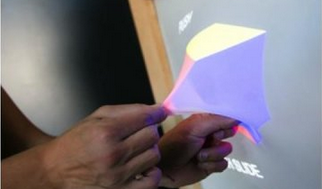
Shape-Changing Displays you can Touch and Feel: GHOST (Generic, Highly-Organic Shape-Changing Interfaces)

Deformable Displays Credit: GHOST technology


EU-supported research project designed to tap humans’ ability to reason about and manipulate physical objects through the interfaces of computers and mobile devices. ‘This will have all sorts of implications for the future, from everyday interaction with mobile phones to learning with computers and design work,’ … ‘It’s not only about deforming the shape of the screen, but also the digital object you want to manipulate, maybe even in mid-air. Through ultrasound levitation tech, eg we can project the display out of the flat screen. And thanks to deformable screens we can plunge our fingers into it.’

This breakthrough in user interaction with tech allows us to handle objects, data, in a completely new way...

Read More