Category Technology/Electronics

Simultaneous Performance Improvement and Energy Savings with an Innovative Algorithm for 6G Vision Services

wireless tower

Professor Jeongho Kwak’s from the Department of Electrical Engineering and Computer Science at DGIST has developed a learning model and resource optimization technology that combines accuracy and efficiency for 6G vision services. This technology is expected to be utilized to address the high levels of computing power and complex learning models required by 6G vision services.

6G mobile vision services are associated with innovative technologies such as augmented reality (AR) and autonomous driving, which are receiving significant attention in modern society. These services enable quick capturing of videos and images, and efficient understanding of their content through deep learning-based models.

However, this requires high-performance processors (GPUs) and accurate learning mo...

Read More

A Solar cell you can Bend and Soak in,Water

image of waterproof and flexible device
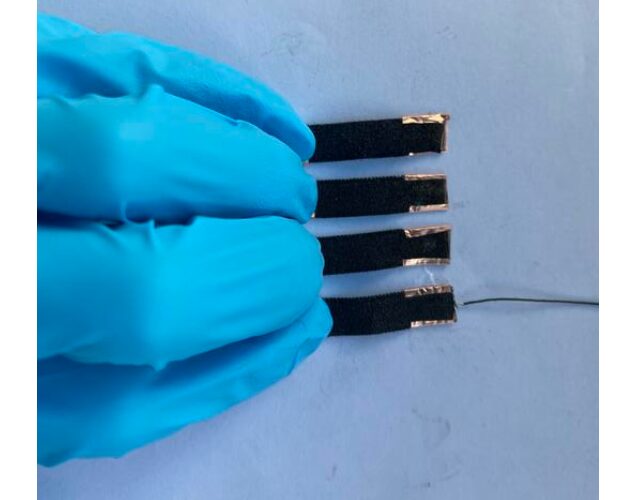
Waterproof and flexible organic photovoltaic film developed in this study

Researchers from the RIKEN Center for Emergent Matter Science and collaborators have developed an organic photovoltaic film that is both waterproof and flexible, allowing a solar cell to be put onto slothes and still function correctly after being rained on or even washed.

One of the potential uses of organic photovoltaics is to create wearable electronics — devices that can be attached to clothing that can monitor medical devices, for example, without requiring battery changes.

However, researchers have found it challenging to achieve waterproofing without the use of extra layers that end up decreasing the flexibility of the film.

Now, in work published in Nature Communications, a group of scientists ha...

Read More

Researchers Send Data 4.5 million times Faster than Average Broadband

Aston University researchers send data 4.5 million times faster than average broadband
Dr. Ian Phillips with the wavelength management device. Credit: Dr. Ian Phillips

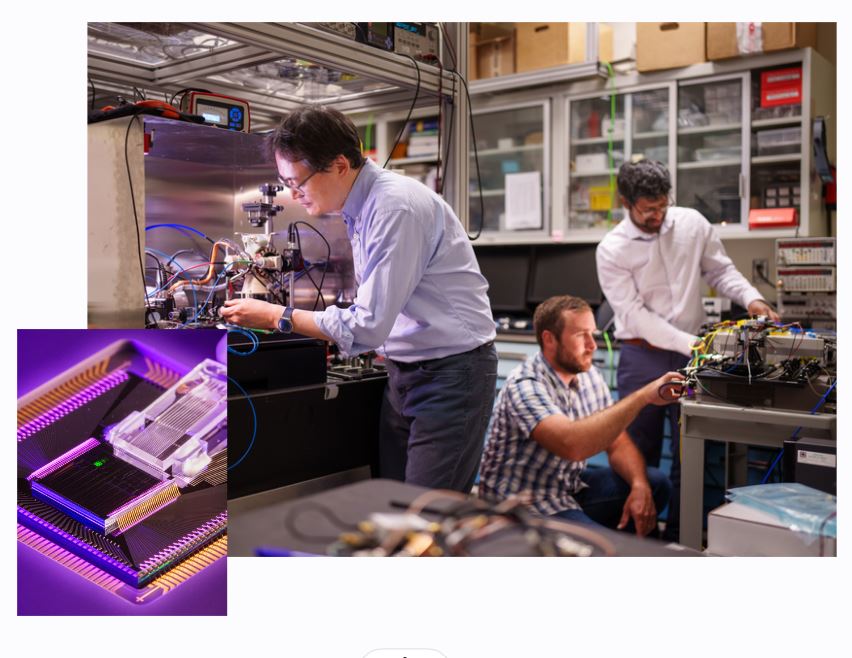
Aston University researchers have sent data at a speed that is 4.5 million times faster than the average home broadband. The rate is the fastest ever sent by opening up specific new wavelength bands that are not yet used in fiber optic systems.

As part of an international collaboration, the academics transferred data at a rate of 301 terabits or 301,000,000 megabits per second, using a single, standard optical fiber.

That’s compared to Ofcom’s UK home broadband performance report published in September 2023, which stated that the average broadband speed is just 69.4 Mbit/s megabits per second.

Professor Wladek Forysiak from Aston Institute of Photonic Technologies and Dr...

Read More

High-Quality Microwave Signals Generated from Tiny Photonic Chip

An illustration of the microwave signal-producing photonic integrated chip.
A high-level schematic of the photonic integrated chip, developed by the Gaeta lab, for all-optical optical frequency division, or OFD – a method of converting a high-frequency signal to a lower frequency. Credit: Yun Zhao/Columbia Engineering

In a new Nature study, Columbia Engineering researchers have built a photonic chip that is able to produce high-quality, ultra-low-noise microwave signals using only a single laser. The compact device—a chip so small, it could fit on a sharp pencil point—results in the lowest microwave noise ever observed in an integrated photonics platform.

The achievement provides a promising pathway towards small-footprint ultra-low-noise microwave generation for applications such as high-speed communication, atomic clocks, and autonomous vehicles.

...Read More