Category Technology/Electronics

Engineers Recreate Star Trek’s Holodeck using ChatGPT and Video Game Assets

Penn Engineers recreate Star Trek's Holodeck using ChatGPT and video game assets
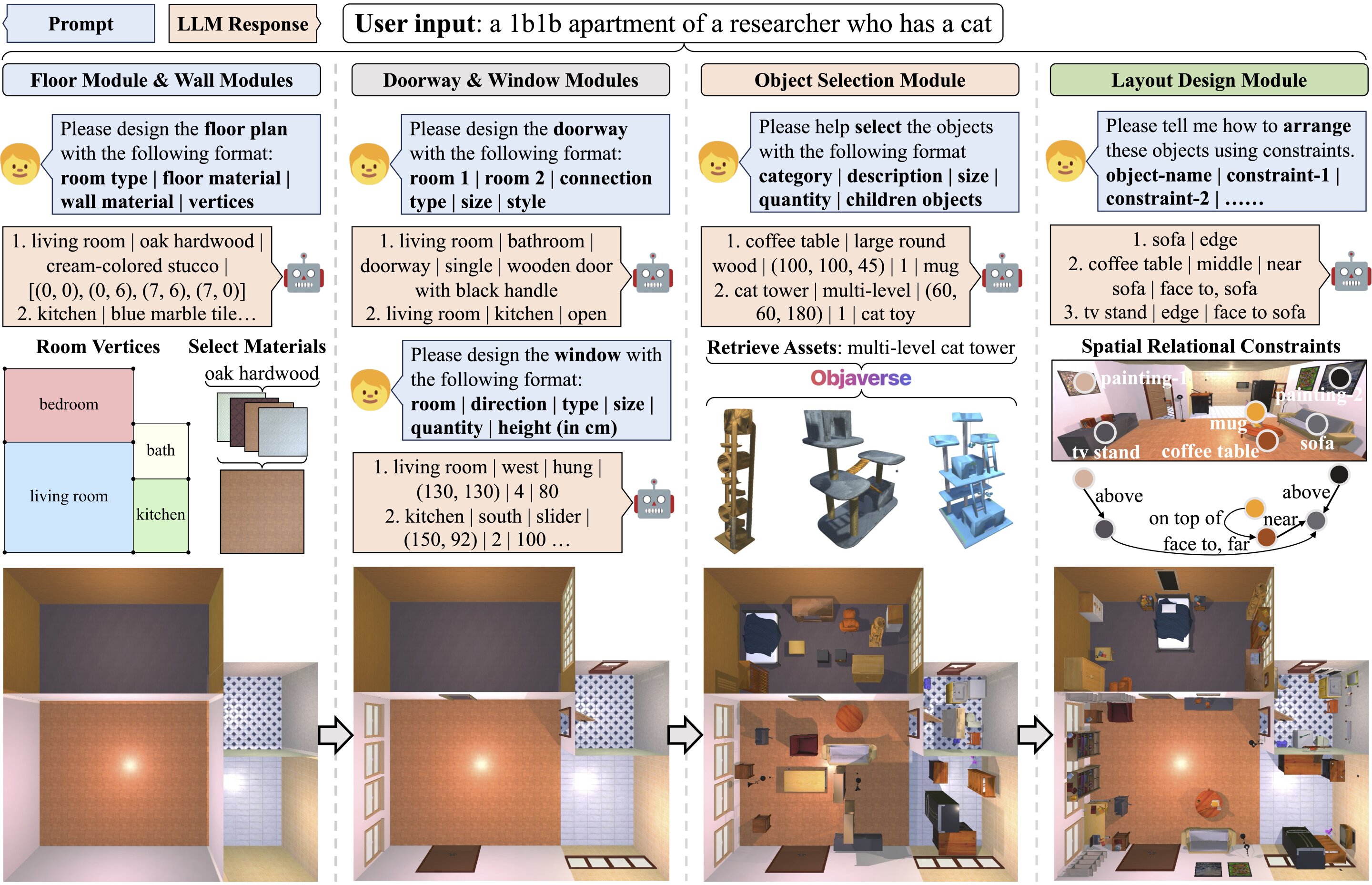
Essentially, Holodeck engages a large language model (LLM) in a conversation, building a virtual environment piece by piece. Credit: Yue Yang

In “Star Trek: The Next Generation,” Captain Picard and the crew of the U.S.S. Enterprise leverage the Holodeck, an empty room capable of generating 3D environments, of preparing for missions and entertaining them, simulating everything from lush jungles to the London of Sherlock Holmes.

Deeply immersive and fully interactive, Holodeck-created environments are infinitely customizable, using nothing but language; the crew has only to ask the computer to generate an environment, and that space appears in the Holodeck.

Today, virtual interactive environments are also used to train robots prior to real-world deployment in a process called “Sim2...

Read More
Could New Technique for ‘Curving’ Light be the Secret to Improved Wireless Communication?

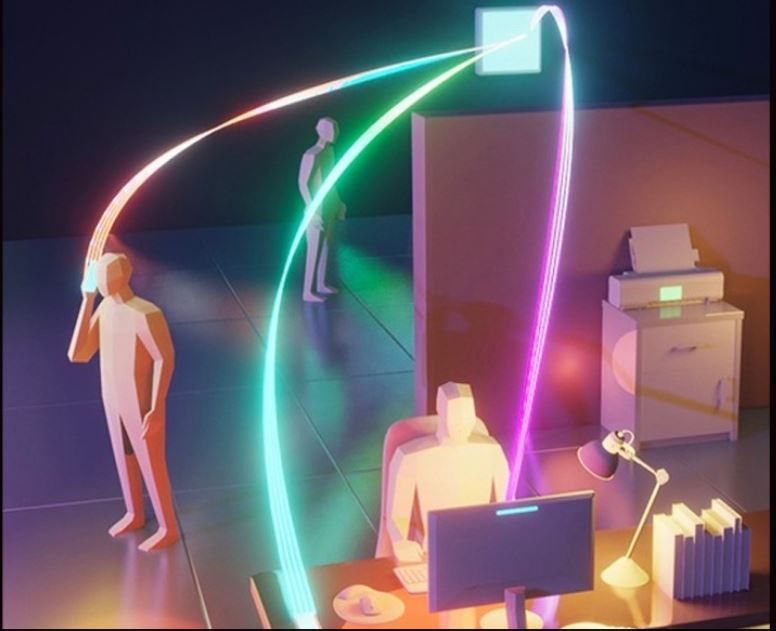
A study that could help revolutionize wireless communication introduces a novel method to curve terahertz signals around an obstacle. Illustration provided by the Mittleman Group

A study that could help revolutionize wireless communication introduces a novel method to curve terahertz signals around an obstacle.

While cellular networks and Wi-Fi systems are more advanced than ever, they are also quickly reaching their bandwidth limits. Scientists know that in the near future they’ll need to transition to much higher communication frequencies than what current systems rely on, but before that can happen there are a number of — quite literal — obstacles standing in the way.

Researchers from Brown University and Rice University say they’ve advanced one step closer to getting around t...

Read More

Quantinuum Quantum Computer using Microsoft’s ‘Logical Quantum Bits’ runs 14,000 Experiments with No Errors

Quantinuum quantum computer using Microsoft's 'logical quantum bits' runs 14,000 experiments with no errors
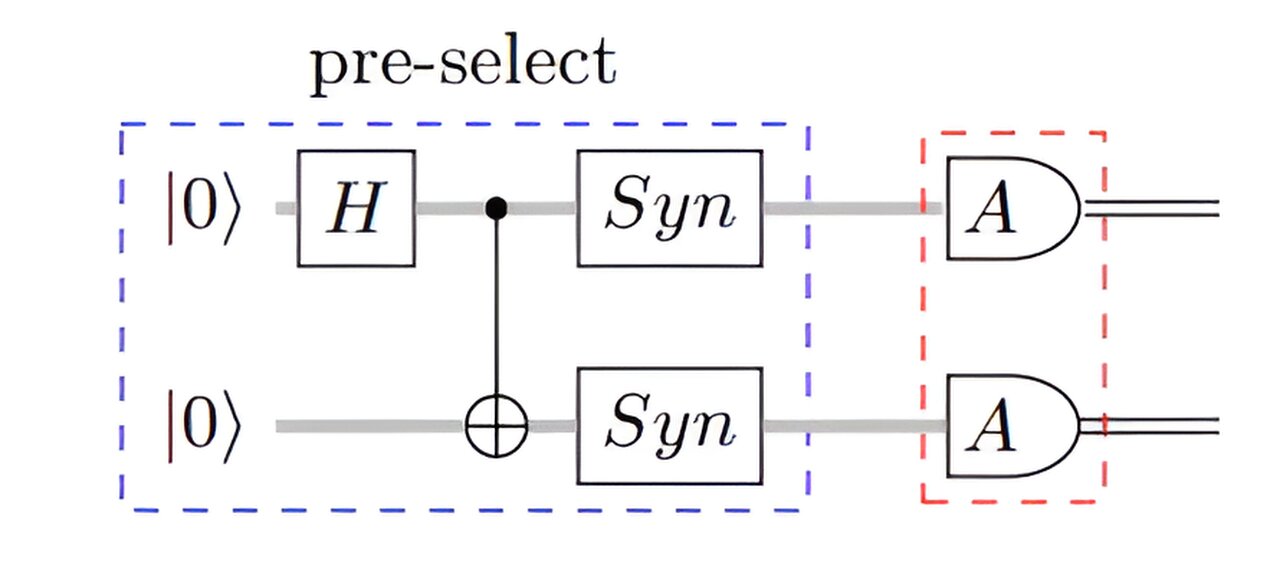
High-level depiction of the logical program of the Bell resource-state preparation using the Steane code. Credit: arXiv (2024). DOI: 10.48550/arxiv.2404.02280

A team of computer engineers from quantum computer maker Quantinuum, working with computer scientists from Microsoft, has found a way to greatly reduce errors when running experiments on a quantum computer. The combined group has published a paper describing their work and results on the arXiv preprint server.

Computer scientists have been working for several years to build a truly useful quantum computer that could achieve quantum supremacy. Research has come a long way, most of which has involved adding more qubits.

But such research has been held up by one main problem—quantum computers make a lot of errors...

Read More

Computer Scientists discover Gap in the Latest Security Mechanisms used by some Chips

computer chips
Credit: CC0 Public Domain

Over the past few years, hardware manufacturers have developed technologies that ought to make it possible for companies and governmental organizations to process sensitive data securely using shared cloud computing resources. Known as confidential computing, this approach protects sensitive data while it is being processed by isolating it in an area that is impenetrable to other users and even to the cloud provider. But computer scientists at ETH Zurich have now proven that it is possible for hackers to gain access to these systems and to the data stored in them.

The researchers ran two attack scenarios, both using what’s known as the interrupt mechanism, which temporarily disrupts regular processing—for instance to prioritize a different computing task...

Read More