
Category Uncategorized

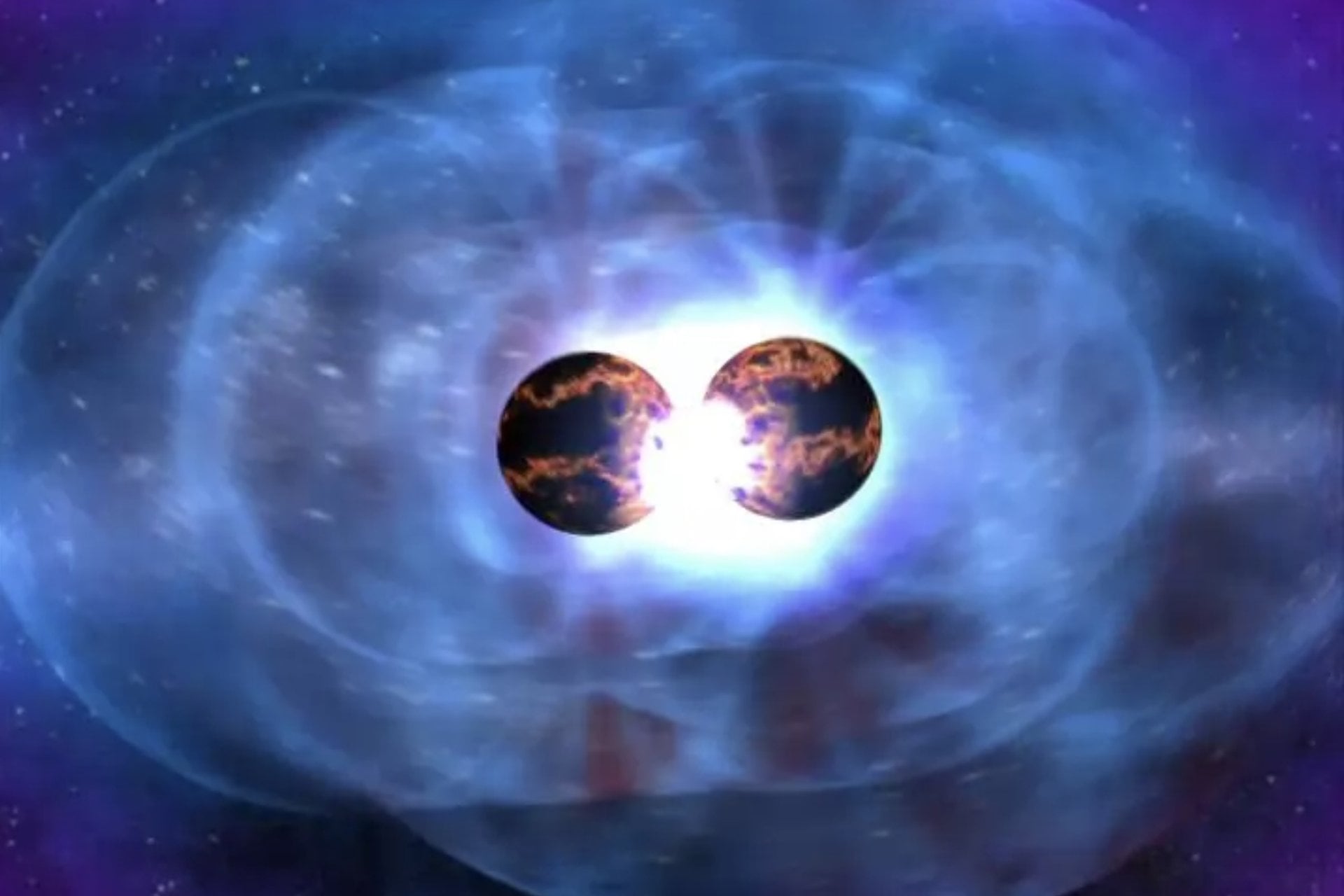
A magnetar can be born when two neutron stars touch

Illustration of a binary neutron star merger just as the two stars make contact. Credit: NASA/Goddard Space Flight Center

All neutron stars have intense magnetic fields. The typical magnetic field of a neutron star is about 100,000 times stronger than the strongest magnetic fields we can create on Earth. But about 1% of neutron stars have even stronger magnetic fields. Known as magnetars, their magnetic fields can be 1,000 times stronger than a regular magnetic field. They are a likely cause of powerful transient events such as soft gamma-ray repeaters and fast radio bursts. A new study looks at how magnetars might form. The findings are published on the arXiv preprint server.

The work focuses on the mergers of binary neutron stars...

Read More
First comprehensive Mars soil classification offers framework for exploration and future farming

Sydney student creates first map of Martian soils
Ph.D. candidate Daniel Irving at the University of Sydney. Credit: Stephanie Zingsheim

A Ph.D. student at the University of Sydney has produced the first comprehensive classification system and map of Martian soils, creating a new framework that could help scientists compare landscapes across the Red Planet and identify promising locations for future exploration, habitation and food production.

The research, led by Daniel Irving from the Sydney Institute of Agriculture and the Faculty of Science, proposes a new term for Martian soil classes: “areths,” derived from Ares, the Greek name for Mars.

Published in the journal CATENA, the research uses orbital observations and models to classify almost 800 million locations across Mars into a hierarchy of 2,000 soil classes and presents ...

Read More

NASA’s SpaceX CRS-35 mission to launch health research

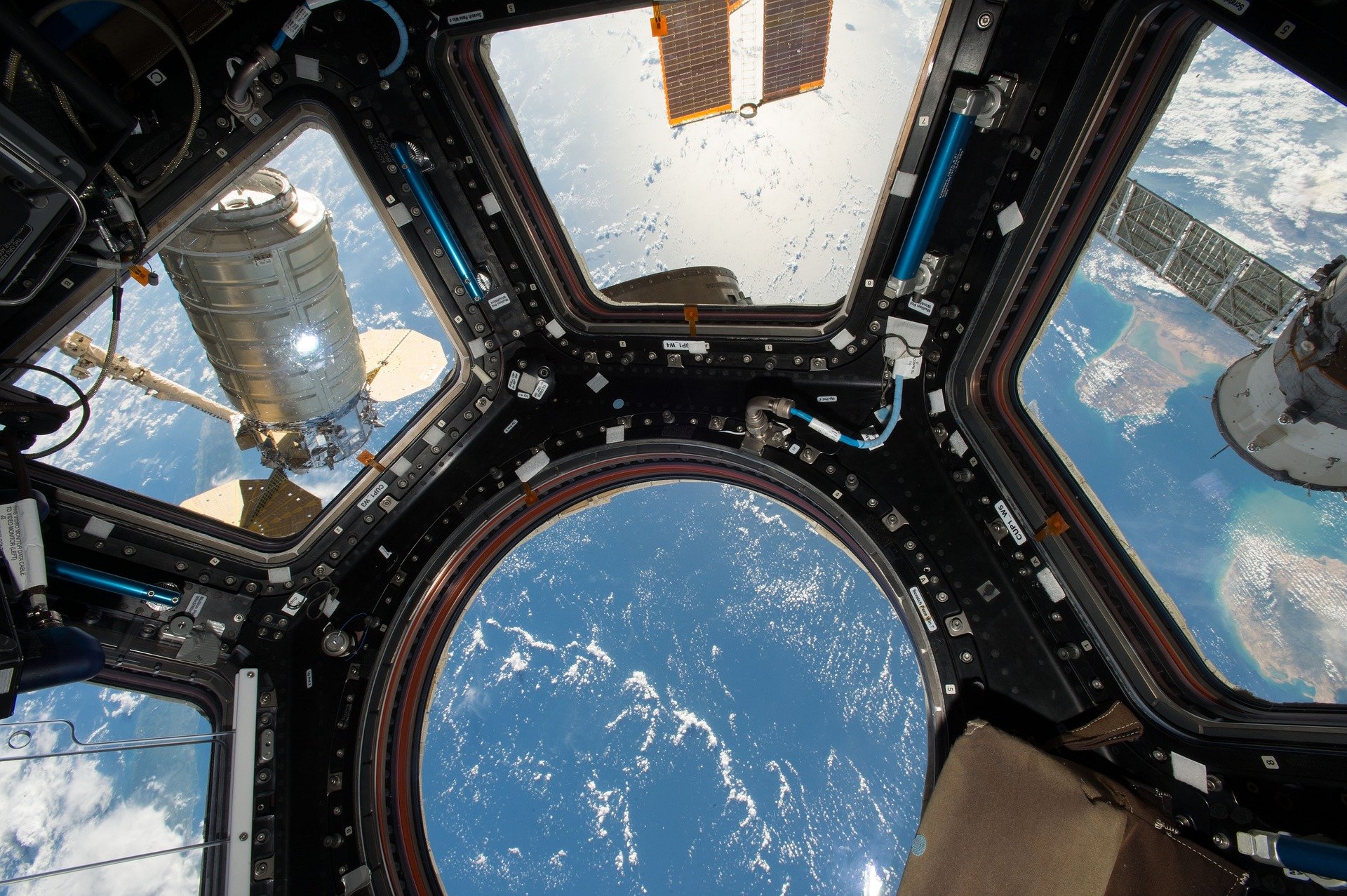
international space station
Credit: CC0 Public Domain

NASA experiments focused on human and plant health and drug-resistant organisms will travel to the International Space Station aboard SpaceX’s 35th Commercial Resupply Services mission for the agency from Cape Canaveral Space Force Station in Florida, advancing research that benefits life on Earth and future exploration.

This research supports astronaut health during long-duration missions through four investigations from the agency’s Biological and Physical Sciences division, including 3D models of the human brain, a crop disease study, a faster way to assess astronaut health and an analysis of antibiotic-resistant bacteria aboard the space station.

Tiny brain models, big questions
A new precision health investigation helps address a key question: What h...

Read More

Visual illusion reveals what today’s AI vision is missing

vision
Credit: Orhan Pergel from Pexels

Our eyes do not always tell us exactly where things are—and that may be a feature of how biological vision works, rather than simply a flaw. A new study by York University researchers uses a common illusion to ask: If artificial intelligence is meant to see more like us, should it make some of the same systematic perceptual “mistakes”?

For example, after staring at something moving steadily in one direction, a stationary object viewed immediately afterward can appear slightly displaced in the opposite direction. This well-known visual illusion, called a motion aftereffect, gives scientists an unusual window into the computations underlying perception: The image itself has not moved, but our experience of where it is has changed.

The study, title...

Read More