Category Uncategorized

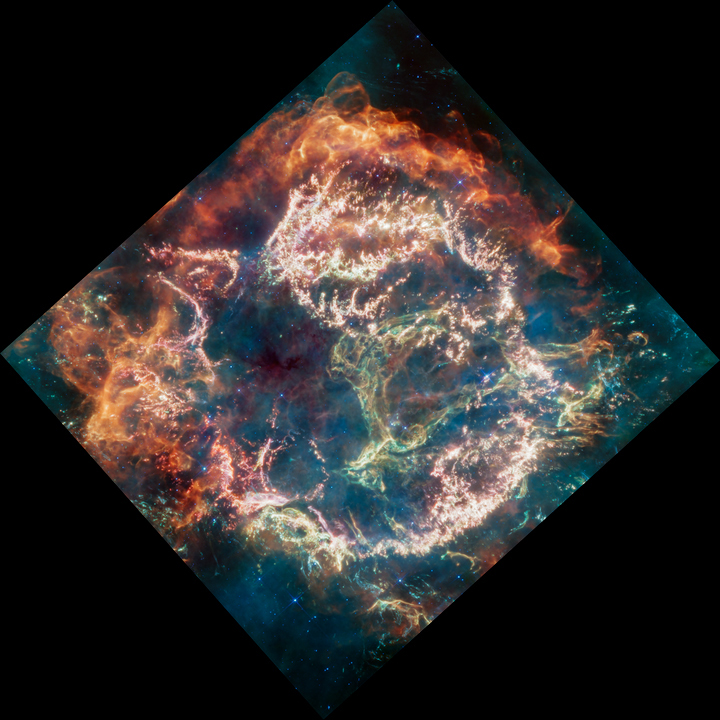
Astronomers confirm Solar System’s Most Distant known object is indeed Farfarout

With the help of the international Gemini Observatory, a Program of NSF’s NOIRLab, and other ground-based telescopes, astronomers have confirmed that a faint object discovered in 2018 and nicknamed “Farfarout” is indeed the most distant object yet found in our Solar System. The object has just received its designation from the International Astronomical Union.

With the help of the international Gemini Observatory, a Program of NSF’s NOIRLab, and other ground-based telescopes, astronomers have confirmed that a faint object discovered in 2018 and nicknamed “Farfarout” is indeed the most distant object yet found in our Solar System. The object has just received its designation from the International Astronomical Union.

Farfarout was first spotted in January 2018 by the Subaru Tel...

Read More

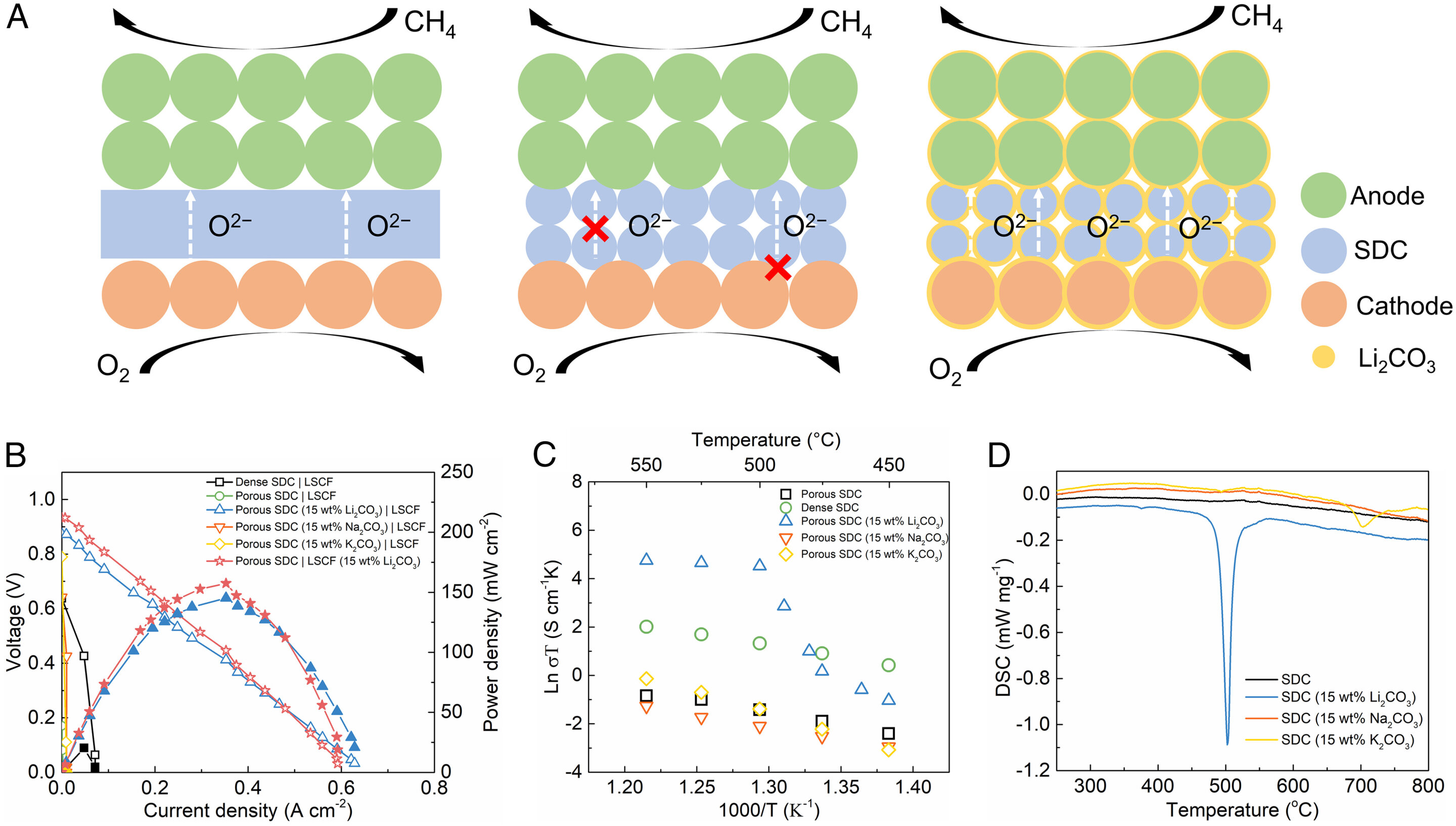
Producing Green Hydrogen through the exposure of Nanomaterials to Sunlight

Sunlight and nanostructured electrodes are the two ingredients used by INRS Professor My Ali El Khakani and a team from ICPEES in France to produce green hydrogen.

A research team from the Institut national de la recherche scientifique (INRS) has joined forces with French researchers from the Institute of Chemistry and Processes for Energy, Environment and Health (ICPEES), a CNRS-University of Strasbourg joint research lab, to pave the way towards the production of green hydrogen. This international team has developed new sunlight-photosensitive-nanostructured electrodes. The results of their research were published in the November 2020 issue of the journal of Solar Energy Materials and Solar Cells.

Hydrogen is being considered by several countries of the Organisation for Economic C...

Read More

Digital Sky Survey maps the entire sky, providing new data to astronomers

The fifth generation of the Sloan Digital Sky Survey is collecting data about our universe for Vanderbilt University astronomers and other project members to use to explore the formation of distant galaxies and supermassive black holes, and to map the Milky Way.

The SDSS-V will make full use of existing satellites, including NASA’s Transiting Exoplanet Survey Satellite mission, to lead to new discoveries. Keivan Stassun, Stevenson Professor of Physics and Astronomy, is co-investigator of NASA TESS, which enabled the discovery of a newly formed exoplanet in June 2020. That discovery boosted the potential for a joint effort with SDSS data.

“SDSS-V will magnify the exoplanet discoveries from TESS, both retrospectively and prospectively,” Stassun said...

Read More

Astronomers agree: Universe is nearly 14 billion years old

Squiggly colored lines, look very abstract
A portion of a new picture of the oldest light in the universe taken by the Atacama Cosmology Telescope. This part covers a section of the sky 50 times the moon’s width, representing a region of space 20 billion light-years across. The light, emitted just 380,000 years after the Big Bang, varies in polarization (represented here by redder or bluer colors). Astrophysicists used the spacing between these variations to calculate a new estimate for the universe’s age. Credit: ACT Collaboration

From an observatory high above Chile’s Atacama Desert, astronomers have taken a new look at the oldest light in the universe. Their observations, plus a bit of cosmic geometry, suggest that the universe is 13.77 billion years old – give or take 40 million years...

Read More