
Category Uncategorized

The Blood Stem Cell Research that could Change Medicine of the Future

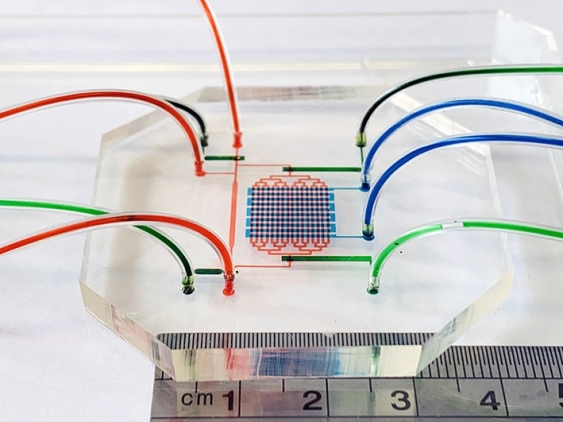
Tubes filled with coloured liquid join a microfluid device set in perspex
The microfluidic device that emulated an embryo’s heartbeat and blood circulation. The cell seeding channels are filled with red food dye, while the heart ventricular contraction control channels and circulation valve control channels are filled with blue and green food dye respectively. Photo: UNSW/Jingjing Li

Making stem cells from a patient’s adult cells — rather than human embryos — is one of the holy grails in modern medicine treatments. New research brings us two steps closer.

Biomedical engineers and medical researchers at UNSW Sydney have independently made discoveries about embryonic blood stem cell creation that could one day eliminate the need for blood stem cell donors.

The achievements are part of a move in regenerative medicine towards the use of ‘induced pluripoten...

Read More
The Paired Perils of Breast Cancer and Diabetes

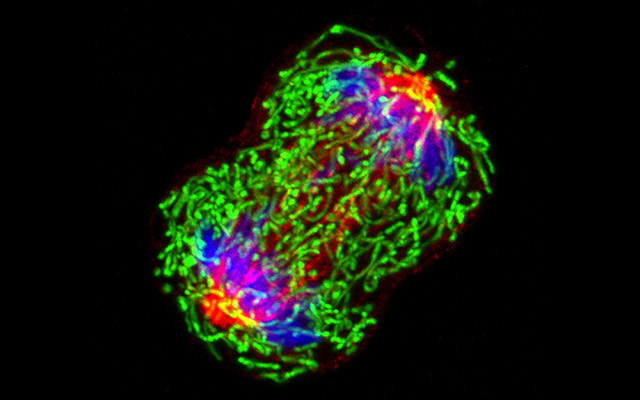
A breast cancer cell captured in the process of division, with tubulin (a structural protein) in red; mitochondria in green; and chromosomes in blue. Photo credit: Wei Qian\National Cancer Institute

Researchers have discovered a mechanism linking breast cancer and diabetes, each of which promotes development and growth of the other. Breast cancer and type 2 diabetes would seem to be distinctly different diseases, with commonality only in their commonality. Breast cancer is the second most diagnosed malignancy after some types of skin cancer; approximately 1 in eight U.S. women will develop invasive breast cancer over the course of their lifetime. More than 10 percent of the U.S...

Read More

Clearance of Protein Linked to Alzheimer’s controlled by Circadian Cycle

Ability of immune system to destroy Alzheimer’s-related protein oscillates with daily circadian rhythm. The brain’s ability to clear a protein closely linked to Alzheimer’s disease is tied to our circadian cycle, according to research published today in PLOS Genetics. The research underscores the importance of healthy sleep habits in preventing the protein Amyloid-Beta 42 (AB42) from forming clumps in the brain, and opens a path to potential Alzheimer’s therapies.

“Circadian regulation of immune cells plays a role in the intricate relationship between the circadian clock and Alzheimer’s disease,” said Jennifer Hurley, an expert in circadian rhythms, and associate professor of biological science at Rensselaer Polytechnic Institute...

Read More

Scientists develop a Stretchable Sweat-Powered Battery for Wearable Tech

Inavate Magazine

Scientists from Nanyang Technological University, Singapore (NTU Singapore) have developed a soft and stretchable battery that is powered by human perspiration.

The prototype battery consists of printed silver flake electrodes that generate electricity in the presence of sweat. Measuring 2 cm by 2 cm and as flat as a small paper bandage, the battery is affixed to a flexible and sweat absorbent textile that is stretchable and attachable to wearable devices, like watches, wrist bands or arm straps.

To demonstrate its potential use when it becomes incorporated in wearable biosensors and other electronic devices, the team of scientists tested their device with artificial human sweat.

In a separate trial, the team reported that an individual wearing the battery around their wrist ...

Read More
