Category Uncategorized

Death by Spaghettification: ESO Telescopes Record Last Moments of Star Devoured by a Black Hole

undefined
Using telescopes from the European Southern Observatory (ESO) and other organisations around the world, astronomers have spotted a rare blast of light from a star being ripped apart by a supermassive black hole. The phenomenon, known as a tidal disruption event, is the closest such flare recorded to date at just over 215 million light-years from Earth, and has been studied in unprecedented detail. The research is published today in Monthly Notices of the Royal Astronomical Society.

Using telescopes from the European Southern Observatory (ESO) and other organisations around the world, astronomers have spotted a rare blast of light from a star being ripped apart by a supermassive black hole...

Read More

New Class of Highly Effective Inhibitors protects against Neurodegeneration

Interaction of interface inhibitors compound 8 and compound 19 within their binding pockets of the protein contact surface.
Interaction of interface inhibitors compound 8 and compound 19 within their binding pockets of the protein contact surface. | © Hilmar Bading

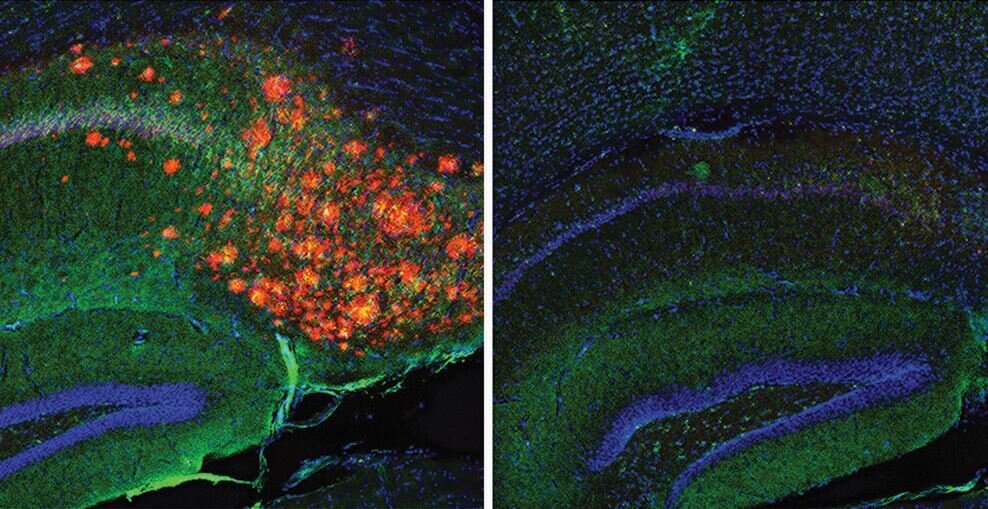
Neurobiologists at Heidelberg University have discovered how a special receptor at neuronal junctions that normally activates a protective genetic programme can lead to nerve cell death when located outside synapses. Their fundamental findings on neurodegenerative processes simultaneously led the researchers at the Interdisciplinary Center for Neurosciences (IZN) to a completely new principle for therapeutic agents. In their experiments on mouse models, they discovered a new class of highly effective inhibitors for protecting nerve cells. As Prof...

Read More

Scientists find Upper Limit for the Speed of Sound

Image of a soundwave. Credit: Ali Kahfi/iStock.com

A research collaboration between Queen Mary University of London, the University of Cambridge and the Institute for High Pressure Physics in Troitsk has discovered the fastest possible speed of sound. The result- about 36 km per second — is around twice as fast as the speed of sound in diamond, the hardest known material in the world.

Waves, such as sound or light waves, are disturbances that move energy from one place to another. Sound waves can travel through different mediums, such as air or water, and move at different speeds depending on what they’re travelling through...

Read More

Researchers find ‘Missing Link’ between Magnetars and Rotation-powered Pulsars

Image showing the magnetic lines of a magnetar star
Magnetic lines of a magnetar. Image by Ryuunosuke Takeshige

Researchers from the RIKEN Cluster for Pioneering Research have made observations of a new magnetar, called Swift J1818.0-1607, which challenges current knowledge about two types of extreme stars, known as magnetars and pulsars. The research, just published in The Astrophysical Journal, was done using the Neutron star Interior Composition Explorer (NICER), an X-ray instrument aboard the International Space Station. Magnetars are a subtype of pulsars, which are neutron stars — degenerate stars that failed to become black holes but instead became extremely dense bodies composed mostly of neutrons.

Magnetars as well as some young rotation-powered pulsars — another type of pulsar — emit powerful X-ray beams, but the mechanism i...

Read More