Category Uncategorized

Soil-powered Fuel Cell promises Cheap, Sustainable Water Purification

Bath researchers with Soil Microbial Fuel Cells in Brazil
Bath researchers Jakub Dziegielowski, Dr Jannis Wenk and Dr Mirella Di Lorenzo testing Soil Microbial Fuel Cells in Brazil

Soil microbial fuel cells proven to be capable of creating energy to filter a person’s daily drinking water in Brazil test. Engineers at the University of Bath have shown that it’s possible to capture and use energy created by the natural reactions occurring in microorganisms within soil.

A team of chemical and electrical engineers has demonstrated the potential of cheap, simple ‘soil microbial fuel cells’ (SMFCs), buried in the earth to power an electrochemical reactor that purifies water.

The proof-of-concept design was demonstrated during field testing in North-East Brazil that took place in 2019 and showed that SMFCs can purify about three litres of water...

Read More

Odds are good for Unique 2D Compound

The polarized light emission from a 7-layer cesium, bismuth and iodine triangle developed at Rice University, under circularly polarized excitation, shows the valleytronics mechanism in action. The inset shows the electronic state written and read optically in a valleytronic memory. Courtesy of the Lou Group

Perovskites show potential for valleytronics applications. Engineers at Rice University and Texas A&M University have found a 2D material that could make computers faster and more energy-efficient.

Their material is a derivative of perovskite — a crystal with a distinctive structure — that has the surprising ability to enable the valleytronics phenomenon touted as a possible platform for information processing and storage.

The lab of materials scientist Jun Lou of Rice’s Brow...

Read More

Death by Spaghettification: ESO Telescopes Record Last Moments of Star Devoured by a Black Hole

undefined
Using telescopes from the European Southern Observatory (ESO) and other organisations around the world, astronomers have spotted a rare blast of light from a star being ripped apart by a supermassive black hole. The phenomenon, known as a tidal disruption event, is the closest such flare recorded to date at just over 215 million light-years from Earth, and has been studied in unprecedented detail. The research is published today in Monthly Notices of the Royal Astronomical Society.

Using telescopes from the European Southern Observatory (ESO) and other organisations around the world, astronomers have spotted a rare blast of light from a star being ripped apart by a supermassive black hole...

Read More

New Class of Highly Effective Inhibitors protects against Neurodegeneration

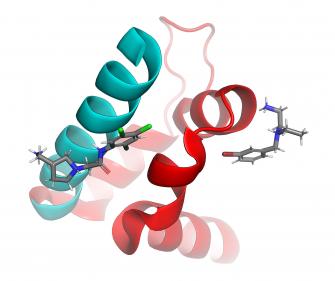
Interaction of interface inhibitors compound 8 and compound 19 within their binding pockets of the protein contact surface.
Interaction of interface inhibitors compound 8 and compound 19 within their binding pockets of the protein contact surface. | © Hilmar Bading

Neurobiologists at Heidelberg University have discovered how a special receptor at neuronal junctions that normally activates a protective genetic programme can lead to nerve cell death when located outside synapses. Their fundamental findings on neurodegenerative processes simultaneously led the researchers at the Interdisciplinary Center for Neurosciences (IZN) to a completely new principle for therapeutic agents. In their experiments on mouse models, they discovered a new class of highly effective inhibitors for protecting nerve cells. As Prof...

Read More