
Category Uncategorized

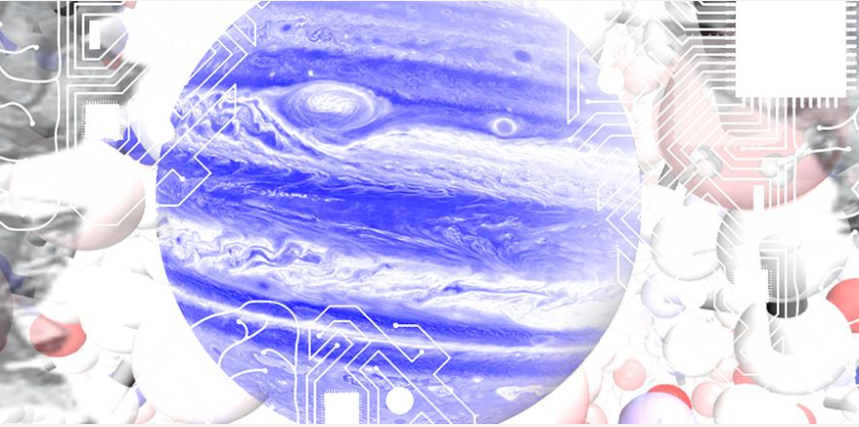
AI used to show how Hydrogen becomes a Metal inside Giant Planets

Bingqing Cheng et al. ‘Evidence for supercritical behaviour of high-pressure liquid hydrogen.’ Nature (2020). DOI: 10.1038/s41586-020-2677-y.

Dense metallic hydrogen – a phase of hydrogen which behaves like an electrical conductor – makes up the interior of giant planets, but it is difficult to study and poorly understood. By combining artificial intelligence and quantum mechanics, researchers have found how hydrogen becomes a metal under the extreme pressure conditions of these planets.

The researchers, from the University of Cambridge, IBM Research and EPFL, used machine learning to mimic the interactions between hydrogen atoms in order to overcome the size and timescale limitations of even the most powerful supercomputers...

Read More

Exposure to Cadmium in the Womb linked to childhood Asthma and Allergies

Babies born with higher levels of cadmium in their umbilical cord blood may be more likely to develop childhood asthma and allergies, according to research presented at the European Respiratory Society International Congress.

Cadmium is known to be hazardous to human health and its use is restricted in the European Union, but it has been widely used, for example in batteries, pigments and as a coating for other metals. It is also present in tobacco and can enter the body via smoking or passive smoking.

Researchers say their findings lend support for tight controls over the use and disposal of cadmium.

The research was presented to the virtual conference by Professor Isabella Annesi-Maesano, research director at France’s Institut national de la santé et de la recherche médical...

Read More

Team’s flexible Micro LEDs may reshape future of Wearable Technology

The flexible micro LEDs can be twisted (on left) or folded (on the right). The LEDs, which can be peeled off and stuck to almost any surface, could help pave the way for the next generation of wearable technology.

Novel devices can be folded, cut, attached to surfaces. University of Texas at Dallas researchers and their international colleagues have developed a method to create micro LEDs that can be folded, twisted, cut and stuck to different surfaces.

The research, published online in June in the journal Science Advances, helps pave the way for the next generation of flexible, wearable technology.

Used in products ranging from brake lights to billboards, LEDs are ideal components for backlighting and displays in electronic devices because they are lightweight, thin, energy effi...

Read More

After a Century of Searching, Scientists find a New Liquid Phase

The colors in this newly discovered phase of liquid crystal shift as researchers apply a small electric field. (Credit: SMRC)

Researchers at the University of Colorado Boulder’s Soft Materials Research Center (SMRC) have discovered an elusive phase of matter, first proposed more than 100 years ago and sought after ever since.

The team describes the discovery of what scientists call a “ferroelectric nematic” phase of liquid crystal in a study published today in the Proceedings of the National Academy of Sciences. The discovery opens a door to a new universe of materials, said co-author Matt Glaser, a professor in the Department of Physics.

Nematic liquid crystals have been a hot topic in materials research since the 1970s...

Read More
