To raise new questions, new possibilities, to regard old problems from a new angle, requires creative imagination and marks real advance in science.
~Albert Einstein
Read More
Old Newtonian physics claimed that things have an objective reality separate from our perception of them. Quantum physics, and particularly Heisenberg's Uncertainty Principle, reveal that, as our perception of an object changes, the object itself literally changes.
~Marianne Williamson
Read More
Comet C/2014 UN271 (Bernardinelli-Bernstein), as seen in a synthetic color composite image made with the Las Cumbres Observatory 1-meter telescope at Sutherland, South Africa, on 22 June 2021. The diffuse cloud is the comet’s coma. Credit: LOOK/LCO
A newly discovered visitor to the outer edges of our Solar System has been shown to be the largest known comet ever, thanks to the rapid response telescopes of Las Cumbres Observatory. The object, which is named Comet C/2014 UN271 Bernardinelli-Bernstein after its two discoverers, was first announced on Saturday, June 19th, 2021...
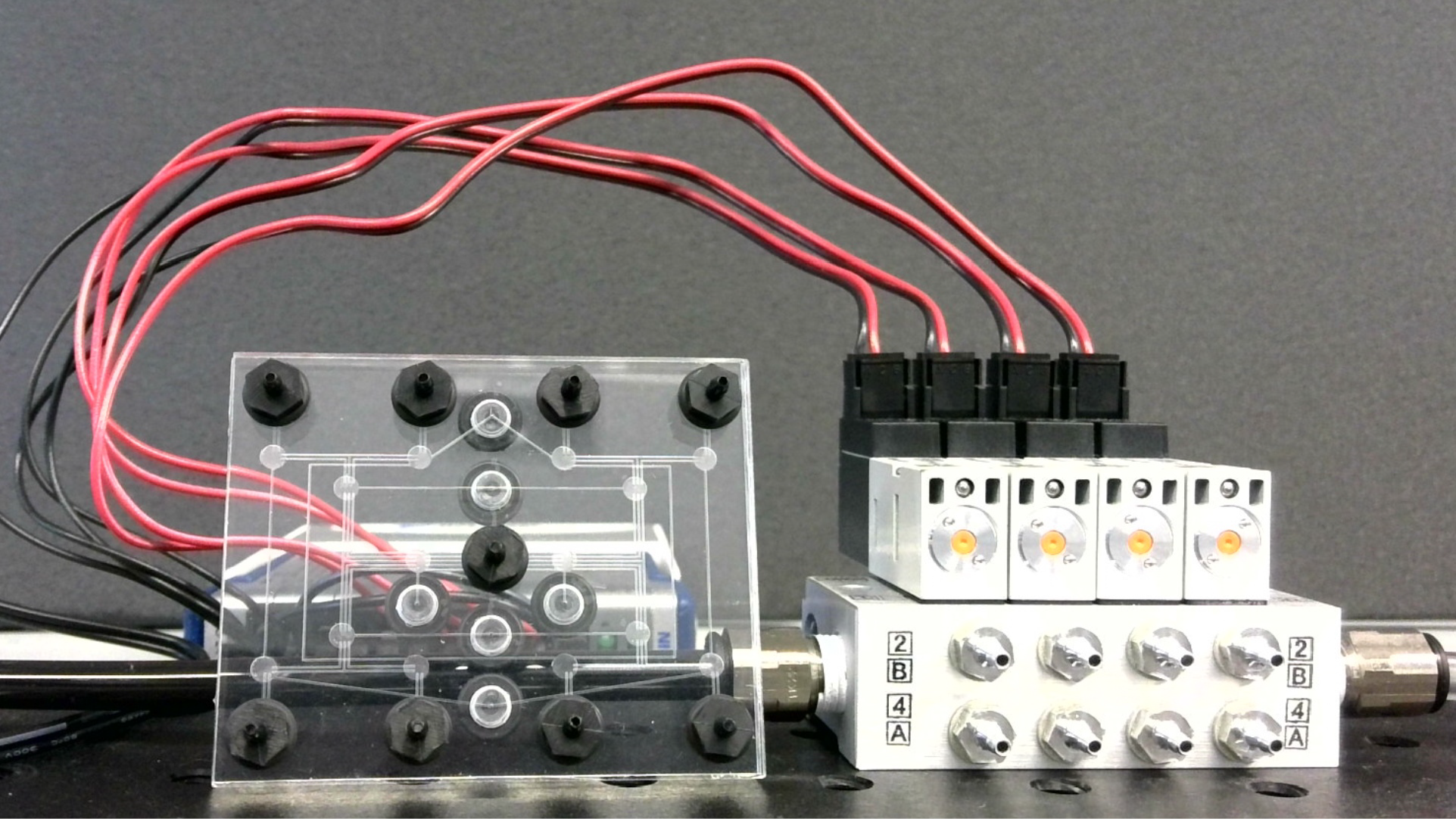
An 8-bit pneumatic RAM chip used to help a soft robot control its movements. (William Grover)
“Airhead” robot uses pneumatic RAM to play piano. Engineers at UC Riverside have unveiled an air-powered computer memory that can be used to control soft robots. The innovation overcomes one of the biggest obstacles to advancing soft robotics: the fundamental mismatch between pneumatics and electronics. The work is published in the open-access journal, PLOS One.
Pneumatic soft robots use pressurized air to move soft, rubbery limbs and grippers and are superior to traditional rigid robots for performing delicate tasks. They are also safer for humans to be around. Baymax, the healthcare companion robot in the 2014 animated Disney film, Big Hero 6, is a pneumatic robot for good reason.
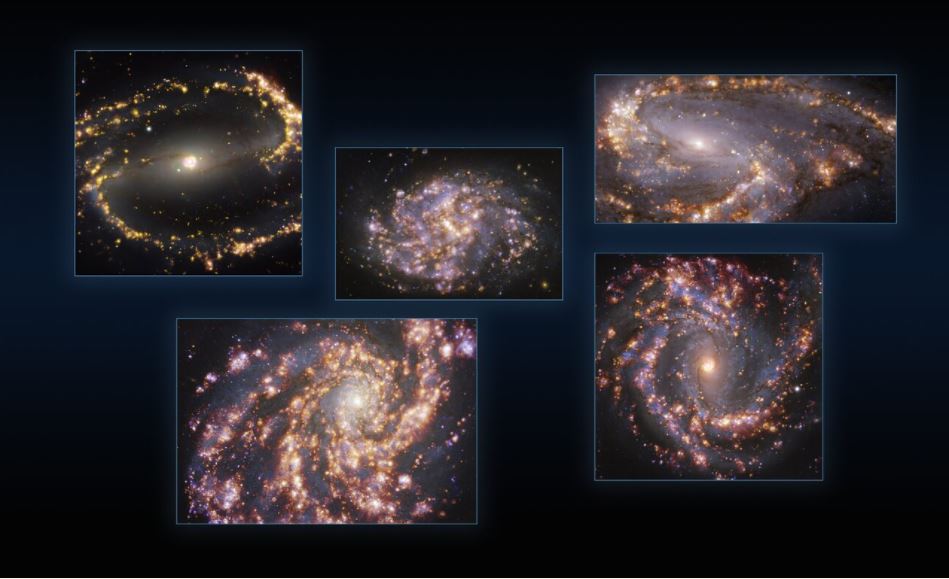
A team of astronomers has released new observations of nearby galaxies that resemble colourful cosmic fireworks. The images, obtained with the European Southern Observatory’s Very Large Telescope (ESO’s VLT), show different components of the galaxies in distinct colours, allowing astronomers to pinpoint the locations of young stars and the gas they warm up around them. By combining these new observations with data from the Atacama Large Millimeter/submillimeter Array (ALMA), in which ESO is a partner, the team is helping shed new light on what triggers gas to form stars.
A team of astronomers has released new observations of nearby galaxies that resemble colourful cosmic fireworks...
Keeping your brain active in old age has always been a smart idea, but a new study suggests that reading, writing letters and playing card games or puzzles in later life may delay the onset of Alzheimer’s dementia by up to five years. The research is published in the July 14, 2021, online issue of Neurology, the medical journal of the American Academy of Neurology.
“The good news is that it’s never too late to start doing the kinds of inexpensive, accessible activities we looked at in our study,” said study author Robert S. Wilson, PhD, of Rush University Medical Center in Chicago. “Our findings suggest it may be beneficial to start doing these things, even in your 80s, to delay the onset of Alzheimer’s dementia.”
The study looked at 1,978 people with an average age of 80 who di...












Recent Comments