


Researchers can Turn a Single Photo into a Video

A GIF that showcases symmetric splatting -- starts out with two waterfalls. On the right, the waterfall starts losing pixels at the top because they are moving to the bottom. On the left, the waterfall starts losing pixels at the bottom because they are moving to the top. At the end of this GIF, the two waterfalls are combined into one so that there are no holes.
To animate the image, the team created “symmetric splatting,” which predicts both the future and the past for an image and then combines them into one animation.Hołyński et al./CVPR

Researchers have developed a deep learning method that can produce a seamlessly looping, realistic looking video from a single photo. Sometimes photos cannot truly capture a scene. How much more epic would that vacation photo of Niagara Falls be if the water were moving?

Researchers at the University of Washington have developed a deep learning method that can do just that: If given a single photo of a waterfall, the system creates a video showing that water cascading down. All that’s missing is the roar of the water and the feeling of the spray on your face.

The team’s method can animate any fl...

Read More
Dark Matter is Slowing the Spin of the Milky Way’s Galactic Bar

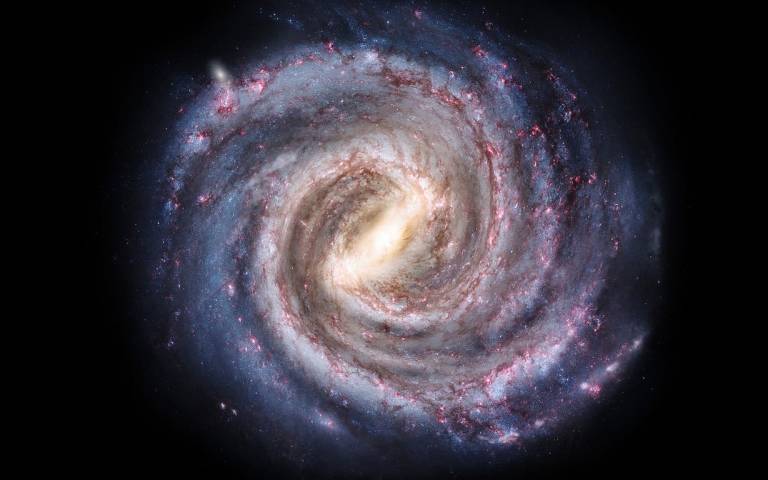
artist's conception of the Milky Way

For 30 years, astrophysicists have predicted such a slowdown, but this is the first time it has been measured. The researchers say it gives a new type of insight into the nature of dark matter, which acts like a counterweight slowing the spin.

The spin of the Milky Way’s galactic bar, which is made up of billions of clustered stars, has slowed by about a quarter since its formation, according to a new study by researchers at University College London (UCL) and the University of Oxford.

For 30 years, astrophysicists have predicted such a slowdown, but this is the first time it has been measured.

The researchers say it gives a new type of insight into the nature of dark matter, which acts like a counterweight slowing the spin.

In the study, published in the Monthly Notices o...

Read More

Engineers devise novel approach to Wirelessly Power Wearable Devices

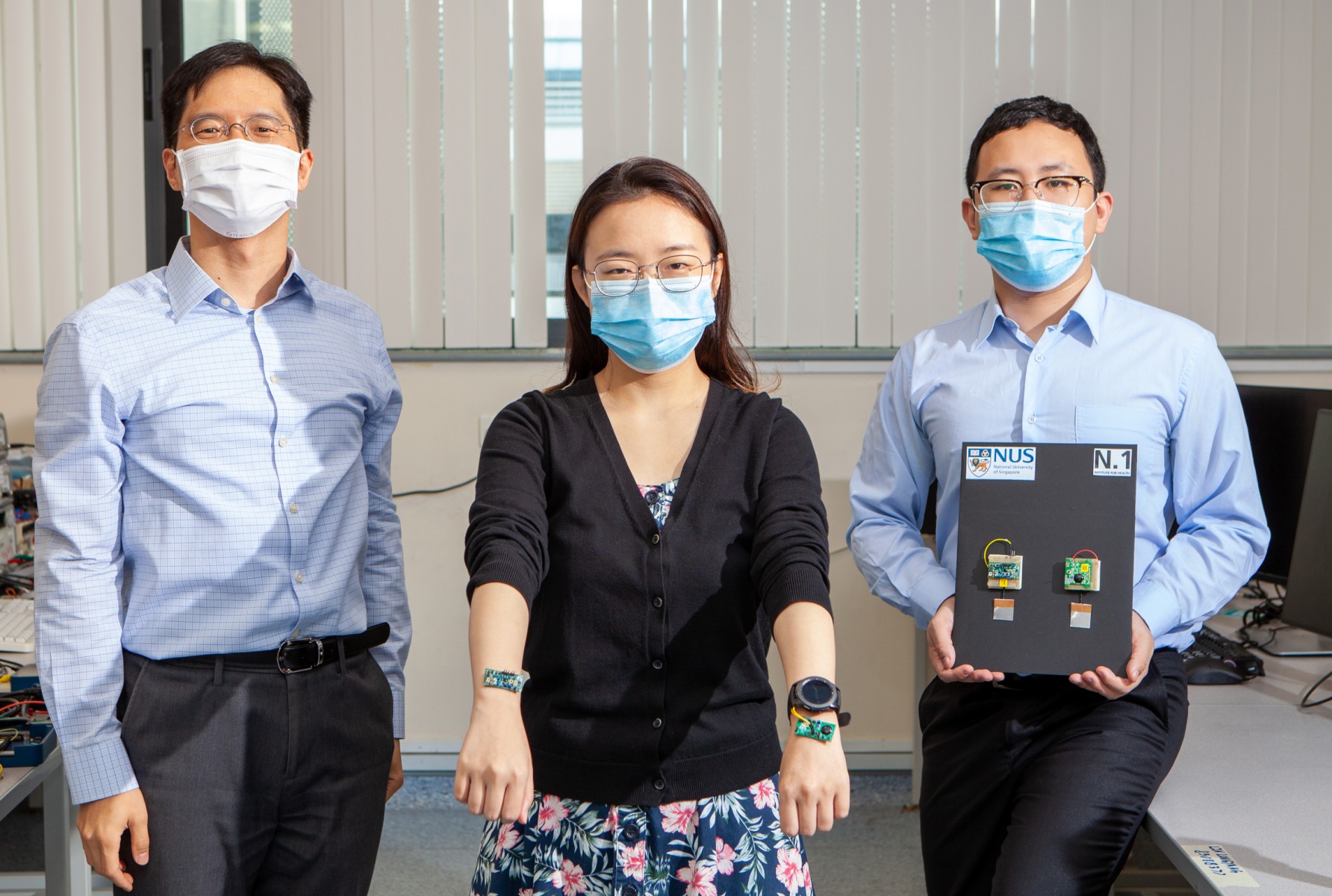
A team led by Associate Professor Jerald Yoo (left) has developed a novel wireless powering solution for wearables. With him are two team members: Ms Li Jiamin (centre), who has a transmitter on her right wrist and a receiver connected to a smart watch on her left wrist, and Mr Dong Yilong (right) who is holding a panel displaying the technology.

Researchers have come up with a way to use one single device – such as a mobile phone or smartwatch – to wirelessly power up to 10 wearables on a user. This novel method uses the human body as a medium for transmitting power. Their system can also harvest unused energy from electronics in a typical home or office environment to power the wearables.

Advancements in wearable technology are reshaping the way we live, work and play, and also ho...

Read More

Black Holes Help with Star Birth

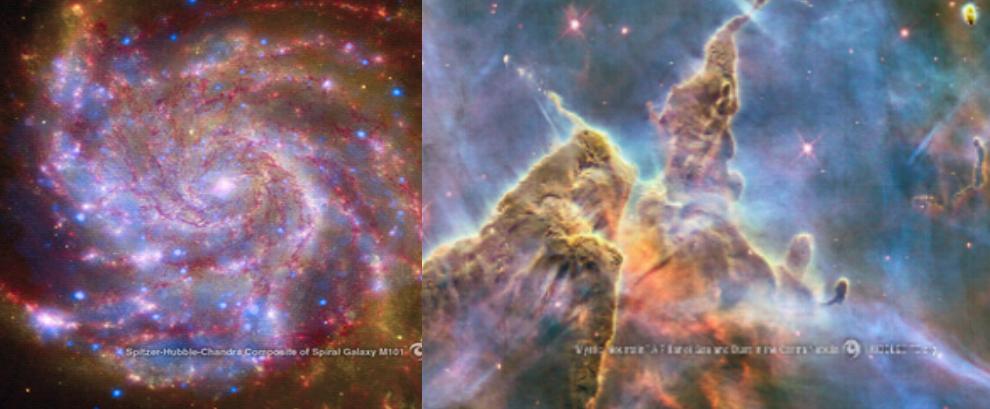
Virtual milky way: Gas density around a massive central galaxy in a group in the virtual universe of the TNG50 simulation. Gas inside the galaxy corresponds to the bright vertical structure: a gaseous disk. To the left and right of that structure… [more]
© TNG Collaboration/Dylan Nelson

The cosmic mass monsters clear the way for the formation of new suns in satellite galaxies. Research combining systematic observations with cosmological simulations has found that, surprisingly, black holes can help certain galaxies form new stars. On scales of galaxies, the role of supermassive black holes for star formation had previously been seen as destructive — active black holes can strip galaxies of the gas that galaxies need to form new stars...

Read More