Unique Ag-Hydrogel Composite for Soft Bioelectronics created

Source: Soft Machines Lab
Stingray-inspired soft swimmer

In the field of robotics, metals offer advantages like strength, durability, and electrical conductivity. But, they are heavy and rigid – properties that are undesirable in soft and flexible systems for wearable computing and human-machine interfaces.

Hydrogels, on the other hand, are lightweight, stretchable, and biocompatible, making them excellent materials for contact lenses and tissue engineering scaffolding. They are, however, poor at conducting electricity, which is needed for digital circuits and bioelectronics applications.

Researchers in Carnegie Mellon University’s Soft Machines Lab have developed a unique silver-hydrogel composite that has high electrical conductivity and is capable of delivering direct current w...

Read More

Astronomers have detected a Moving Supermassive Black Hole

Astronomers detect a black hole on the move
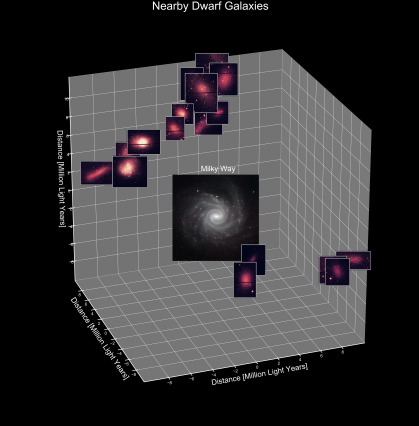
Galaxy J0437+2456 is thought to be home to a supermassive, moving black hole. Credit: Sloan Digital Sky Survey (SDSS).

Scientists have long theorized that supermassive black holes can wander through space – but catching them in the act has proven difficult. Now, researchers at the Center for Astrophysics | Harvard & Smithsonian have identified the clearest case to date of a supermassive black hole in motion. Their results are published today in the Astrophysical Journal.

“We don’t expect the majority of supermassive black holes to be moving; they’re usually content to just sit around,” says Dominic Pesce, an astronomer at the Center for Astrophysics who led the study. “They’re just so heavy that it’s tough to get them going...

Read More

With Gene Therapy, scientists develop Opioid-Free solution for Chronic Pain

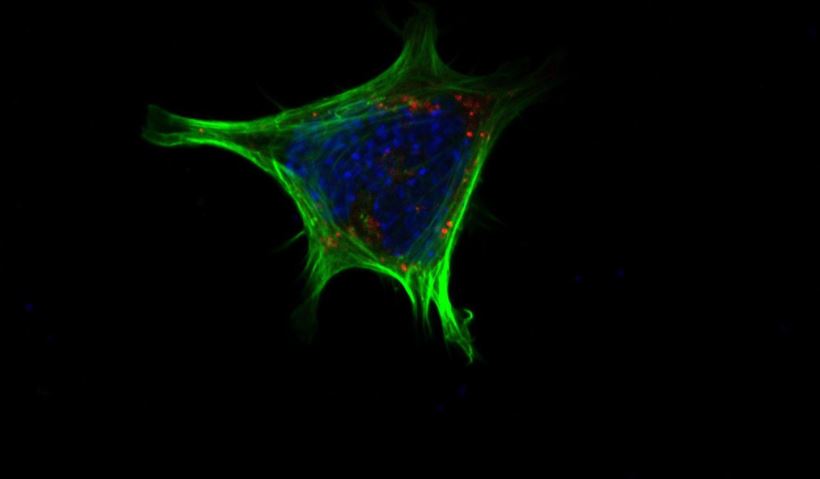
The researchers used CRISPR and zinc fingers to repress NaV 1.7 and block pain signals in neurons in mice. [A.M. Moreno et al., Science Translational Medicine (2021)]

A gene therapy for chronic pain could offer a safer, non-addictive alternative to opioids. Researchers at the University of California San Diego developed the new therapy, which works by temporarily repressing a gene involved in sensing pain. It increased pain tolerance in mice, lowered their sensitivity to pain and provided months of pain relief without causing numbness.

The researchers report their findings in a paper published Mar. 10 in Science Translational Medicine.

The gene therapy could be used to treat a broad range of chronic pain conditions, from lower back pain to rare neuropathic pain disorders — co...

Read More

Producing Highly Efficient LEDs based on 2D Perovskite Films

The structure and performance of 2D perovskite LEDs.
(Figure source: DOI number: 10.1038/s41467-021-21522-8 )

Energy-efficient light-emitting diodes (LEDs) have been used in our everyday life for many decades. But the quest for better LEDs, offering both lower costs and brighter colours, has recently drawn scientists to a material called perovskite. A recent joint-research project co-led by the scientist from City University of Hong Kong (CityU) has now developed a 2D perovskite material for the most efficient LEDs.

From household lighting to mobile phone displays, from pinpoint lighting needed for endoscopy procedures to light source to grow vegetables in Space, LEDs are everywhere...

Read More