Smart microfibers turn everyday objects into health care monitors and energy devices

Smart microfibres turn everyday objects into healthcare monitors and energy devices
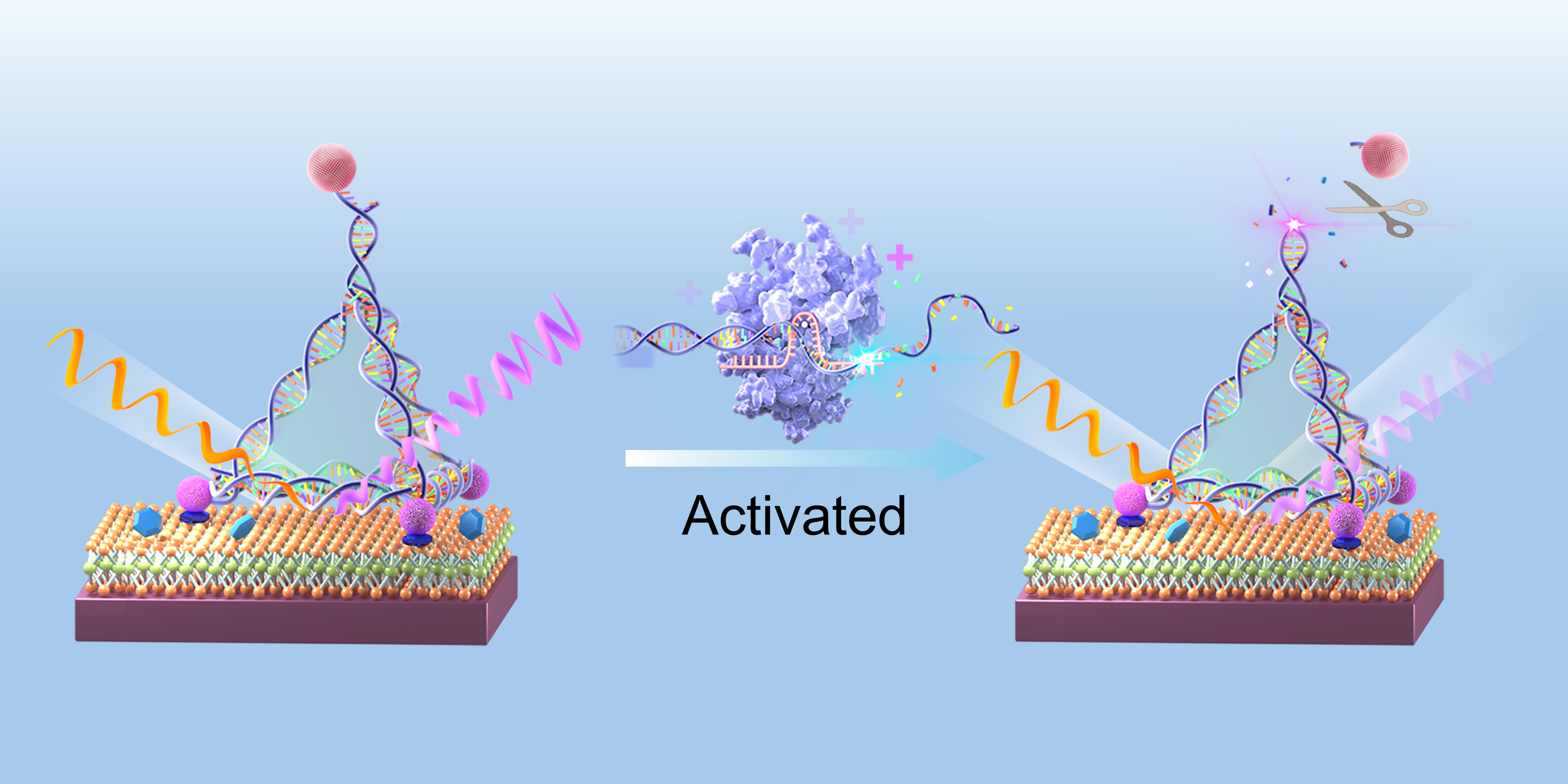
Illustration of the microfibers in action, with uses in wearable breath and gas sensors, health monitoring, and energy conversion and electrodes. Credit: Andy Wang/University of Cambridge

New research led by the University of Cambridge, in collaboration with Hong Kong University of Science and Technology (GZ) and Queen Mary University of London, could redefine how we interact with everyday tools and devices—thanks to a novel method for printing ultra-thin conductive microfibers.

Imagine fibers thinner than a human hair (nano- to micro-scale in diameter) that can be tuned on-demand to add sensing, energy conversion and electronic connectivity capabilities to objects of different shapes and surface textures (such as glass, plastic and leather)...

Read More

Cassini proves complex chemistry in Enceladus ocean

Cassini proves complex chemistry in Enceladus ocean
The process of light, soluble and reactive organic molecules making their way onto ice grains emitted in jets of water from Saturn’s moon Enceladus, where they were detected by the Cassini spacecraft. Credit: NASA/JPL-Caltech

Scientists digging through data collected by the Cassini spacecraft have found new complex organic molecules spewing from Saturn’s moon Enceladus. This is a clear sign that complex chemical reactions are taking place within its underground ocean. Some of these reactions could be part of chains that lead to even more complex, potentially biologically relevant molecules.

Published in Nature Astronomy, this discovery further strengthens the case for a dedicated European Space Agency (ESA) mission to orbit and land on Enceladus.

In 2005, Cassini found the first ...

Read More

Smart blood: How AI reads your body’s aging signals

Smart blood: How AI reads your body's aging signals
Credit: npj Systems Biology and Applications (2025). DOI: 10.1038/s41540-025-00580-4

Could a simple blood test reveal how well someone is aging? A team of researchers led by Wolfram Weckwerth from the University of Vienna, Austria, and Nankai University, China, has combined advanced metabolomics with cutting-edge machine learning and a novel network modeling tool to uncover the key molecular processes underlying active aging.

Their study, published in npj Systems Biology and Applications, identifies aspartate as a dominant biomarker of physical fitness and maps the dynamic interactions that support healthier aging.

It has long been known that exercise protects mobility and lowers the risk of chronic disease...

Read More

Geomagnetic disturbances caused by sun may influence occurrence of heart attacks, especially among women

Since the late 1970s, studies conducted in the Northern Hemisphere have suggested that magnetic particles ejected by the Sun may have an impact on human health (image: NASA/Goddard Space Flight Center)

An article published in the journal Communications Medicine points to a correlation between disturbances in Earth’s magnetic field resulting from solar storms and an increase in the frequency of heart attacks, especially among women.

The authors reached this conclusion by analyzing data from the public health network of São José dos Campos, in the state of São Paulo, Brazil, recorded between 1998 and 2005, a period considered to be one of intense solar activity.

Focusing on hospital admissions for myocardial infarction, the analysis included information from 871 men and 469 wom...

Read More