



Avocado discovery may point to Leukemia Treatment

man seated before several avocados and holding half an avocado in his right hand
Dr. Paul Spagnuolo

A compound in avocados may ultimately offer a route to better leukemia treatment, says a new University of Guelph study.

The compound targets an enzyme that scientists have identified for the first time as being critical to cancer cell growth, said Dr. Paul Spagnuolo, Department of Food Science.

Published recently in the journal Blood, the study focused on acute myeloid leukemia (AML), which is the most devastating form of leukemia. Most cases occur in people over age 65, and fewer than 10 per cent of patients survive five years after diagnosis.

Leukemia cells have higher amounts of an enzyme called VLCAD involved in their metabolism, said Spagnuolo.

“The cell relies on that pathway to survive,” he said, explaining that the compound is a likely candidate ...

Read More
Will your Future Clothes be Made of Algae?

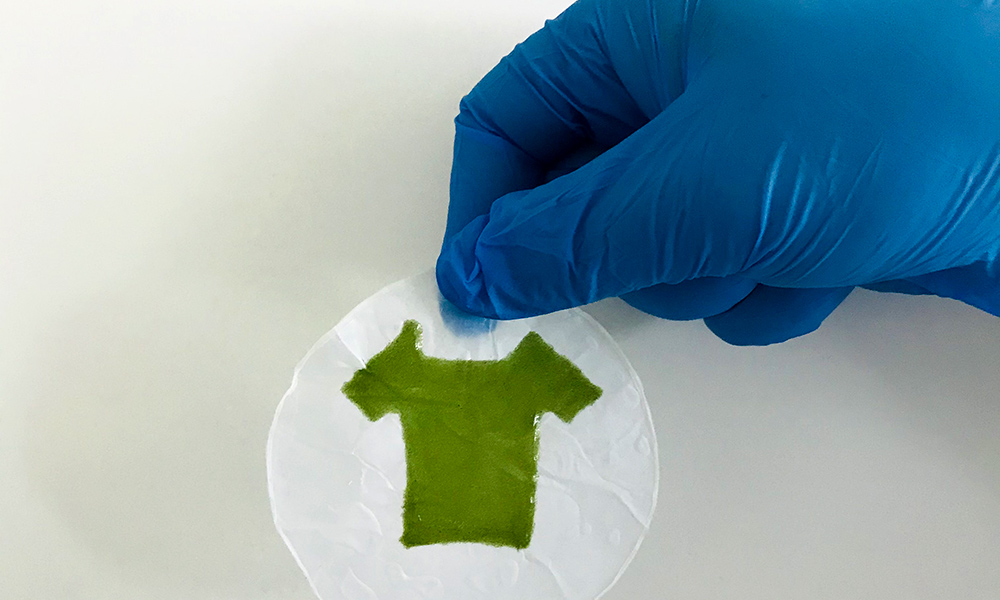
A mini T-shirt demonstrates the photosynthetic living materials created in the lab of Rochester biology professor Anne S. Meyer using 3D printers and a new bioink technique. (University of Rochester photo)

For the first time, an international team of researchers from the University of Rochester and Delft University of Technology in the Netherlands used 3D printers and a novel bioprinting technique to print algae into living, photosynthetic materials that are tough and resilient. The material has a variety of applications in the energy, medical, and fashion sectors. The research is published in the journal Advanced Functional Materials.

“Three-dimensional printing is a powerful technology for fabrication of living functional materials that have a huge potential in a wide range of env...

Read More

Small Galaxies likely played important Role in Evolution of the Universe

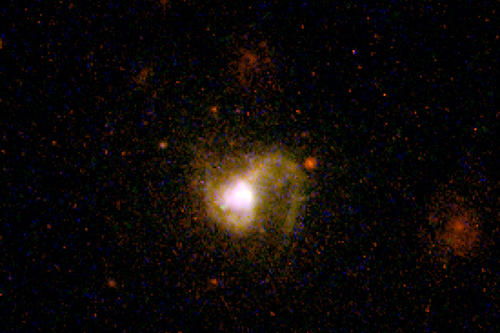
The University of Minnesota study shows that high-energy light from small galaxies, like the Pox 186 galaxy depicted above, may have played a key role in the reionization and evolution of the Universe. Credit: Podevin, J.f., 2006

Researchers find first-ever galaxy observed in a ‘blow-away’ state. A new study led by University of Minnesota astrophysicists shows that high-energy light from small galaxies may have played a key role in the early evolution of the Universe. The research gives insight into how the Universe became reionized, a problem that astronomers have been trying to solve for years.

The research is published in The Astrophysical Journal, a peer-reviewed scientific journal of astrophysics and astronomy.

After the Big Bang, when the Universe was formed billions of yea...

Read More

A Silver Lining for Extreme Electronics

A photograph shows the silver lines of circuit leads, which have been patterned to look like a Spartan helmet. Circuit design by MSU veterinarian Jane M. Manfredi.
MSU researchers developed a process to create more resilient circuitry, which they demonstrated by creating a silver Spartan helmet. The circuit was designed by Jane Manfredi, an assistant professor in the College of Veterinary Medicine. Credit: Acta Materialia Inc./Elsevier

Michigan State researchers are building tougher circuits to help withstand the grueling demands of energy production, space exploration and more. Tomorrow’s cutting-edge technology will need electronics that can tolerate extreme conditions. That’s why a group of researchers led by Michigan State University’s Jason Nicholas is building stronger circuits today.

Nicholas and his team have developed more heat resilient silver circuitry with an assist from nickel...

Read More