New Machine Learning Theory raises Questions about Nature of Science

PPPL physicist Hong Qin in front of images of planetary orbits and computer code (Photo by Elle Starkman)

A novel computer algorithm, or set of rules, that accurately predicts the orbits of planets in the solar system could be adapted to better predict and control the behavior of the plasma that fuels fusion facilities designed to harvest on Earth the fusion energy that powers the sun and stars.

The algorithm, devised by a scientist at the U.S. Department of Energy’s (DOE) Princeton Plasma Physics Laboratory (PPPL), applies machine learning, the form of artificial intelligence (AI) that learns from experience, to develop the predictions...

Read More

TESS discovers New Worlds in a River of Young Stars

This illustration sketches out the main features of TOI 451, a triple-planet system located 400 light-years away in the constellation Eridanus.
Credit: NASA’s Goddard Space Flight Center

Using observations from NASA’s Transiting Exoplanet Survey Satellite (TESS), an international team of astronomers has discovered a trio of hot worlds larger than Earth orbiting a much younger version of our Sun called TOI 451. The system resides in the recently discovered Pisces-Eridanus stream, a collection of stars less than 3% the age of our solar system that stretches across one-third of the sky.

The planets were discovered in TESS images taken between October and December 2018...

Read More

Nanowire could provide a Stable, easy-to-make Superconducting Transistor

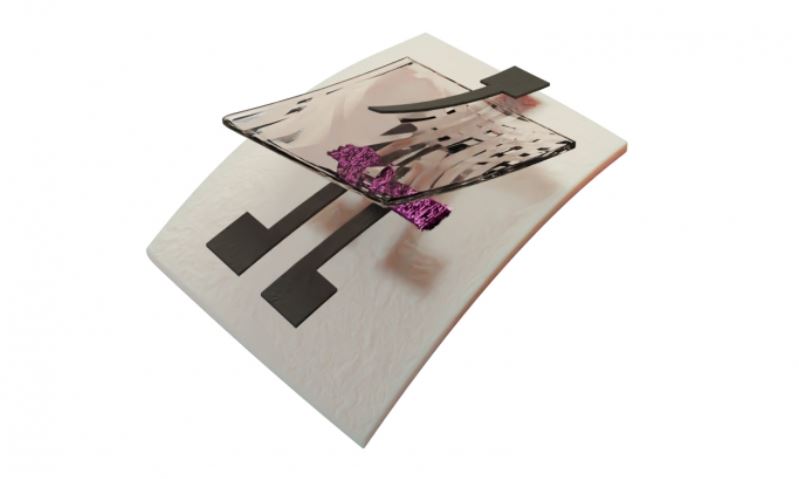
superconducting nanowire
MIT researchers are developing a superconducting nanowire, which could enable more efficient superconducting electronics.
Credits:Image: Christine Daniloff, MIT

Superconductors—materials that conduct electricity without resistance—are remarkable. They provide a macroscopic glimpse into quantum phenomena, which are usually observable only at the atomic level. Beyond their physical peculiarity, superconductors are also useful. They’re found in medical imaging, quantum computers, and cameras used with telescopes.

But superconducting devices can be finicky. Often, they’re expensive to manufacture and prone to err from environmental noise. That could change, thanks to research from Karl Berggren’s group in the Department of Electrical Engineering and Computer Science.

The researche...

Read More

Mediterranean-style Diet linked to better Thinking Skills in later life

People who eat a Mediterranean-style diet — particularly one rich in green leafy vegetables and low in red meat — are more likely to stay mentally sharp in later life, a study shows.

Closely adhering to a Mediterranean diet was associated with higher scores on a range of memory and thinking tests among adults in their late 70s, the research found.

The study found no link, however, between the Mediterranean-style diet and better brain health. Markers of healthy brain ageing — such as greater grey or white matter volume, or fewer white matter lesions — did not differ between those regularly eating a Mediterranean diet and those who did not.

These latest findings suggest that this primarily plant-based diet may have benefits for cognitive functioning as we get older, researchers...

Read More