To raise new questions, new possibilities, to regard old problems from a new angle, requires creative imagination and marks real advance in science.
~Albert Einstein
Read More
Old Newtonian physics claimed that things have an objective reality separate from our perception of them. Quantum physics, and particularly Heisenberg's Uncertainty Principle, reveal that, as our perception of an object changes, the object itself literally changes.
~Marianne Williamson
Read More
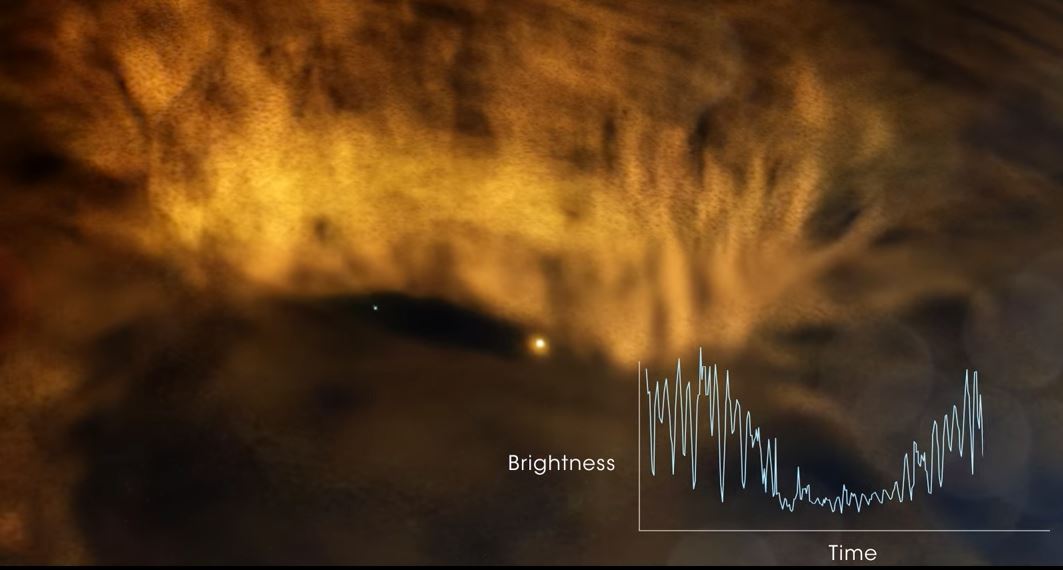
Two stars orbit each other within an enormous dusty disk in the U Monocerotis system, illustrated here. When the stars are farthest from each other, they funnel material from the disk’s inner edge. At this time, the primary star is slightly obscured by the disk from our perspective. The primary star, a yellow supergiant, expands and contracts. The smaller secondary star is thought to maintain its own disk of material, which likely powers an outflow of gas that emits X-rays. Credits: NASA’s Goddard Space Flight Center/Chris Smith (USRA/GESTAR) Download high-resolution video and images from NASA’s Scientific Visualization Studio
Astronomers have painted their best picture yet of an RV Tauri variable, a rare type of stellar binary where two stars — one approaching the end of its life ...
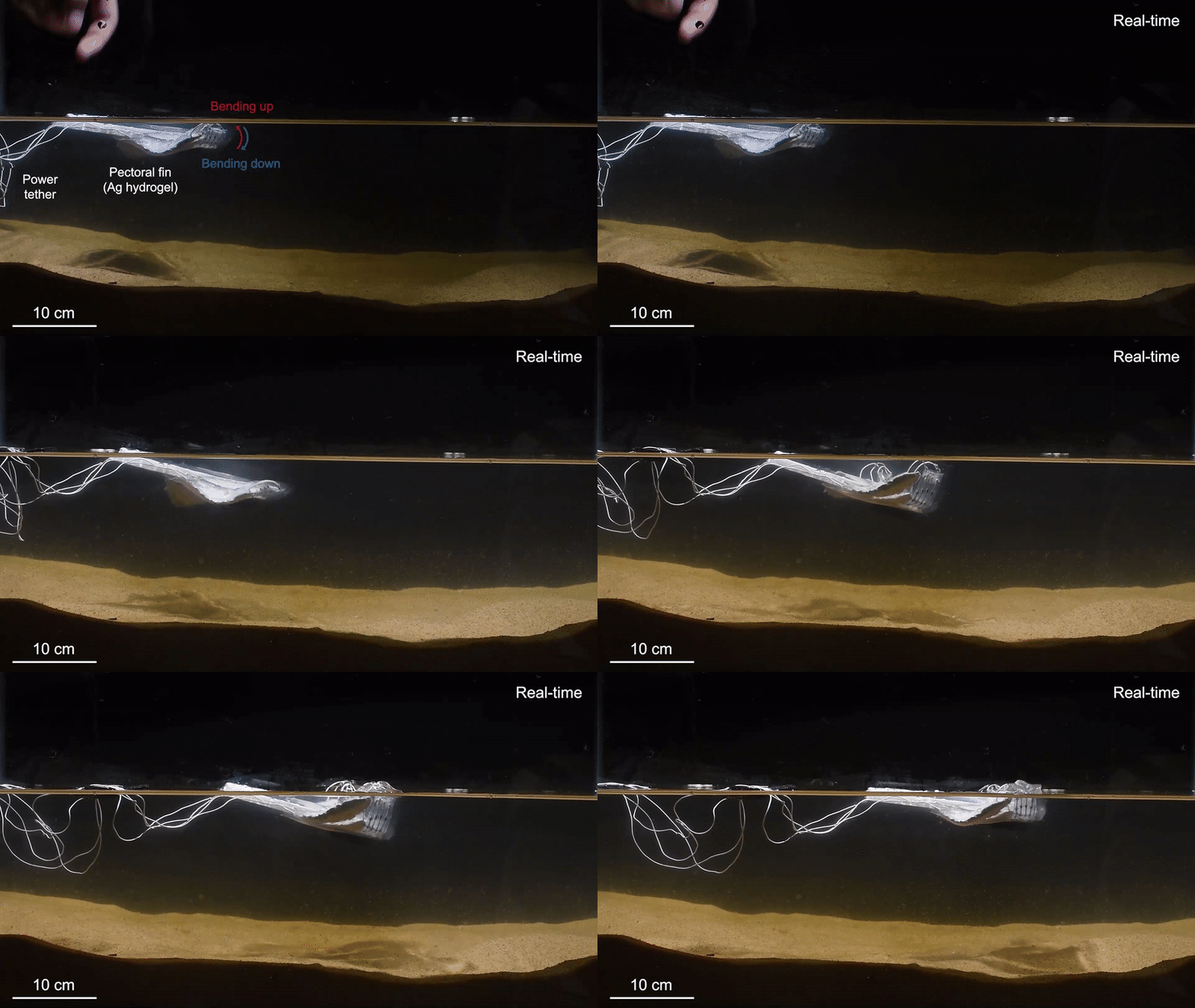
In the field of robotics, metals offer advantages like strength, durability, and electrical conductivity. But, they are heavy and rigid – properties that are undesirable in soft and flexible systems for wearable computing and human-machine interfaces.
Hydrogels, on the other hand, are lightweight, stretchable, and biocompatible, making them excellent materials for contact lenses and tissue engineering scaffolding. They are, however, poor at conducting electricity, which is needed for digital circuits and bioelectronics applications.
Researchers in Carnegie Mellon University’s Soft Machines Lab have developed a unique silver-hydrogel composite that has high electrical conductivity and is capable of delivering direct current w...
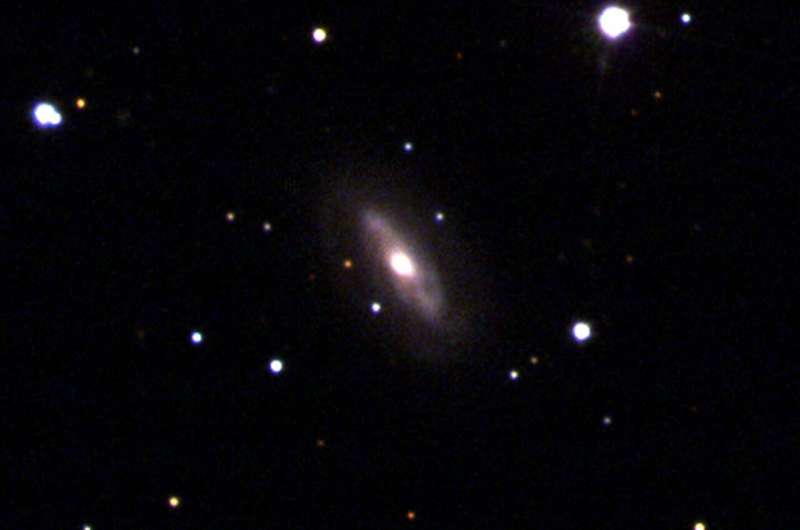
Galaxy J0437+2456 is thought to be home to a supermassive, moving black hole. Credit: Sloan Digital Sky Survey (SDSS).
Scientists have long theorized that supermassive black holes can wander through space – but catching them in the act has proven difficult. Now, researchers at the Center for Astrophysics | Harvard & Smithsonian have identified the clearest case to date of a supermassive black hole in motion. Their results are published today in the Astrophysical Journal.
“We don’t expect the majority of supermassive black holes to be moving; they’re usually content to just sit around,” says Dominic Pesce, an astronomer at the Center for Astrophysics who led the study. “They’re just so heavy that it’s tough to get them going...
The researchers used CRISPR and zinc fingers to repress NaV 1.7 and block pain signals in neurons in mice. [A.M. Moreno et al., Science Translational Medicine (2021)]
A gene therapy for chronic pain could offer a safer, non-addictive alternative to opioids. Researchers at the University of California San Diego developed the new therapy, which works by temporarily repressing a gene involved in sensing pain. It increased pain tolerance in mice, lowered their sensitivity to pain and provided months of pain relief without causing numbness.
The researchers report their findings in a paper published Mar. 10 in Science Translational Medicine.
The gene therapy could be used to treat a broad range of chronic pain conditions, from lower back pain to rare neuropathic pain disorders — co...












Recent Comments