Unified memristor-ferroelectric memory developed for energy-efficient training of AI systems

A unified memristor-ferroelectric memory for the energy-efficient training of AI systems
Credit: Dupouy/CEA

Over the past decades, electronics engineers have developed a wide range of memory devices that can safely and efficiently store increasing amounts of data. However, the different types of devices developed to date come with their own trade-offs, which pose limits on their overall performance and restrict their possible applications.

Researchers at Université Grenoble Alpes (CEA-Leti, CEA List), Université de Bordeaux (CNRS) and Université Paris-Saclay (CNRS) recently developed a new memory device that combines two complementary components typically used individually, known as memristors and ferroelectric capacitors (FeCAPs)...

Read More

XRISM catches a pulsar’s cosmic wind—and sees a surprising result

XRISM catches a pulsar's cosmic wind—and sees a surprising result
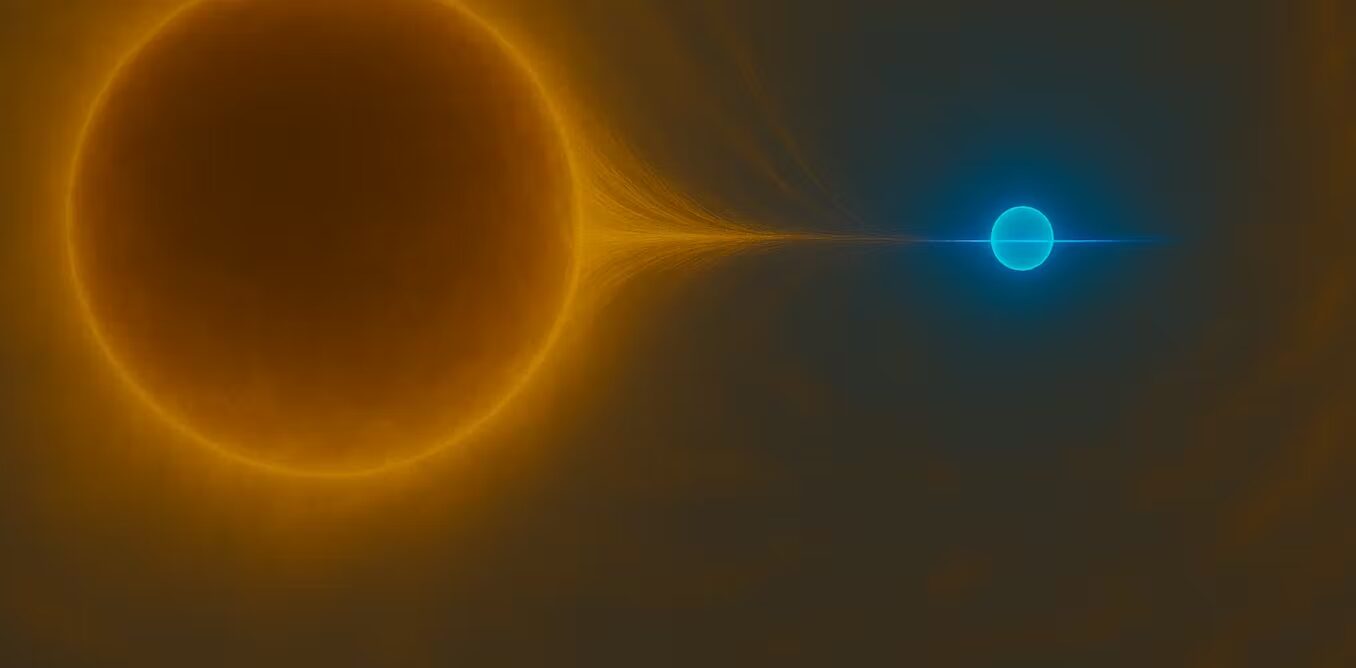
An artist’s conception of a pulsar/main sequence star pair, similar to the one featured in the study. Credit: ESA

The universe is a strange place. The X-ray Imaging and Spectroscopy Mission (XRISM) orbiting observatory recently highlighted this fact, when it was turned on a pulsar to document its powerful cosmic winds.

The XRISM observatory is a joint mission for NASA, the European Space Agency (ESA), and the Japan Aerospace Exploration Agency (JAXA). The mission was also a replacement for the ill-fated Hitomi X-ray observatory, which failed shortly after launch in 2016.

The discovery comes courtesy of ESA’s Resolve instrument, a soft X-ray spectrometer aboard XRISM. The study looked at neutron star GX 13+1...

Read More

How axolotls rely on their ‘fight or flight’ network to regenerate body parts

axolotls
Credit: Yaiol AI from Pexels

Biologists have long been fascinated by the ability of salamanders to regrow entire limbs. Now Harvard researchers have solved part of the mystery of how they accomplish this feat—by activating stem cells throughout the body, not just at the injury site.

In a paper published in the journal Cell, researchers documented how this body-wide response in axolotl salamanders is triggered by the sympathetic nervous system—the iconic “fight or flight” network. The study raises the possibility that these mechanisms might one day be manipulated to regenerate human limbs and organs.

“We’ve shown the importance of the adrenaline stress signaling hormone in getting cells ready for regeneration,” said Duygu Payzin-Dogru, lead author of the new study and a postdo...

Read More

How the brain’s activity, energy use and blood flow change as people fall asleep

A new study by investigators from Mass General Brigham has used next-generation imaging technology to discover that when the brain is falling asleep, it shows a coordinated shift in activity.

The researchers found that during NREM (non-rapid eye movement) sleep, parts of the brain that handle movement and sensory input stay active and keep using energy, while areas involved in thinking, memory and daydreaming quiet down and use less energy. Their results are published in Nature Communications.

“This research helps explain how the brain stays responsive to the outside world even as awareness fades during sleep,” said corresponding author Jingyuan Chen, Ph.D., an assistant investigator at the Athinoula A. Martinos Center for Biomedical Imaging at Massachusetts General Hospital.

...Read More