

Researchers say they may have found proof of theorized axions, and possibly dark matter, around group of neutron stars. A new study, led by a theoretical physicist at the U.S...
Read More


Until we recognize the essential role of biology, our attempts to truly unify the universe will remain a train to nowhere. ~Robert Lanza Read More

Good health is not something we can buy. However, it can be an extremely valuable savings account. ~Anne Wilson Schaef Read More

The only way forward, if we are going to improve the quality of the environment, is to get everybody involved. ~Richard Rogers Read More

To raise new questions, new possibilities, to regard old problems from a new angle, requires creative imagination and marks real advance in science. ~Albert Einstein Read More

Old Newtonian physics claimed that things have an objective reality separate from our perception of them. Quantum physics, and particularly Heisenberg's Uncertainty Principle, reveal that, as our perception of an object changes, the object itself literally changes. ~Marianne Williamson Read More

Astronomy compels the soul to look upwards and leads us from this world to another. ~ Read More
January 16, 2021,
 Astronomy/Space
Researchers say they may have found proof of theorized axions, and possibly dark matter, around group of neutron stars. A new study, led by a theoretical physicist at the U.S...
Read More
January 15, 2021,
Health/Medical, Biology/Biotechnology
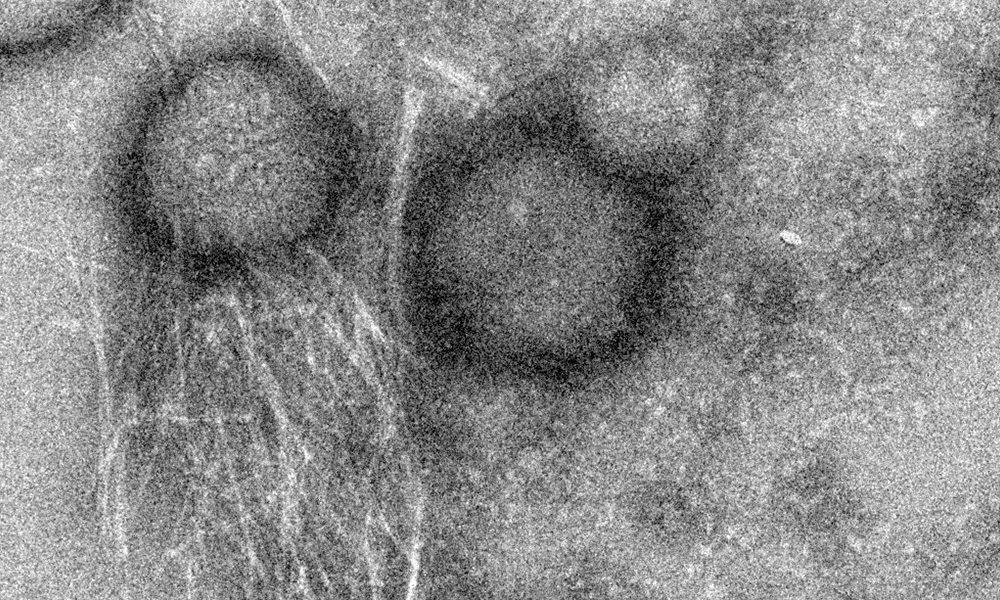
Researchers have discovered remarkable molecular properties of an antimicrobial peptide from the skin of the Australian toadlet. The discovery could inspire the development of novel synthetic drugs to combat bacterial infections.
The researchers solved the 3D molecul...
Read More
January 15, 2021,
Physics, Technology/Electronics

By adding some magnetic flair to an exotic quantum experiment, physicists produced an ultra-stable one-dimensional quantum gas with never-before-seen ‘scar’ states – a feature that could someday be useful for securing quantum information.
As the story goes, the Greek mathematician and tinkerer Archimedes came across an invention while traveling through ancient Egypt that would later bear his name. It was a machine consisting of a screw housed inside a hollow tube that trapped and drew water upon rotation...
Read More
January 15, 2021,
Astronomy/Space
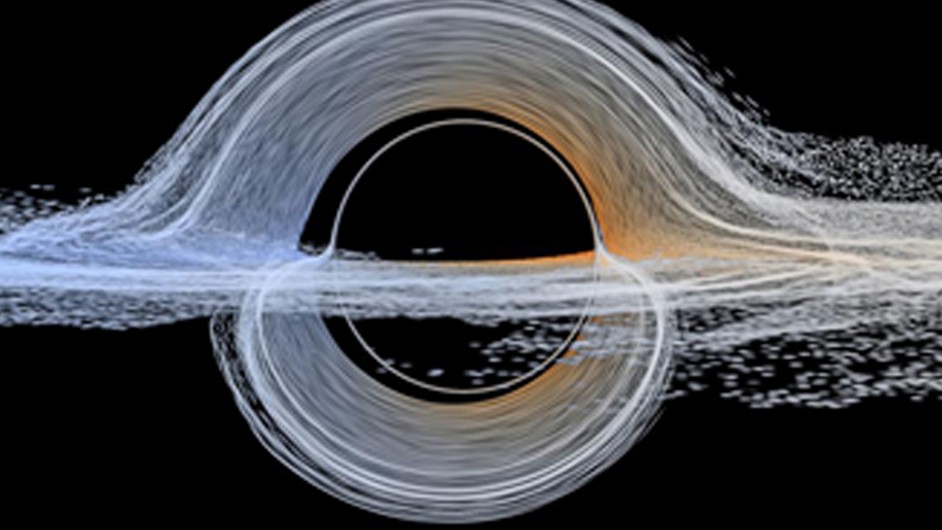
A new study indicates energy can be extracted from black holes through reconnection of magnetic field lines. A remarkable prediction of Einstein’s theory of general relativity — the theory that connects space, time, and gravity — is that rotating black holes have enormous amounts of energy available to be tapped.
For the last 50 years, scientists have tried to come up with methods to unleash this power. Nobel physicist Roger Penrose theorized that a particle disintegration could draw energy from a black hole; Stephen Hawking proposed that black holes could release energy through quantum mechanical emission; while Roger Blandford and Roman Znajek suggested electromagnetic torque as a main agent of energy extraction.
Now, in a study published in the journal Physical Review D, phys...
Read More
Recent Comments