To raise new questions, new possibilities, to regard old problems from a new angle, requires creative imagination and marks real advance in science.
~Albert Einstein
Read More
Old Newtonian physics claimed that things have an objective reality separate from our perception of them. Quantum physics, and particularly Heisenberg's Uncertainty Principle, reveal that, as our perception of an object changes, the object itself literally changes.
~Marianne Williamson
Read More
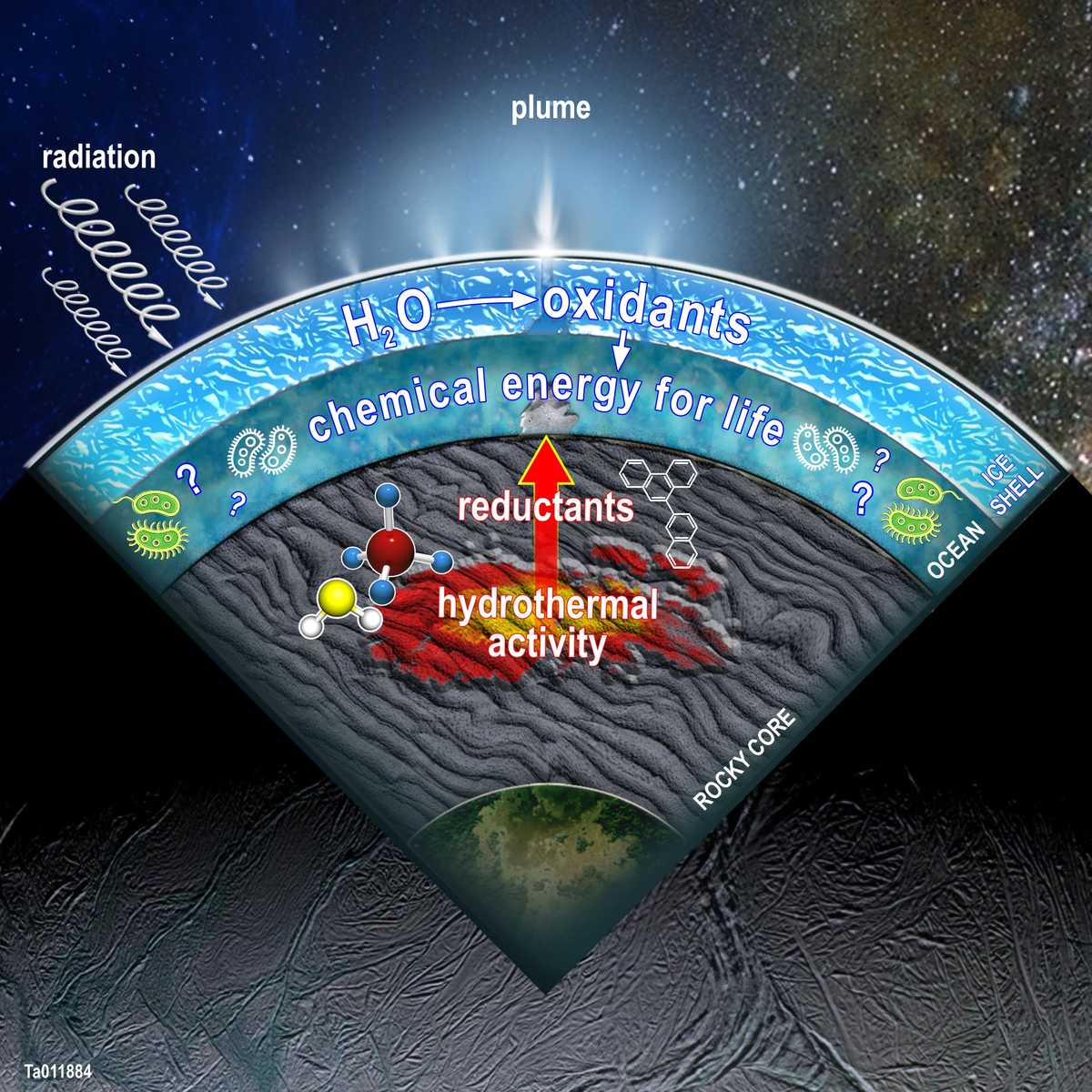
Courtesy of Southwest Research Institute This figure illustrates a cross-section of Enceladus, showing a summary of the processes SwRI scientists modeled in the Saturn moon. Oxidants produced in the surface ice when water molecules are broken apart by radiation can combine with reductants produced by hydrothermal activity and other water-rock reactions, creating an energy source for potential life in the ocean.
Using data from NASA’s Cassini spacecraft, scientists at Southwest Research Institute (SwRI) modeled chemical processes in the subsurface ocean of Saturn’s moon Enceladus. The studies indicate the possibility that a varied metabolic menu could support a potentially diverse microbial community in the liquid water ocean beneath the moon’s icy facade.
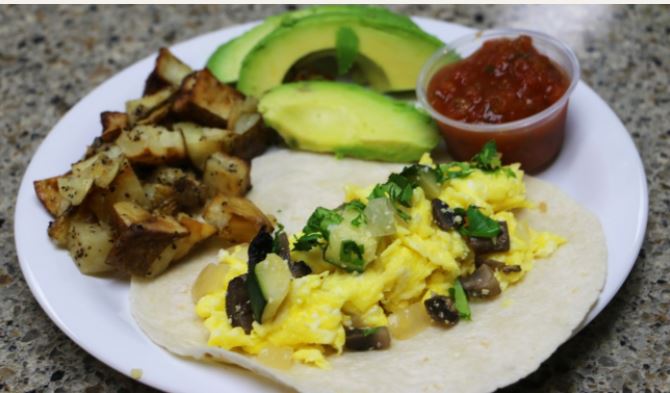
Adding avocado to your meal improves gut health, a new University of Illinois study shows.
Eating avocado as part of your daily diet can help improve gut health, a new study from University of Illinois shows. Avocados are a healthy food that is high in dietary fiber and monounsaturated fat. However, it was not clear how avocados impact the microbes in the gastrointestinal system or “gut.”
“We know eating avocados helps you feel full and reduces blood cholesterol concentration, but we did not know how it influences the gut microbes, and the metabolites the microbes produce,” says Sharon Thompson, graduate student in the Division of Nutritional Sciences at U of I and lead author on the paper, published in the Journal of Nutrition.
The researchers found that people who ate avocado e...
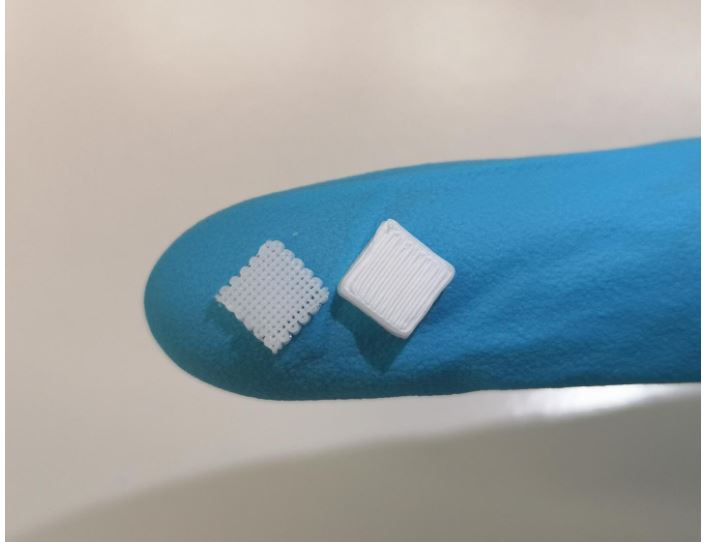
nside the 3-D-printed material (right) a lattice structure (left) contains the added liquids. Credit: Harald Rupp/Uni Halle
Chemists at Martin Luther University Halle-Wittenberg (MLU) have developed a way to integrate liquids directly into materials during the 3D printing process. This allows, for example, active medical agents to be incorporated into pharmaceutical products or luminous liquids to be integrated into materials, which allow monitoring of damage. The study was published in “Advanced Materials Technologies”.
3D printing is now widely used for a range of applications. Generally, however, the method is limited to materials which are liquefied through heat and become solid after printing...
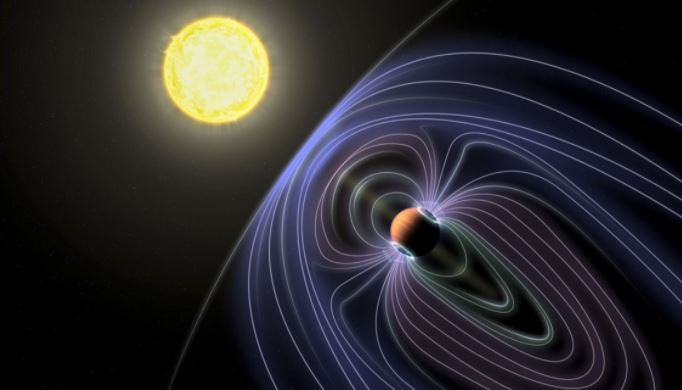
In this artistic rendering of the Tau Boötes b system, the lines representing the invisible magnetic field are shown protecting the hot Jupiter planet from solar wind Jack Madden/Cornell University
By monitoring the cosmos with a radio telescope array, an international team of scientists has detected radio bursts emanating from the constellation Boötes — that could be the first radio emission collected from a planet beyond our solar system.
The team, led by Cornell postdoctoral researcher Jake D. Turner, Philippe Zarka of the Observatoire de Paris — Paris Sciences et Lettres University and Jean-Mathias Griessmeier of the Université d’Orléans will publish their findings in the forthcoming research section of Astronomy & Astrophysics, on Dec. 16.











Recent Comments