
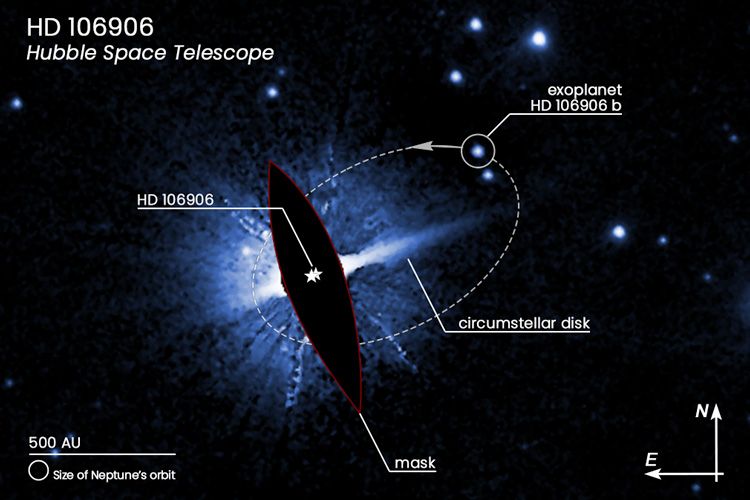
Astronomers confirm bound orbit for planet far from its star, showing that far-flung planets exist...
Read More


Until we recognize the essential role of biology, our attempts to truly unify the universe will remain a train to nowhere. ~Robert Lanza Read More

Good health is not something we can buy. However, it can be an extremely valuable savings account. ~Anne Wilson Schaef Read More

The only way forward, if we are going to improve the quality of the environment, is to get everybody involved. ~Richard Rogers Read More

To raise new questions, new possibilities, to regard old problems from a new angle, requires creative imagination and marks real advance in science. ~Albert Einstein Read More

Old Newtonian physics claimed that things have an objective reality separate from our perception of them. Quantum physics, and particularly Heisenberg's Uncertainty Principle, reveal that, as our perception of an object changes, the object itself literally changes. ~Marianne Williamson Read More

Astronomy compels the soul to look upwards and leads us from this world to another. ~ Read More
December 15, 2020,
 Astronomy/Space
Astronomers confirm bound orbit for planet far from its star, showing that far-flung planets exist...
Read More
December 12, 2020,
Health/Medical, Biology/Biotechnology

In a new study, published online in the journal American Chemical Society (ACS) Applied Polymer Materials, scientists at Texas A&M University reported they have designed a hydrogel membrane that may be used to house optical glucose sensing materials, toward building a biosensor for monitoring sugar levels in diabetics.
By incorporating dangling, comb-type molecular chains within a type of hydrogel called poly(N-isopropylacrylamide) or poly NIPAAm for short, they showed that the membrane could prevent leakage of small-sized molecules, like the ones for glucose-sensing, while still allowing glucose to freely diffuse in and out.
When ready for clinical use, the researchers s...
Read More
December 12, 2020,
Astronomy/Space

Researchers from the Laboratory for Atmospheric and Space Physics (LASP) at the University of Colorado Boulder are diving into the dusty environment that surrounds the sun — a search that could help to reveal how planets like Earth come into being.
The pursuit comes by way of NASA’s Parker Solar Probe, a pioneering mission that has taken scientists closer to Earth’s home star than any spacecraft to date. Over two years, the probe has circled the sun six times, hitting maximum speeds of roughly 290,000 miles per hour.
In the process, the Parker team has learned a lot about the microscopic grains of dust that lie just beyond the sun’s atmosphere, said David Malas...
Read More
December 11, 2020,
Health/Medical, Biology/Biotechnology
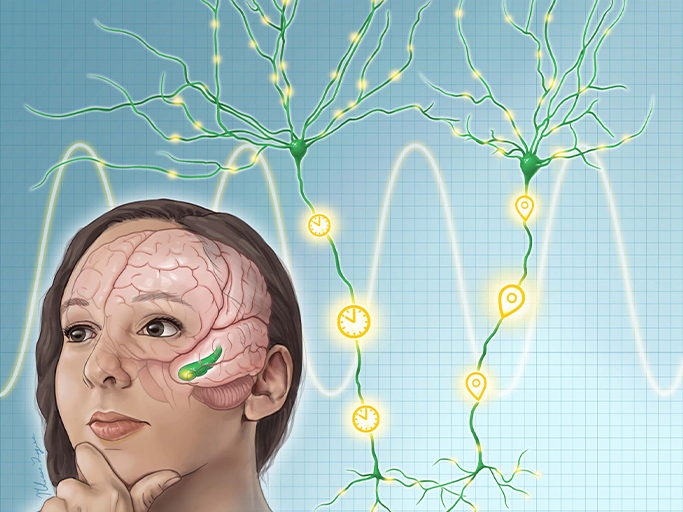
Two studies led by UT Southwestern researchers shed new light on how the brain encodes time and place into memories. The findings, published recently in PNAS and Science, not only add to the body of fundamental research on memory, but could eventually provide the basis for new treatments to combat memory loss from conditions such as traumatic brain injury, TBI, or Alzheimer’s disease.
About a decade ago, a group of neurons kno...
Read More
Recent Comments