The first Ultra-Hot Neptune, LTT 9779b, is one of nature’s improbable planets

The Ultra Hot Neptune. Credit: Ricardo Ramirez

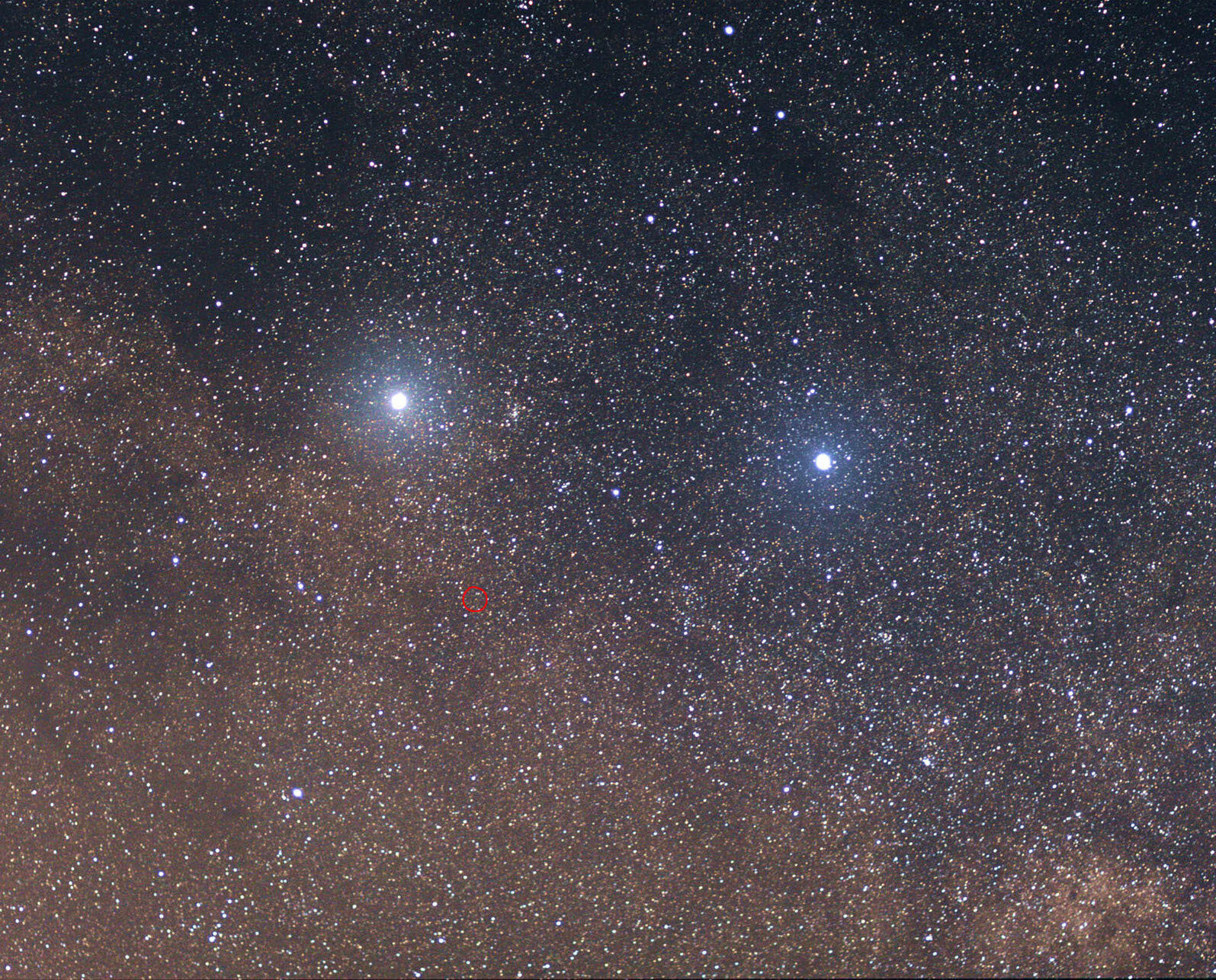
An international team of astronomers, including a group from the University of Warwick, have discovered the first Ultra Hot Neptune planet orbiting the nearby star LTT 9779.

The world orbits so close to its star that its year lasts only 19 hours, meaning the stellar radiation heats the planet to over 1700 degrees Celsius.

At these temperatures, heavy elements like iron can be ionized in the atmosphere and molecules disassociated, providing a unique laboratory to study the chemistry of planets outside the solar system.

Although the world weighs twice as much as Neptune does, it is also slightly larger and so has a similar density...

Read More

Giant Spider provides promise of Pain Relief for Irritable Bowel Syndrome

Two pain blocking peptides were found in the venom from the Venezuelan Pinkfoot Goliath tarantula. Molecules from the venom of one of the world’s largest spiders could help University of Queensland-led researchers tailor pain blockers for people with irritable bowel syndrome (IBS).

Researchers screened 28 spiders, with the venom of the Venezuelan Pinkfoot Goliath tarantula — which has a leg-span of up to 30 centimetres — showing the most promise.

The team led by Professor Richard Lewis from UQ’s Institute for Molecular Bioscience in collaboration with Flinders University’s Professor Stuart Brierley and the South Australian Health and Medical Research Institute hopes to find effective pain relief for chronic intestinal pain.

“All pains are complex but gut pain is particularly ...

Read More

New Type of Superconductor identified

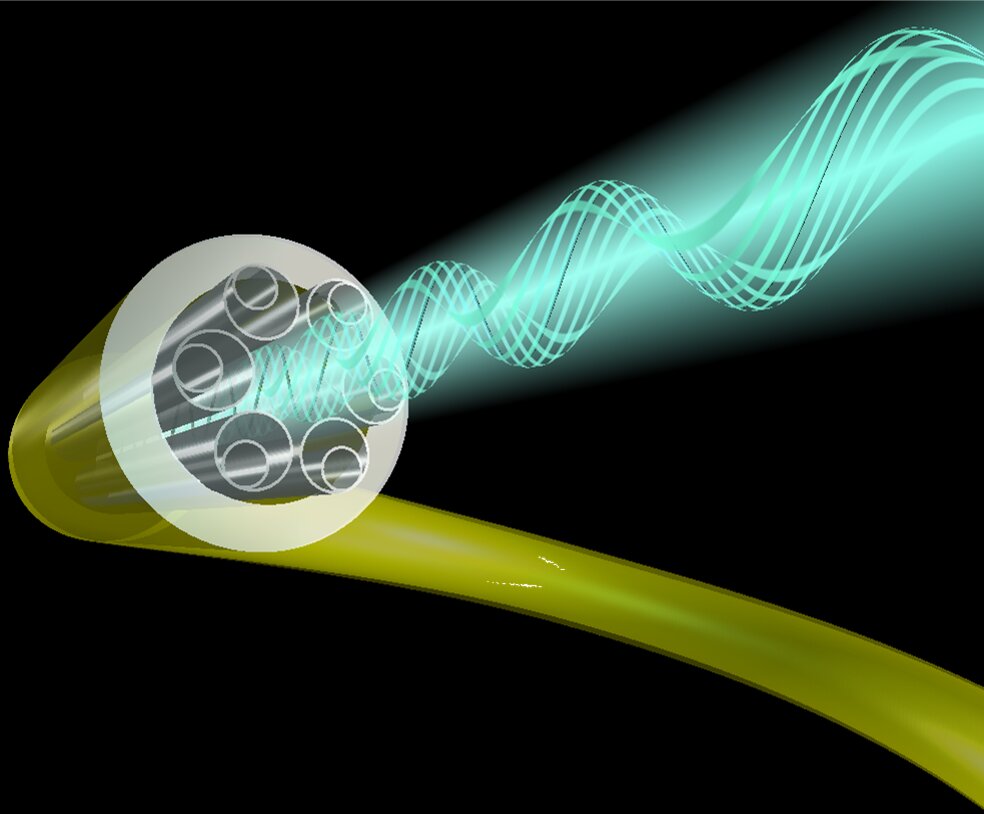
This illustration shows a crystal lattice of strontium ruthenate responding to various sound waves sent via resonant ultrasound spectroscopy as the material cools through its superconducting transition at 1.4 kelvin (minus 457 degrees Fahrenheit). The highlighted deformation suggests the material may be a new type of superconductor.   

Until now, the history of superconducting materials has been a tale of two types: s-wave and d-wave. Now, Cornell researchers — led by Brad Ramshaw, the Dick & Dale Reis Johnson Assistant Professor in the College of Arts and Sciences — have discovered a possible third type: g-wave.

Their paper, “Thermodynamic Evidence for a Two-Component Superconducting Order Parameter in Sr2RuO4,” published Sept. 21 in Nature Physics...

Read More

Comet discovered to have its own Northern Lights

Image acquired by the navigation camera on the European Space Agency’s Rosetta spacecraft orbiting Comet 67P/Churyumov-Gerasimenko between Nov. 19 and Dec. 3, 2014. Image credit: ESA/Rosetta/NAVCAM

An atmospheric light show previously relegated to planets and Jupiter moons is found on comet using data from ESA’s Rosetta spacecraft. Data from NASA instruments aboard the ESA (European Space Agency) Rosetta mission have helped reveal that comet 67P/Churyumov-Gerasimenko has its own far-ultraviolet aurora. It is the first time such electromagnetic emissions in the far-ultraviolet have been documented on a celestial object other than a planet or moon. A paper on the findings was released today in the journal Nature Astronomy.

On Earth, aurora (also known as the northern or southern light...

Read More