
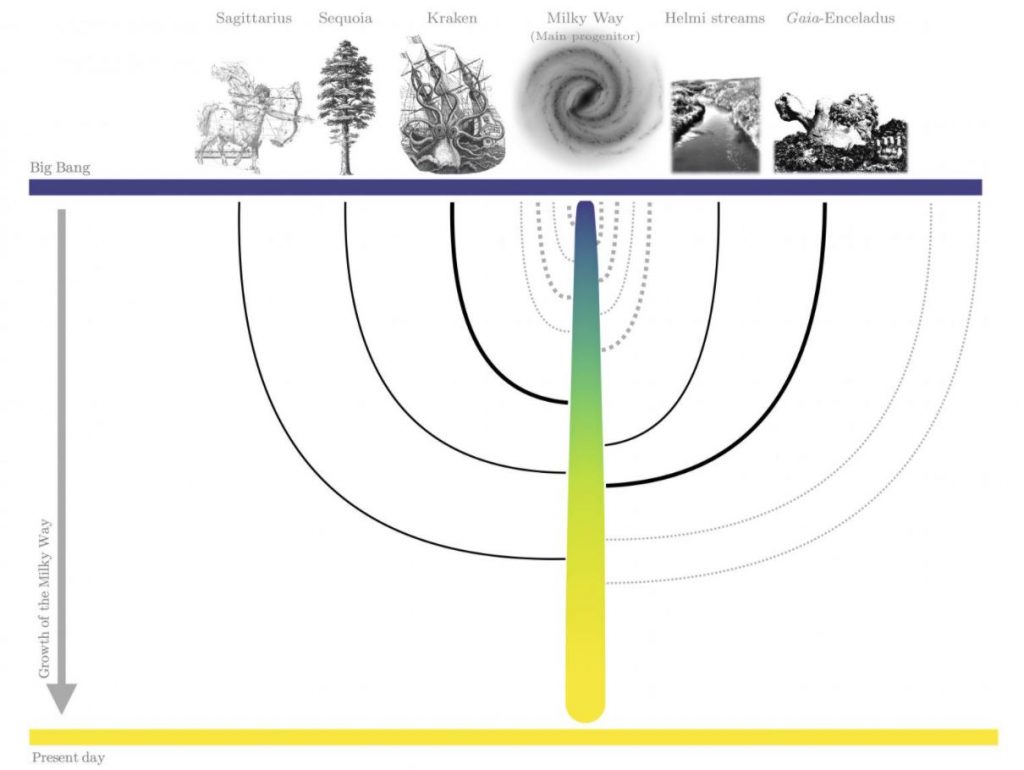
Astrophysicists reconstruct the galaxy merger history of our home galaxy. Galaxies like the Milky Way formed by the merging of smaller progenitor galaxies...
Read More


Until we recognize the essential role of biology, our attempts to truly unify the universe will remain a train to nowhere. ~Robert Lanza Read More

Good health is not something we can buy. However, it can be an extremely valuable savings account. ~Anne Wilson Schaef Read More

The only way forward, if we are going to improve the quality of the environment, is to get everybody involved. ~Richard Rogers Read More

To raise new questions, new possibilities, to regard old problems from a new angle, requires creative imagination and marks real advance in science. ~Albert Einstein Read More

Old Newtonian physics claimed that things have an objective reality separate from our perception of them. Quantum physics, and particularly Heisenberg's Uncertainty Principle, reveal that, as our perception of an object changes, the object itself literally changes. ~Marianne Williamson Read More

Astronomy compels the soul to look upwards and leads us from this world to another. ~ Read More
November 24, 2020,
 Astronomy/Space
Astrophysicists reconstruct the galaxy merger history of our home galaxy. Galaxies like the Milky Way formed by the merging of smaller progenitor galaxies...
Read More
November 23, 2020,
Physics, Technology/Electronics
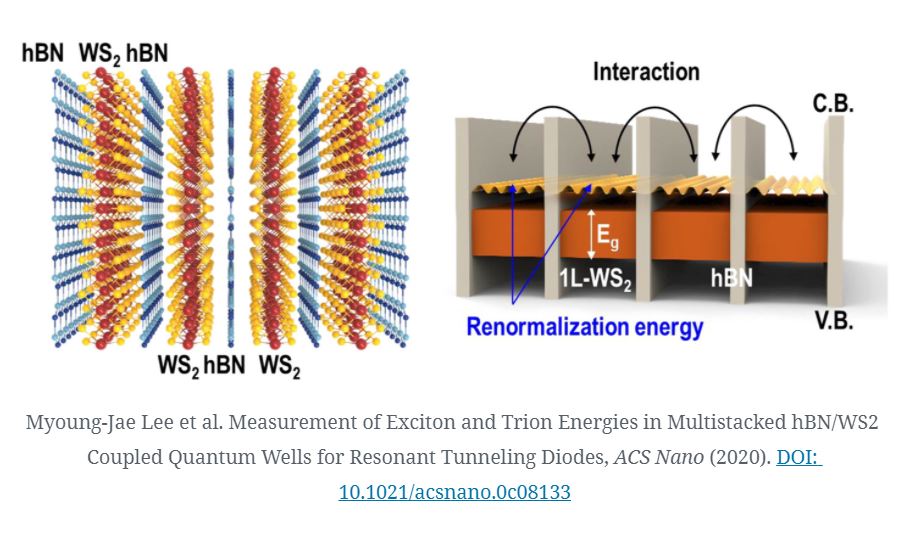
Scientists have designed a 2D material-based multi-stacked structure comprising tungsten disulfide (WS2) layer sandwiched between hexagonal boron nitride (hBN) layers that displays long-range interaction between successive WS2 layers with potential for reducing circuit design complexity and power consumption.
2D materials have been popular among materials scientists owing to their lucrative electronic properties, allowing their applications in photovoltaics, semiconductors, and water purification. In particular, the relative physical and chemical stability of 2D materials allow them to be “stacked” and “integrated” with each other...
Read More
November 23, 2020,
Astronomy/Space
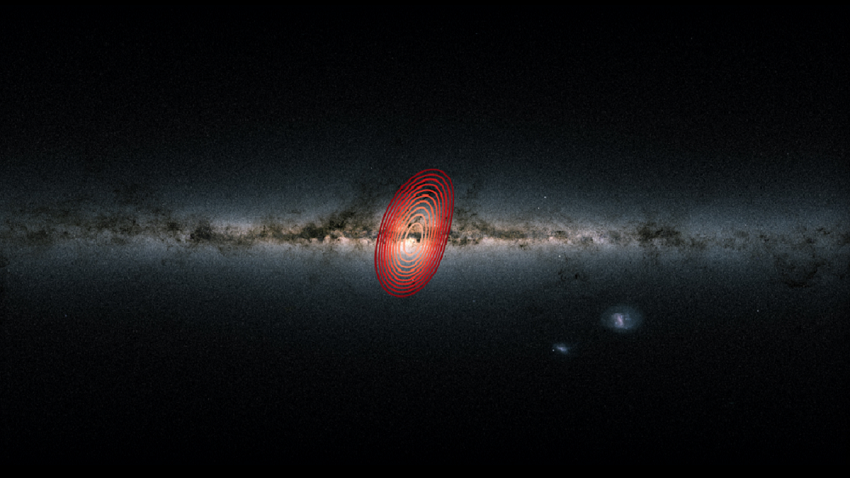
Scientists working with data from the Sloan Digital Sky Surveys’ Apache Point Observatory Galactic Evolution Experiment (APOGEE) have discovered a “fossil galaxy” hidden in the depths of our own Milky Way. This result, published in Monthly Notices of the Royal Astronomical Society, may shake up our understanding of how the Milky Way grew into the galaxy we see today.
The proposed fossil galaxy may have collided with the Milky Way ten billion years ago, when our galaxy was still in its infancy...
Read More
November 22, 2020,
Health/Medical, Biology/Biotechnology
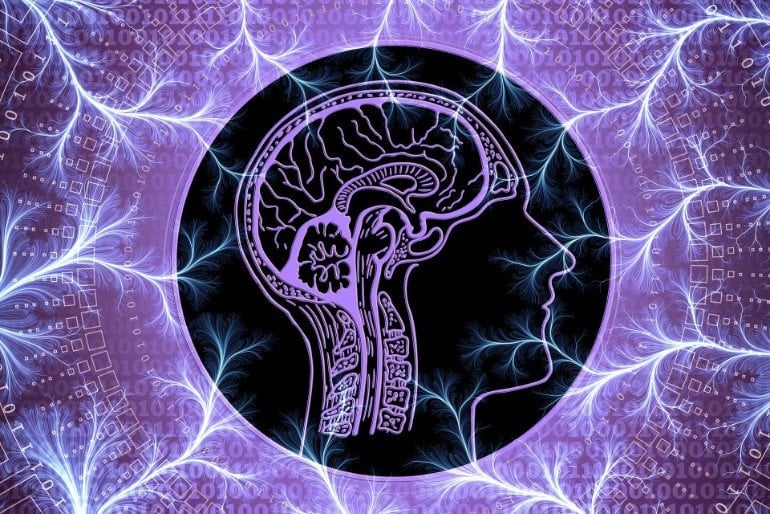
An international research team led by UCSF scientists has shown, for the first time, that gut immune cells travel to the brain during multiple sclerosis (MS) flare-ups in patients. These gut cells seem to be playing a protective role, helping drive MS symptoms back into remission.
Scientists know that in MS, other types of immune cells go haywire and attack myelin, crucial insulation material that helps nerve cells communicate with one another quickly and reliably. The resulting damage leads to periodic MS attacks that can leave patients struggling with vision loss, memory problems, pain and other symptoms...
Read More
Recent Comments