









- Undergraduate student may have solved puzzle regarding isolated galaxies that have stopped producing stars
- Levitating glass sphere becomes entangled with light at room temperature
- Alcohol in space: Exotic methanol discovered in planet-building zones
- Scientists may have found a “unifying theory” of chronic fatigue
Origami-inspired ring lets users ‘feel’ virtual worlds
January 28, 2026,
 Physics, Technology/Electronics
Astrophysicists discover largest sulfur-containing molecular compound in space
January 28, 2026,
Astronomy/Space
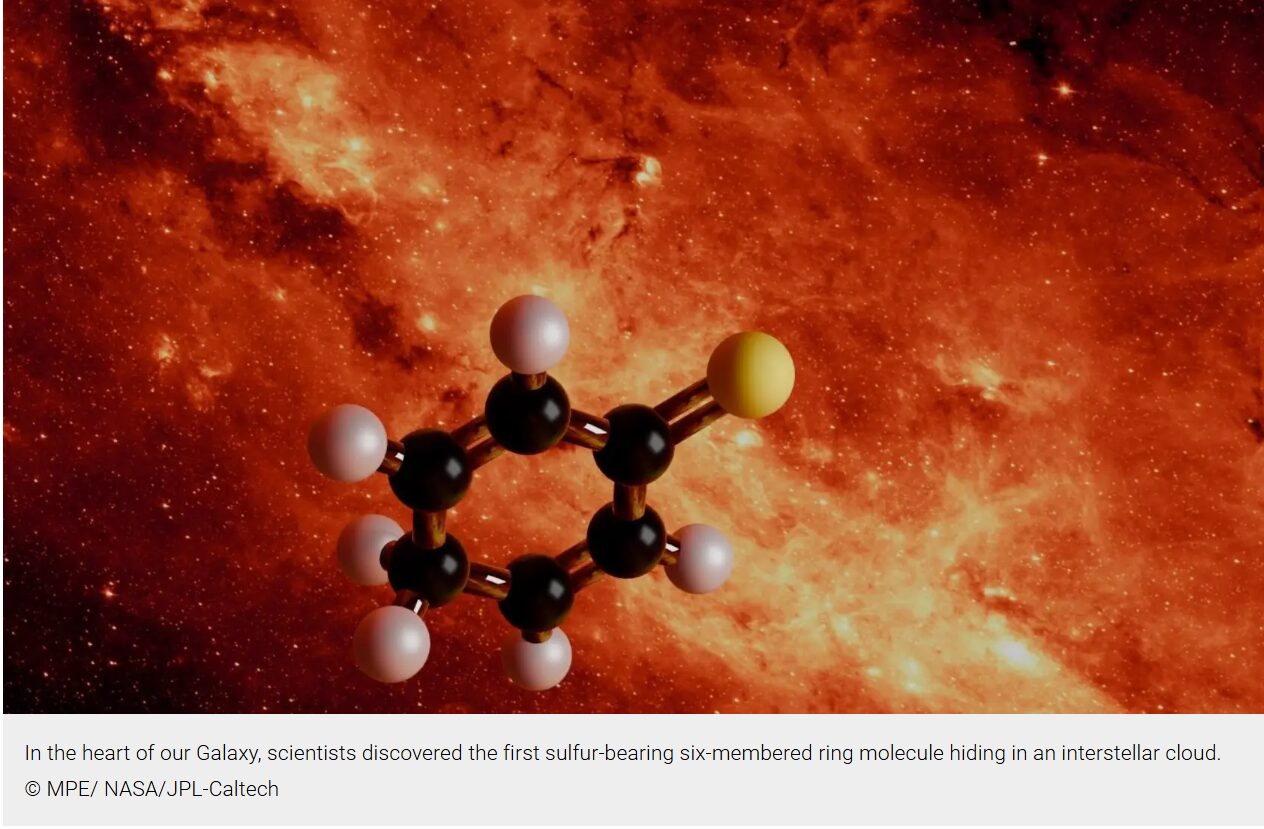
Researchers at the Max Planck Institute for Extraterrestrial Physics (MPE), in collaboration with astrophysicists from the Centro de Astrobiología (CAB), CSIC-INTA, have identified the largest sulfur-bearing molecule ever found in space: 2,5-cyclohexadiene-1-thione (C₆H₆S). They made this breakthrough by combining laboratory experiments with astronomical observations. The molecule resides in the molecular cloud G+0.693–0.027, about 27,000 light-years from Earth near the center of the Milky Way.
With a stable six-membered ring and a total of 13 atoms, it far exceeds the size of all previously detected sulfur-containing compounds in space. The study is published in Nature Astronomy.
Significance of the discovery for astrochemistry
“This is the first unambiguous detection of ...
A “dormant” brain protein turns out to be a powerful switch
January 26, 2026,
Health/Medical, Biology/Biotechnology

Researchers at Johns Hopkins Medicine report that they have uncovered a promising drug target that could allow scientists to increase or decrease the activity of specific brain proteins. The discovery may lead to new treatments for psychiatric conditions such as anxiety and schizophrenia, as well as a neurological disorder that affects movement and balance. The work was supported by funding from the National Institutes of Health.
The proteins at the center of the research are known as delta-type ionotropic glutamate receptors, or GluDs...
Read MorePhysicists challenge a 200-year-old law of thermodynamics at the atomic scale
January 26, 2026,
Physics
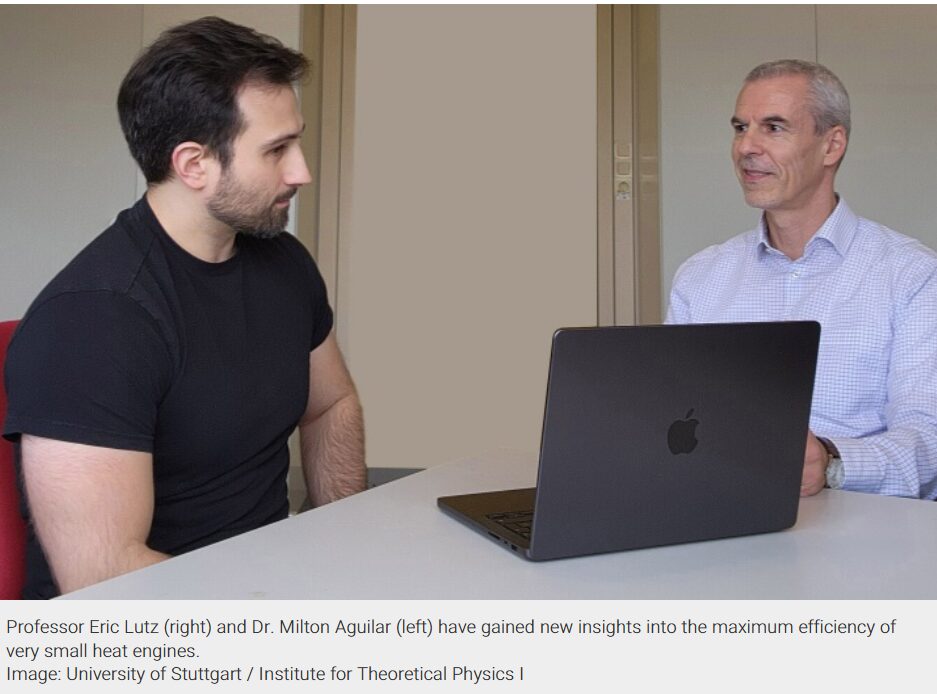
A long-standing law of thermodynamics turns out to have a loophole at the smallest scales. Researchers have shown that quantum engines made of correlated particles can exceed the traditional efficiency limit set by Carnot nearly 200 years ago. By tapping into quantum correlations, these engines can produce extra work beyond what heat alone allows. This could reshape how scientists design future nanoscale machines.
Two physicists at the University of Stuttgart have demonstrated that the Carnot principle, a foundational rule of thermodynamics, does not fully apply at the atomic scale when particles are physically linked (so-called correlated objects). Their findings suggest that this long-standing limit on efficiency breaks down for tiny systems governed by quantum effects...
Read More
Recent Comments