To raise new questions, new possibilities, to regard old problems from a new angle, requires creative imagination and marks real advance in science.
~Albert Einstein
Read More
Old Newtonian physics claimed that things have an objective reality separate from our perception of them. Quantum physics, and particularly Heisenberg's Uncertainty Principle, reveal that, as our perception of an object changes, the object itself literally changes.
~Marianne Williamson
Read More
A near-infrared Hubble image of the luminous, barred spiral galaxy ESO320-G030. Infrared observations and modeling of over a dozen molecular species at its center reveal massive inflows of gas to a nuclear region undergoing a burst of star formation and dominated by three-components, a small warm core, a disk, and an outer envelope. NASA/HST; Alonso-Herrero et al.
A galactic bar is the approximately linear structure of stars and gas that stretches across the inner regions of some galaxies. The bar stretches from one inner spiral arm, across the nuclear region, to an arm on the other side...
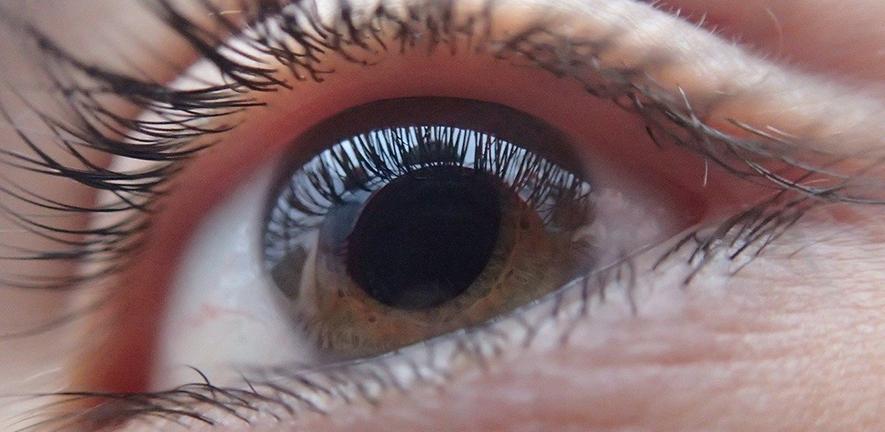
Scientists have used gene therapy to regenerate damaged nerve fibres in the eye, in a discovery that could aid the development of new treatments for glaucoma, one of the leading causes of blindness worldwide.
Axons — nerve fibres — in the adult central nervous system (CNS) do not normally regenerate after injury and disease, meaning that damage is often irreversible. However, over the past decade there have been a number of discoveries that suggest it may be possible to stimulate regeneration.
In a study published today in Nature Communications, scientists tested whether the gene responsible for the production of a protein known as Protrudin could stimulate the regeneration of nerve cells and protect them from cell death after an injury.
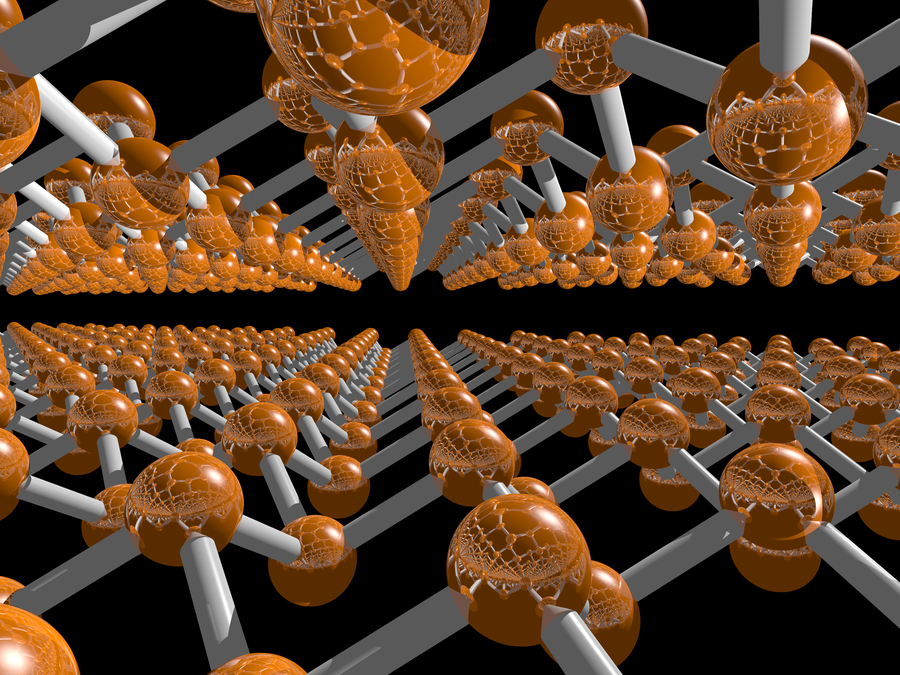
The international team modelled a two-layer buckled honeycomb structure of blue phosphorus by means of highly precise calculations on high-performance computers. The compound is very stable and due to the very small distance between the two layers, it has metallic properties.
Blue phosphorus, an atomically thin synthetic semiconductor, becomes metallic as soon as it is converted into a double layer. The scientists describe the possibility of constructing nanoscale, highly efficient transistors consisting of only one element.
The results of these investigations were published as highlight article in the current issue of the journal Physical Review Letters.
The chemical element phosphorus is considered one of the most essential elements for life...
Scientists from Cornell and Spain’s Centro de Astrobiología have found that Earth’s most arid desert – Chile’s Atacama Desert, shown above – may hold a key to finding microbial life on Mars.
Earth’s most arid desert may hold a key to finding life on Mars. Diverse microbes discovered in the clay-rich, shallow soil layers in Chile’s dry Atacama Desert suggest that similar deposits below the Martian surface may contain microorganisms, which could be easily found by future rover missions or landing craft.
Led by Cornell University and Spain’s Centro de Astrobiología, scientists now offer a planetary primer to identifying microbial markers on shallow rover digs in Martian clay, in their work published Nov. 5 in Nature Scientific Reports.












Recent Comments