AeroNabs promise Powerful, Inhalable Protection against COVID-19

AeroNabs spray in an aerosol
Due to the inherent stability of nanobodies, there was no loss of antiviral potency in the aerosolized form, suggesting that AeroNabs are a potent SARS-CoV-2 antiviral that could be practical to administer via a shelf-stable inhaler or nasal spray. Photo by Noah Berger

As the world awaits vaccines to bring the COVID-19 pandemic under control, UC San Francisco scientists have devised a novel approach to halting the spread of SARS-CoV-2, the virus that causes the disease.

Led by UCSF graduate student Michael Schoof, a team of researchers engineered a completely synthetic, production-ready molecule that straitjackets the crucial SARS-CoV-2 machinery that allows the virus to infect our cells...

Read More

Storing Energy in Red Bricks

smart brick

Chemists in Arts & Sciences have developed a method to make or modify “smart bricks” that can store energy until required for powering devices. (Image: D’Arcy laboratory)

Red bricks – some of the world’s cheapest and most familiar building materials – can be converted into energy storage units that can be charged to hold electricity, like a battery, according to new research from Washington University in St. Louis.

Brick has been used in walls and buildings for thousands of years, but rarely has been found fit for any other use. Now, chemists in Arts & Sciences have developed a method to make or modify “smart bricks” that can store energy until required for powering devices. A proof-of-concept published Aug...

Read More

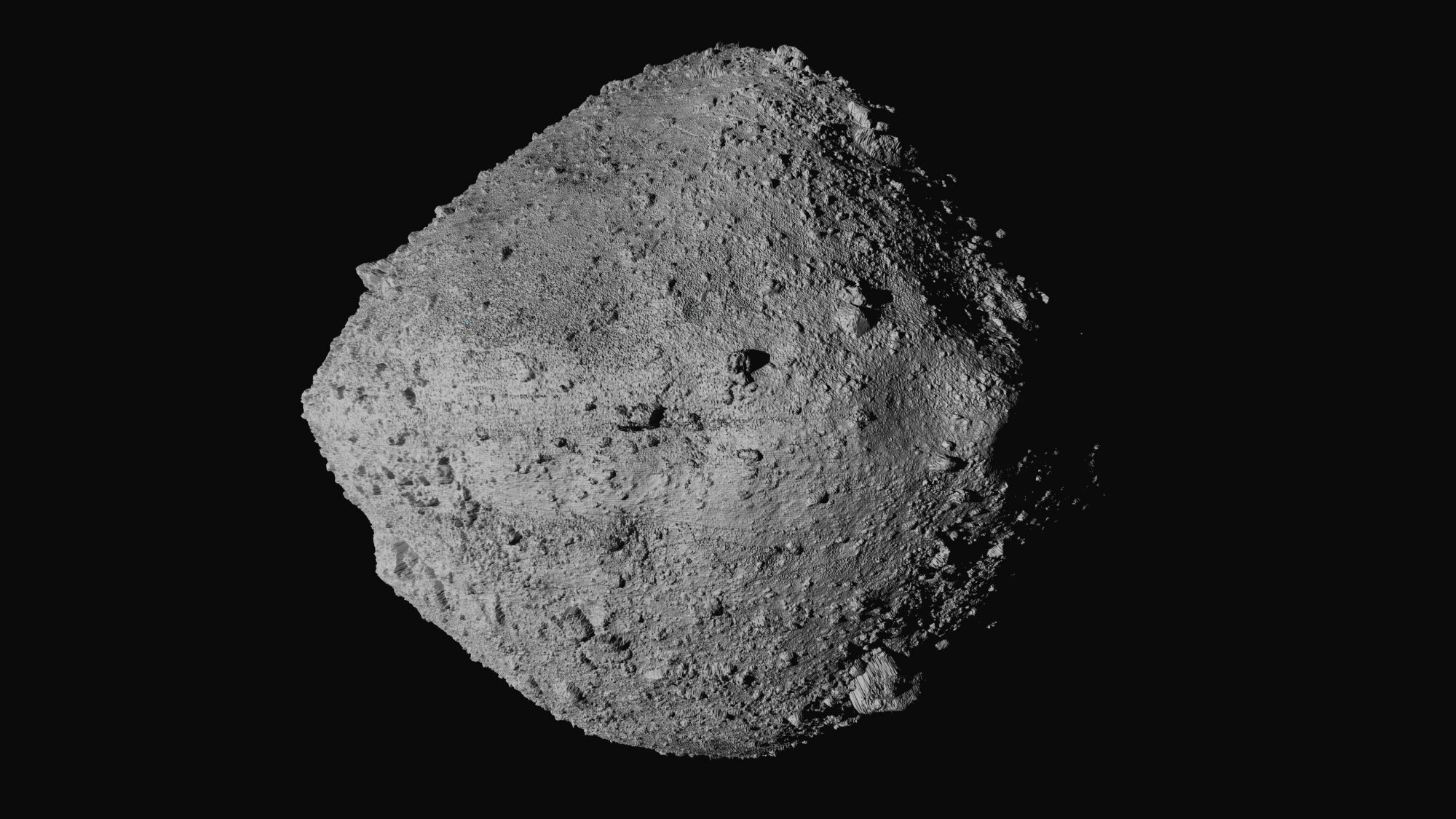
Mystery solved: Bright Areas on Ceres come from Salty Water Below

Images of Occator Crater were pieced together to create this animated view
Images of Occator Crater, seen in false-color, were pieced together to create this animated view. Image credit: NASA/JPL-Caltech/UCLA/MPS/DLR/IDA

Data from NASA’s recent Dawn mission answers two long-unresolved questions: Is there liquid inside Ceres, and how long ago was the dwarf planet geologically active? NASA’s Dawn spacecraft gave scientists extraordinary close-up views of the dwarf planet Ceres, which lies in the main asteroid belt between Mars and Jupiter. By the time the mission ended in October 2018, the orbiter had dipped to less than 22 miles (35 kilometers) above the surface, revealing crisp details of the mysterious bright regions Ceres had become known for.

Scientists had figured out that the bright areas were deposits made mostly of sodium carbonate – a compound of s...

Read More

Experiment shows Which Masks are Best at Blocking Coronavirus

Duke University researchers tested several models of mask. (Duke)

Researchers have devised a test for face masks to show which are the best at blocking droplets of fluid – and rated several current options.

In a proof-of-concept study, scientists at Duke University in Durham, North Carolina, devised a low-cost laser sensor that could spot the masks that were best at stopping droplets spreading.

The team led by Eric Westman found that medical-grade ‘N95’ masks and surgical masks performed extremely well.

Handmade cotton masks also performed well, eliminating a substantial amount of the spray from normal speech.

But improvised face coverings such as bandanas and balaclava-style face coverings were less effective, the researchers found.

Duke researchers created an ine...

Read More