
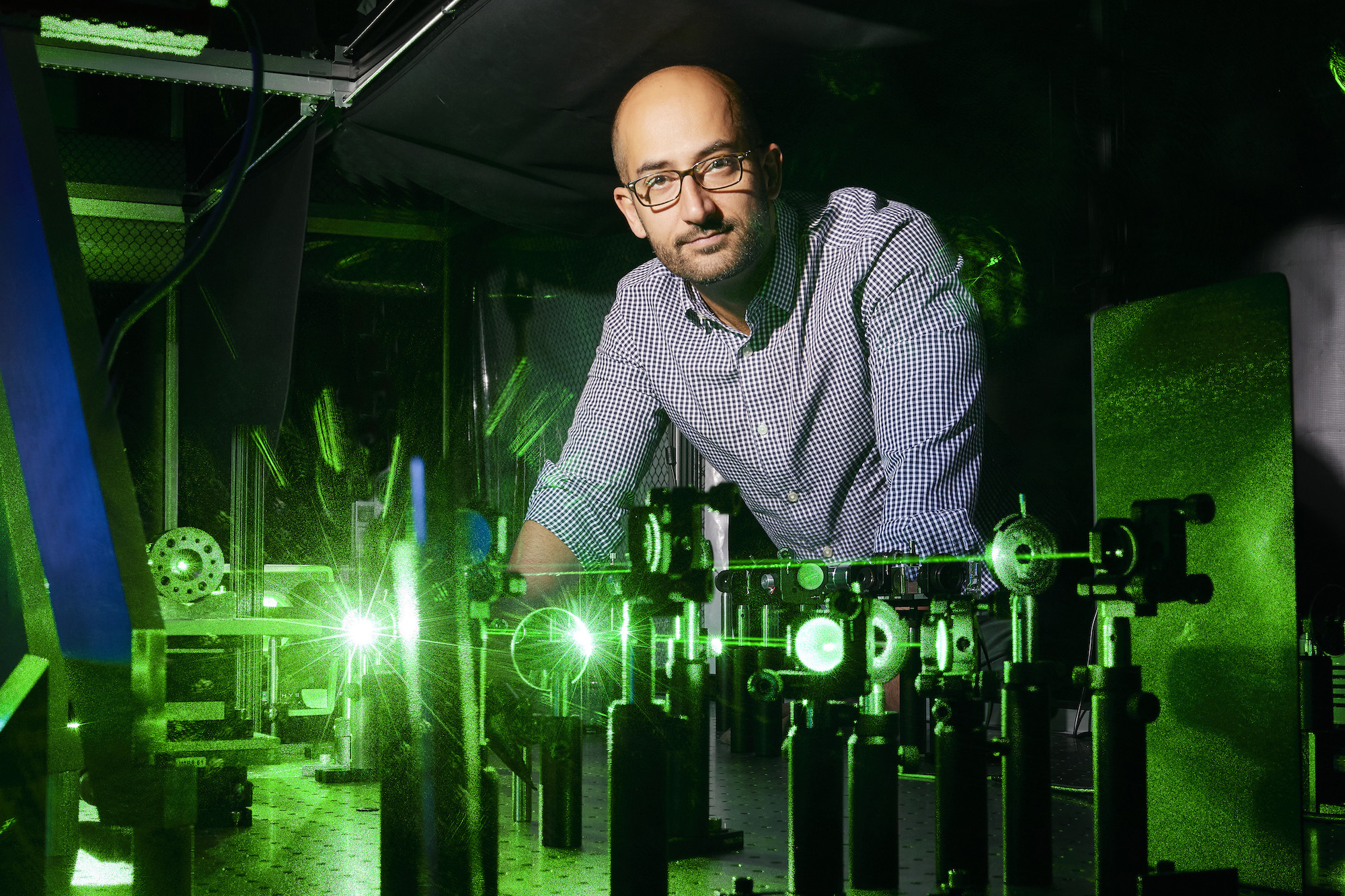
The discovery opens door for reimagining the energy grid, technology, society...
Read More


Until we recognize the essential role of biology, our attempts to truly unify the universe will remain a train to nowhere. ~Robert Lanza Read More

Good health is not something we can buy. However, it can be an extremely valuable savings account. ~Anne Wilson Schaef Read More

The only way forward, if we are going to improve the quality of the environment, is to get everybody involved. ~Richard Rogers Read More

To raise new questions, new possibilities, to regard old problems from a new angle, requires creative imagination and marks real advance in science. ~Albert Einstein Read More

Old Newtonian physics claimed that things have an objective reality separate from our perception of them. Quantum physics, and particularly Heisenberg's Uncertainty Principle, reveal that, as our perception of an object changes, the object itself literally changes. ~Marianne Williamson Read More

Astronomy compels the soul to look upwards and leads us from this world to another. ~ Read More
October 15, 2020,
 Physics
The discovery opens door for reimagining the energy grid, technology, society...
Read More
October 14, 2020,
Astronomy/Space, Chemistry/Nanotechnology

In 2015, the New Horizons space probe discovered spectacular snowcapped mountains on Pluto, which are strikingly similar to mountains on Earth. Such a landscape had never before been observed elsewhere in the Solar System. However, as atmospheric temperatures on our planet decrease at altitude, on Pluto they heat up at altitude as a result of solar radiation.
So where does this ice come from? An international team led by CNRS scientists* conducted this exploration...
Read More
October 14, 2020,
Health/Medical, Biology/Biotechnology
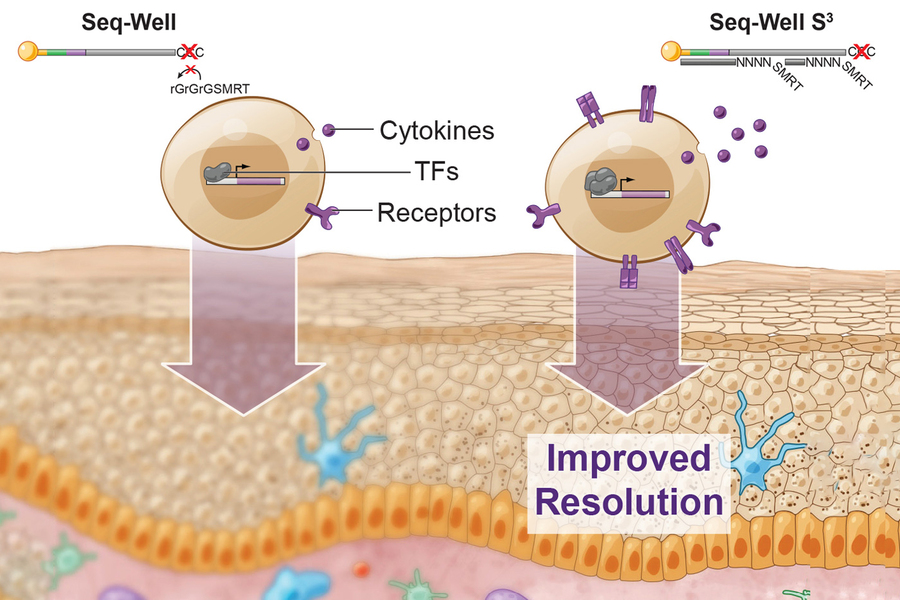
Boosting the efficiency of single-cell RNA-sequencing helps reveal subtle differences between healthy and dysfunctional cells. Sequencing RNA from individual cells can reveal a great deal of information about what those cells are doing in the body...
Read More
October 14, 2020,
Physics, Technology/Electronics

In the era of electric cars, machine learning and ultra-efficient vehicles for space travel, computers and hardware are operating faster and more efficiently. But this increase in power comes with a trade-off: They get superhot.
To counter this, University of Central Florida researchers are developing a way for large machines to “breathe” in and out cooling blasts of water to keep their systems from overheating.
The findings are detailed in a recent study in the journal Physical Review Fluids.
The process is much like how humans and some animals breath in...
Read More
Recent Comments