

Stellar chemical compositions used as proxy for potentially habitable systems. A Southwest Research Institute scientist has identified stellar phosphorus as a probable marker in narrowing the search for life in the cosmos...
Read More


Until we recognize the essential role of biology, our attempts to truly unify the universe will remain a train to nowhere. ~Robert Lanza Read More

Good health is not something we can buy. However, it can be an extremely valuable savings account. ~Anne Wilson Schaef Read More

The only way forward, if we are going to improve the quality of the environment, is to get everybody involved. ~Richard Rogers Read More

To raise new questions, new possibilities, to regard old problems from a new angle, requires creative imagination and marks real advance in science. ~Albert Einstein Read More

Old Newtonian physics claimed that things have an objective reality separate from our perception of them. Quantum physics, and particularly Heisenberg's Uncertainty Principle, reveal that, as our perception of an object changes, the object itself literally changes. ~Marianne Williamson Read More

Astronomy compels the soul to look upwards and leads us from this world to another. ~ Read More
September 18, 2020,
 Astronomy/Space
Stellar chemical compositions used as proxy for potentially habitable systems. A Southwest Research Institute scientist has identified stellar phosphorus as a probable marker in narrowing the search for life in the cosmos...
Read More
September 18, 2020,
Biology/Biotechnology, Health/Medical
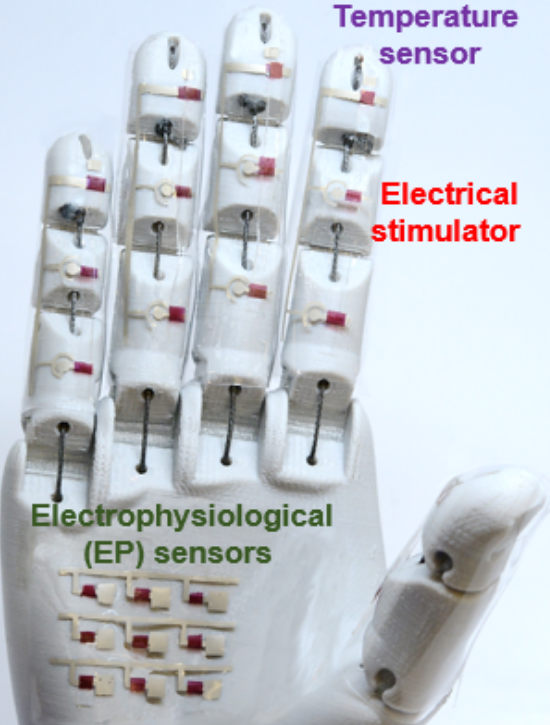
Rubbery electronics offer promise for new applications. A medical robotic hand could allow doctors to more accurately diagnose and treat people from halfway around the world, but currently available technologies aren’t good enough to match the in-person experience.
Researchers report in Science Advances that they have designed and produced a smart electronic skin and a medical robotic hand capable of assessing vital diagnostic data by using a newly invented rubbery semiconductor with high carrier mobility.
Cunjiang Yu, Bill D...
Read More
September 17, 2020,
Health/Medical, Biology/Biotechnology
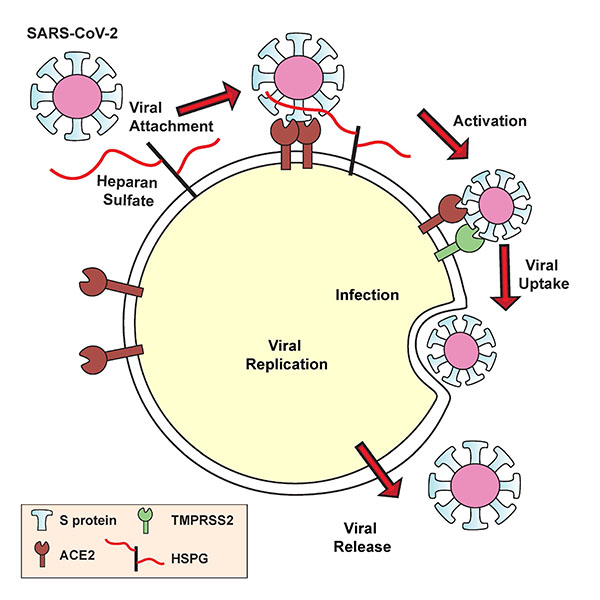
Discovery opens new possibilities for treating COVID-19 by disrupting virus’ ability to bind the carbohydrate, potentially by using a repurposed drug. Researchers discovered that the SARS-CoV-2 virus can’t grab hold of cell receptor ACE2 without a carbohydrate called heparan sulfate, which is also found on lung cell surfaces – disrupting that interaction with a repurposed drug may help treat COVID-19.
A molecule known as ACE2 sits like a doorknob on the outer surfaces of the cells that line the lungs...
Read More
September 17, 2020,
Health/Medical, Biology/Biotechnology
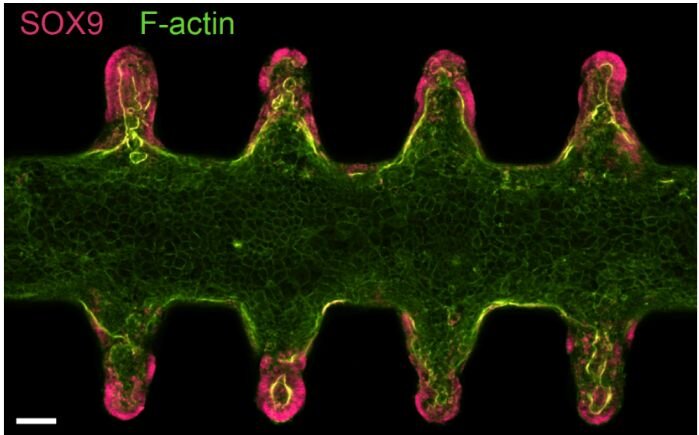
Bioengineers have created miniature intestines in a dish that match up anatomically and functionally to the real thing better than any other lab-grown tissue models. The biological complexity and longevity of the new organoid technology is an important step towards enabling drug testing, personalized medicine, and perhaps, one day, transplantations.
Organoids are fast-becoming one of the most cutting-edge tools of modern life sciences. The idea is to use stem cells to build miniature tissues and organs that accurately resemble and behave like their real counterparts.
One can immediately appreciate the value of organoids for both research and medi...
Read More
Recent Comments