2D Semiconductors found to be close-to-ideal Fractional Quantum Hall Platform

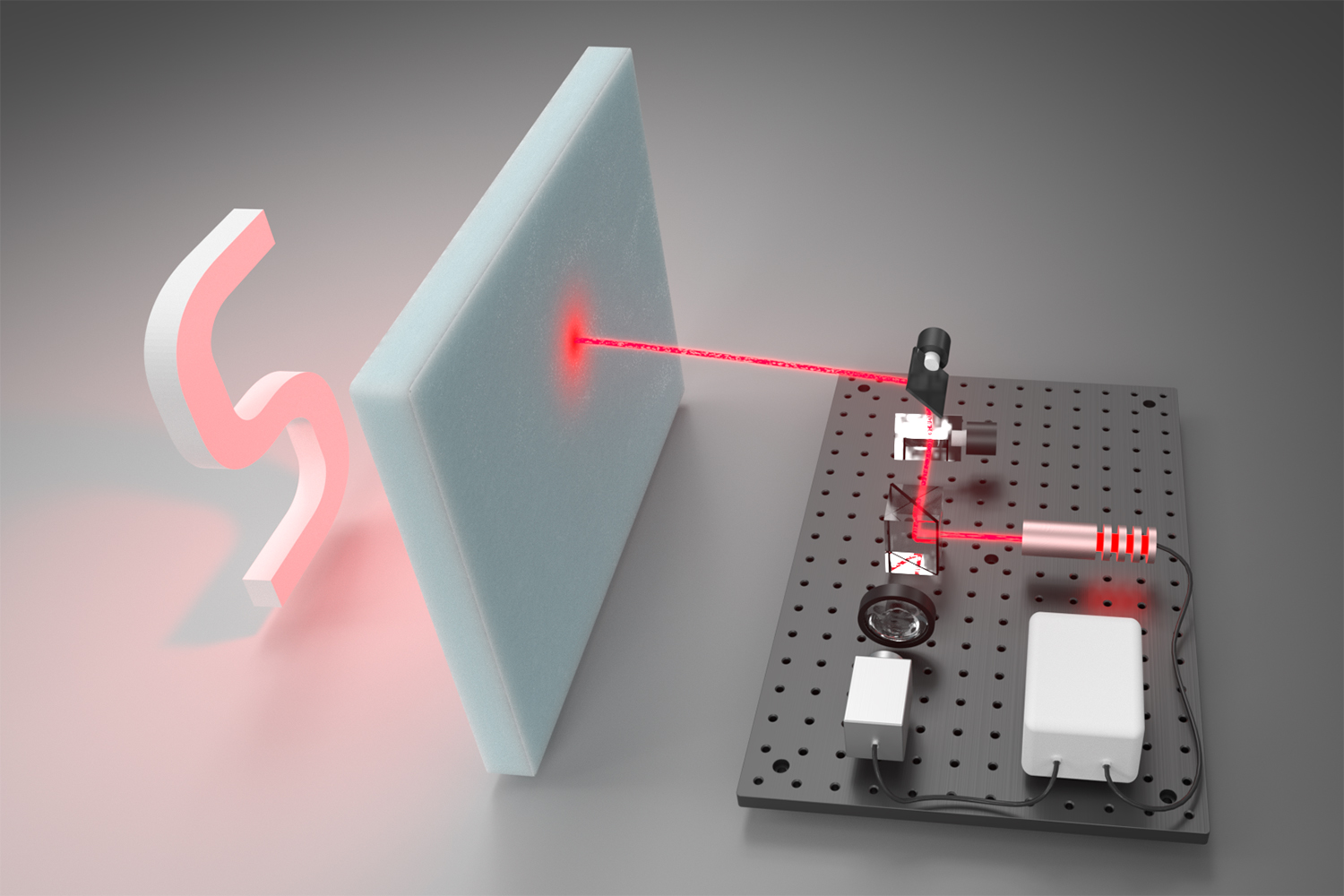
Illustration of the monolayer WSe2 hosting "composite fermions"
A monolayer semiconductor is found to be a close-to-ideal platform for fractional quantum Hall state—a quantum liquid that emerges under large perpendicular magnetic fields. The image illustrates monolayer WSe2 hosting “composite fermions,” a quasi-particle that forms due to the strong interactions between electrons and is responsible for the sequence of fractional quantum Hall states.

Columbia University researchers report that they have observed a quantum fluid known as the fractional quantum Hall states (FQHS), one of the most delicate phases of matter, for the first time in a monolayer 2D semiconductor. Their findings demonstrate the excellent intrinsic quality of 2D semiconductors and establish them as a unique test platform for future applications in quantum computing...

Read More

Dying Stars Breathe Life into Earth: Study

NGC 7789, also known as Caroline’s Rose, is an old open star cluster of the Milky Way, which lies about 8,000 light-years away toward the constellation Cassiopeia. It hosts a few White Dwarfs of unusually high mass, analyzed in this study.
Credit: Guillaume Seigneuret and NASA

As dying stars take their final few breaths of life, they gently sprinkle their ashes into the cosmos through the magnificent planetary nebulae. These ashes, spread via stellar winds, are enriched with many different chemical elements, including carbon.

Findings from a study published today in Nature Astronomy show that the final breaths of these dying stars, called white dwarfs, shed light on carbon’s origin in the Milky Way.

“The findings pose new, stringent constraints on how and when carbon was produce...

Read More

Why some words may be more Memorable than others

NIH study suggests our brains may use search engine strategies to remember words and memories of our past experiences. Courtesy of Zaghloul lab, NIH/NINDS.

Our brains use internet search engine strategies to remember words and memories of past experiences.

In a recent study of epilepsy patients and healthy volunteers, National Institutes of Health researchers found that our brains may withdraw some common words, like “pig,” “tank,” and “door,” much more often than others, including “cat,” “street,” and “stair.” By combining memory tests, brain wave recordings, and surveys of billions of words published in books, news articles and internet encyclopedia pages, the researchers not only showed how our brains may recall words but also memories of our past experiences.

“We found that some wo...

Read More

New breakthrough in ‘Spintronics’ could boost high Speed Data Technology

New breakthrough in 'spintronics' could boost high speed data ...

Scientists have made a pivotal breakthrough in the important, emerging field of spintronics—which could lead to a new high speed energy efficient data technology.

An international team of researchers, including the University of Exeter, has made a revolutionary discovery that has the potential to provide high speed, low power-usage for some of the world’s most well-used electronic devices.

While today’s information technology relies on electronics that consumes a huge amount of energy, the electrons within electric currents can also transfer a form of angular momentum called spin.

‘Spin-based electronics or ‘spintronics’, that exploits spin current, has the potential to be not just significantly faster, but also more energy efficient.

Scientists have recently discovered ...

Read More