Synthetic RBCs Mimic Natural Ones, and have new Abilities

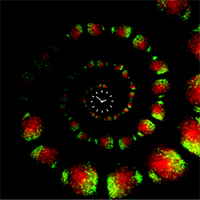
Artificial red blood cells, like the one shown here, could carry oxygen, therapeutic drugs and other cargo in the bloodstream. Scale bar, 2 μm.
Credit: Adapted from ACS Nano 2020, DOI: 10.1021/acsnano.9b08714

Scientists have tried to develop synthetic red blood cells that mimic the favorable properties of natural ones, such as flexibility, oxygen transport and long circulation times. But so far, most artificial red blood cells have had one or a few, but not all, key features of the natural versions. Now, researchers reporting in ACS Nano have made synthetic red blood cells that have all of the cells’ natural abilities, plus a few new ones.

Red blood cells (RBCs) take up oxygen from the lungs and deliver it to the body’s tissues...

Read More

Solar Hydrogen production: Splitting Water with UV is now at almost 100% Quantum Efficiency

Photocatalytic water splitting with a quantum efficiency of almost unity
Authors:Tsuyoshi Takata, Junzhe Jiang, Yoshihisa Sakata, Mamiko Nakabayashi, Naoya Shibata, Vikas Nandal, Kazuhiko Seki, Takashi Hisatomi, Kazunari Domen
Journal:Nature, 581, 411-414 (2020)
DOI10.1038/s41586-020-2278-9

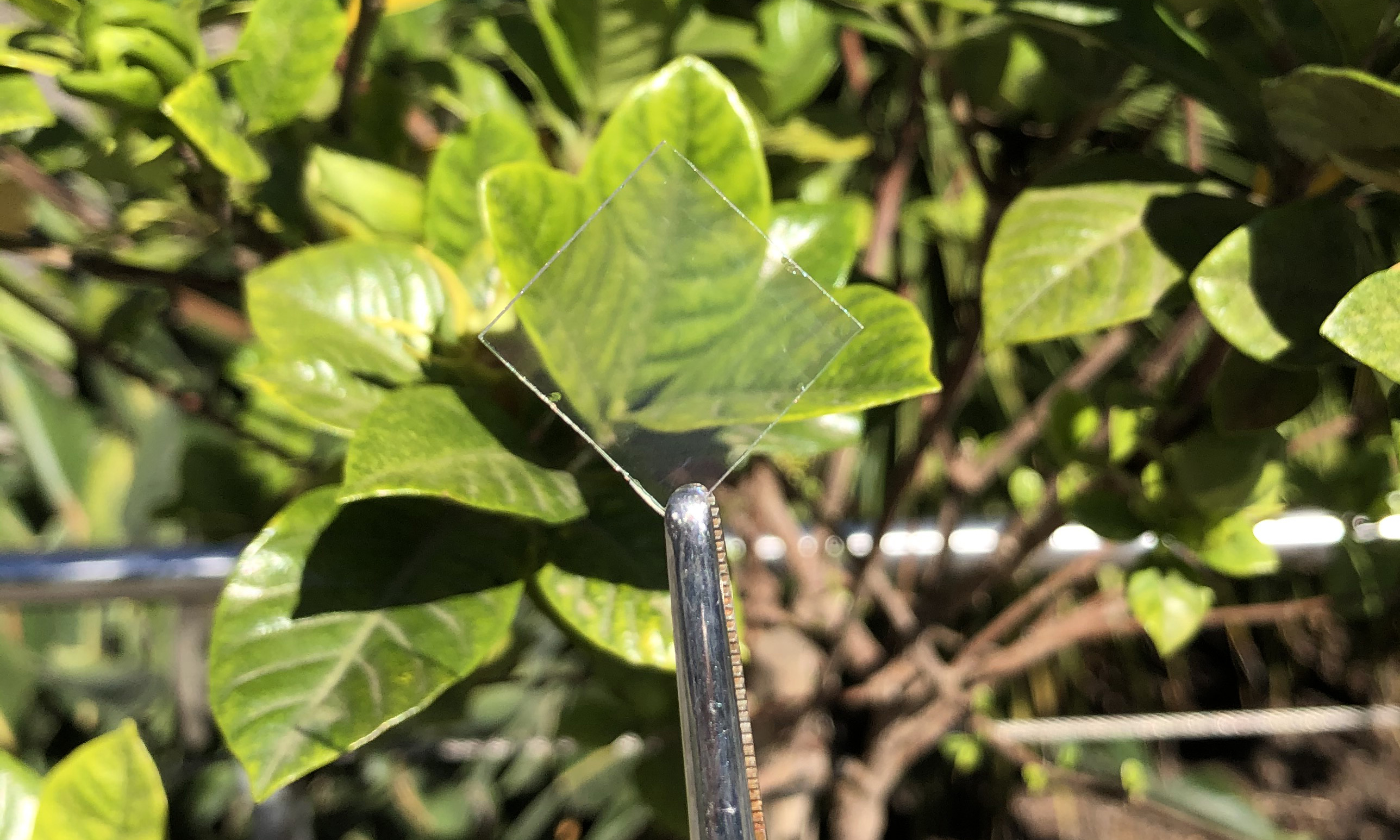
Scientists have successfully split water into hydrogen and oxygen using light and meticulously designed catalysts, and they did so at the maximum efficiency meaning there was almost no loss and undesired side reactions. This latest breakthrough in solar hydrogen production makes the likelihood of scalable, economically viable hydrogen production more than likely, paving the way for humanity to make the switch to clean energy.

Pour yourself a glass of water and take a look at it...

Read More

First Optical Measurements of Milky Way’s Fermi Bubbles probe their Origin

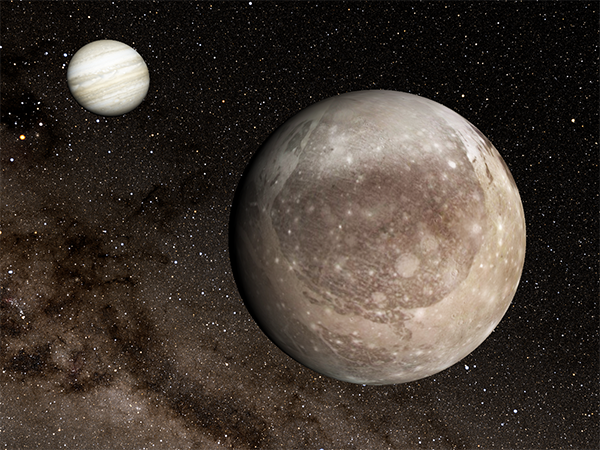
Astronomers used the WHAM telescope to measure huge outflows of gas extending from the Milky Way’s center known as the Fermi Bubbles. They were able to measure the velocity, density and pressure of the gas for the first time, confirming and extending previous measurements made by using a distant quasar as a light source to look through and measure the gas. IMAGE BY DHANESH KRISHNARAO AND NASA

Using the Wisconsin H-Alpha Mapper telescope, astronomers have for the first time measured the Fermi Bubbles in the visible light spectrum. The Fermi Bubbles are two enormous outflows of high-energy gas that emanate from the Milky Way and the finding refines our understanding of the properties of these mysterious blobs.

The research team from the University of Wisconsin-Madison, UW-Whitewater...

Read More
An image captured through transmission electron microscopy shows the nanoparticles used to further stimulate the immune system to fight cancer.
Image: Nicki Watson, W. M. Keck Microscopy Facility at Whitehead Institute, colorized by MIT News

Engineers design nanoparticles that stimulate the immune system, helping it to attack tumors. MIT engineers have now come up with a way to boost the effectiveness of one type of cancer immunotherapy. They showed that if they treated mice with existing drugs called checkpoint inhibitors, along with new nanoparticles that further stimulate the immune system, the therapy became more powerful than checkpoint inhibitors given alone. This approach could allow cancer immunotherapy to benefit a greater percentage of patients, the researchers say.

“These ...

Read More