

A good vitamin D status is beneficial both in cancer prevention and in the prognosis of sever...
Read More


Until we recognize the essential role of biology, our attempts to truly unify the universe will remain a train to nowhere. ~Robert Lanza Read More

Good health is not something we can buy. However, it can be an extremely valuable savings account. ~Anne Wilson Schaef Read More

The only way forward, if we are going to improve the quality of the environment, is to get everybody involved. ~Richard Rogers Read More

To raise new questions, new possibilities, to regard old problems from a new angle, requires creative imagination and marks real advance in science. ~Albert Einstein Read More

Old Newtonian physics claimed that things have an objective reality separate from our perception of them. Quantum physics, and particularly Heisenberg's Uncertainty Principle, reveal that, as our perception of an object changes, the object itself literally changes. ~Marianne Williamson Read More

Astronomy compels the soul to look upwards and leads us from this world to another. ~ Read More
June 12, 2020,
 Health/Medical, Biology/Biotechnology
A good vitamin D status is beneficial both in cancer prevention and in the prognosis of sever...
Read More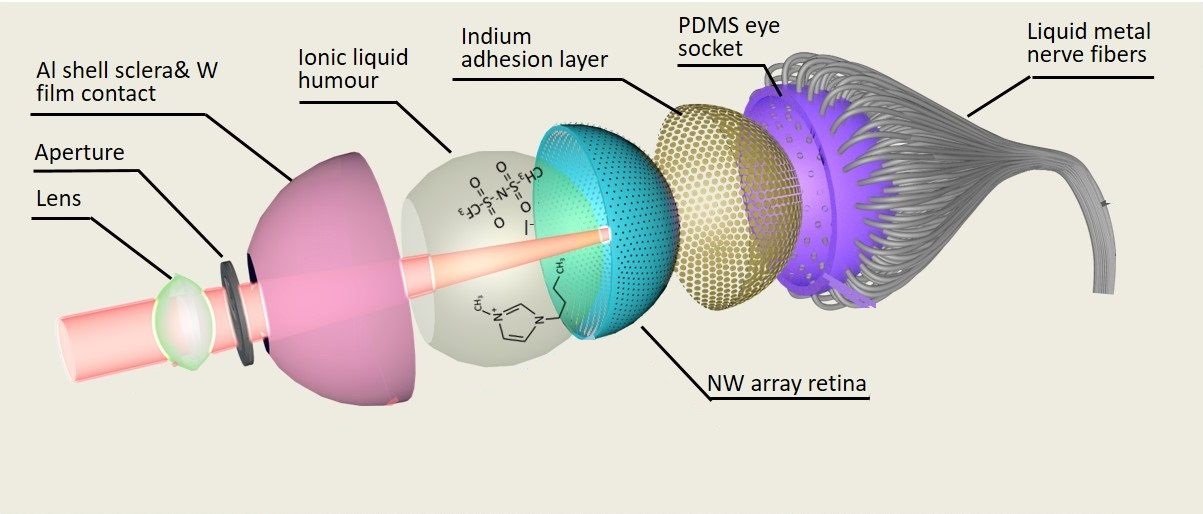
An international team led by scientists at the Hong Kong University of Science and Technology (HKUST) has recently developed the world’s first 3D artificial eye with capabilities better than existing bionic eyes and in some cases, even exceed those of the human eyes, bringing vision to humanoid robots and new hope to patients with visual impairment.
Scientists have spent decades trying to replicate the structure and clarity of a biological eye, but vision provided by existing prosthetic eyes – largely in the form of spectacles attached with external cables, are still in poor resolution with 2D flat image sensors...
Read More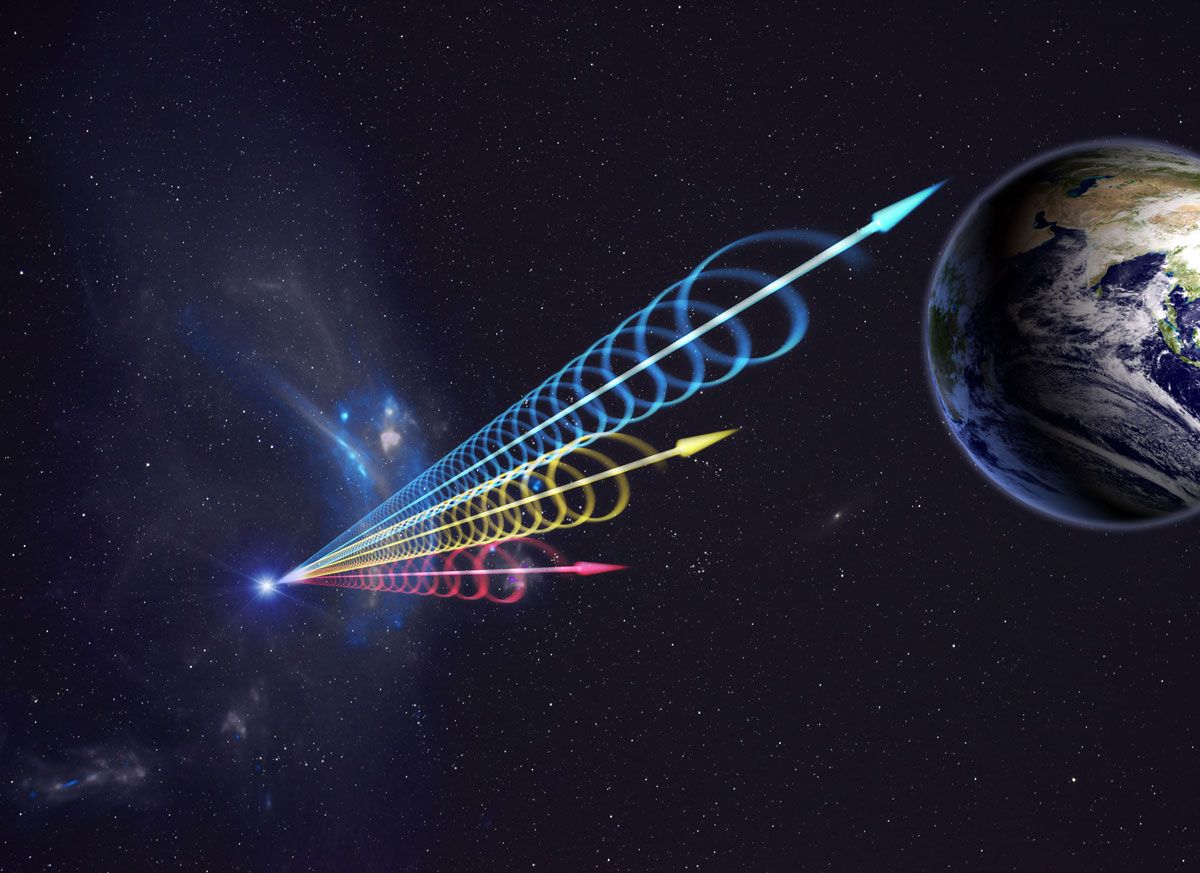
The find could be a big clue about the nature of fast radio bursts. Astronomers have discovered an activity cycle in another fast radio burst, potentially unearthing a significant clue about these mysterious deep-space phenomena.
Fast radio bursts, or FRBs, are extragalactic flashes of light that pack a serious wallop, unleashing in a few milliseconds as much energy as Earth’s sun does in a century. Scientists first spotted an FRB in 2007, and the cause of these eruptions remains elusive nearly a decade and a half later; potential explanations range from merging superdense neutron stars to advanced alien civilizations.
Read More
June 10, 2020,
Health/Medical, Biology/Biotechnology

Persistently engaging in negative thinking patterns may raise the risk of Alzheimer’s disease, finds a new UCL-led study.
In the study of people aged over 55, published in Alzheimer’s & Dementia, researchers found ‘repetitive negative thinking’ (RNT) is linked to subsequent cognitive decline as well as the deposition of harmful brain proteins linked to Alzheimer’s.
The researchers say RNT should now be further investigated as a potential risk factor for dementia, and psychological tools, such as mindfulness or meditation, should be studied to see if these could reduce dementia risk.
Lead author Dr Natalie Marchant (UCL Psychiatry) said: “Depression and anxiety in mid-life and old age are already known to be risk factors for dementia...
Read More
Recent Comments