






First Optical Measurements of Milky Way’s Fermi Bubbles probe their Origin

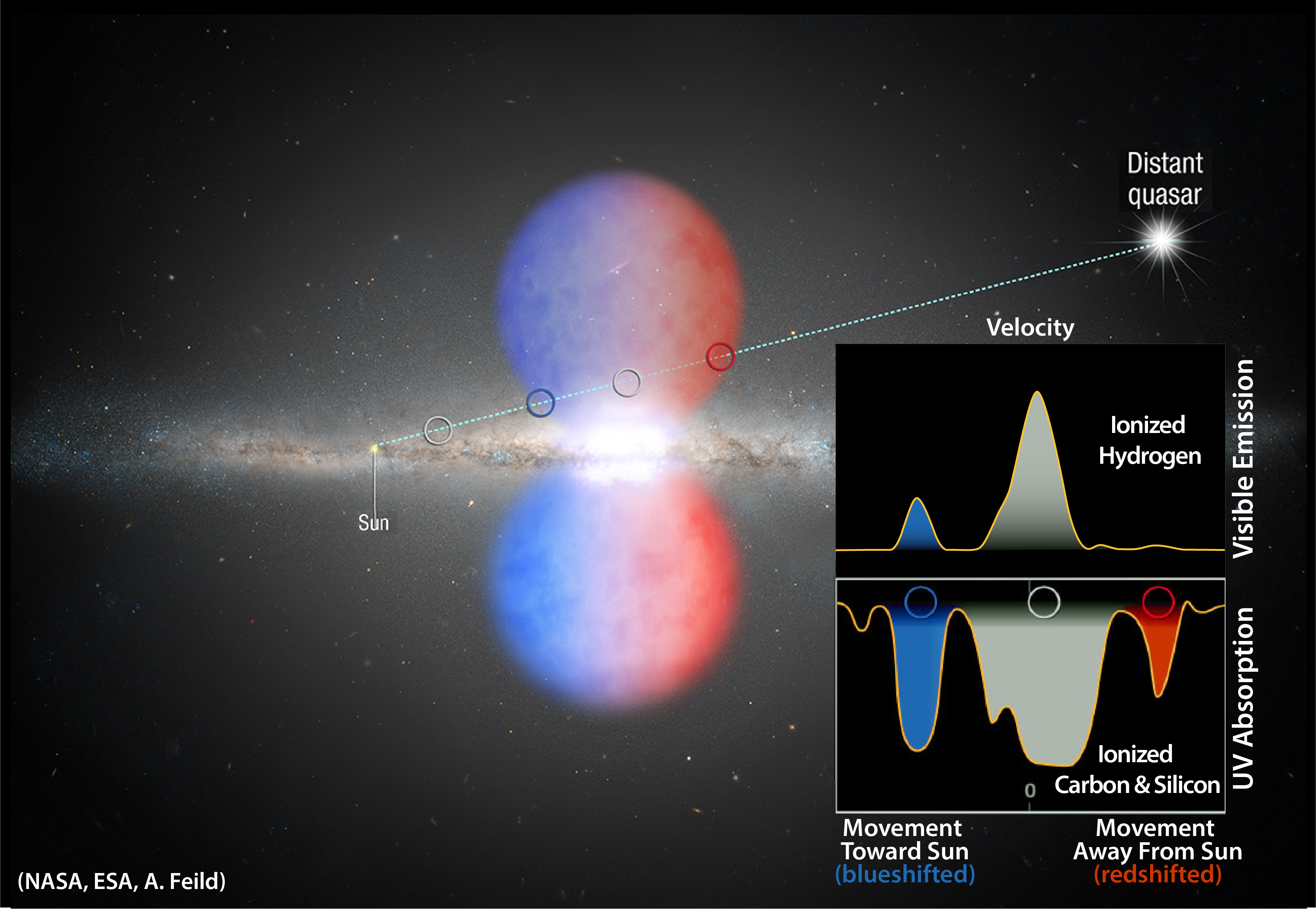
Astronomers used the WHAM telescope to measure huge outflows of gas extending from the Milky Way’s center known as the Fermi Bubbles. They were able to measure the velocity, density and pressure of the gas for the first time, confirming and extending previous measurements made by using a distant quasar as a light source to look through and measure the gas. IMAGE BY DHANESH KRISHNARAO AND NASA

Using the Wisconsin H-Alpha Mapper telescope, astronomers have for the first time measured the Fermi Bubbles in the visible light spectrum. The Fermi Bubbles are two enormous outflows of high-energy gas that emanate from the Milky Way and the finding refines our understanding of the properties of these mysterious blobs.

The research team from the University of Wisconsin-Madison, UW-Whitewater...

Read More
An image captured through transmission electron microscopy shows the nanoparticles used to further stimulate the immune system to fight cancer.
Image: Nicki Watson, W. M. Keck Microscopy Facility at Whitehead Institute, colorized by MIT News

Engineers design nanoparticles that stimulate the immune system, helping it to attack tumors. MIT engineers have now come up with a way to boost the effectiveness of one type of cancer immunotherapy. They showed that if they treated mice with existing drugs called checkpoint inhibitors, along with new nanoparticles that further stimulate the immune system, the therapy became more powerful than checkpoint inhibitors given alone. This approach could allow cancer immunotherapy to benefit a greater percentage of patients, the researchers say.

“These ...

Read More

From Dark to Light in a Flash: Smart Film lets Windows Switch Autonomously

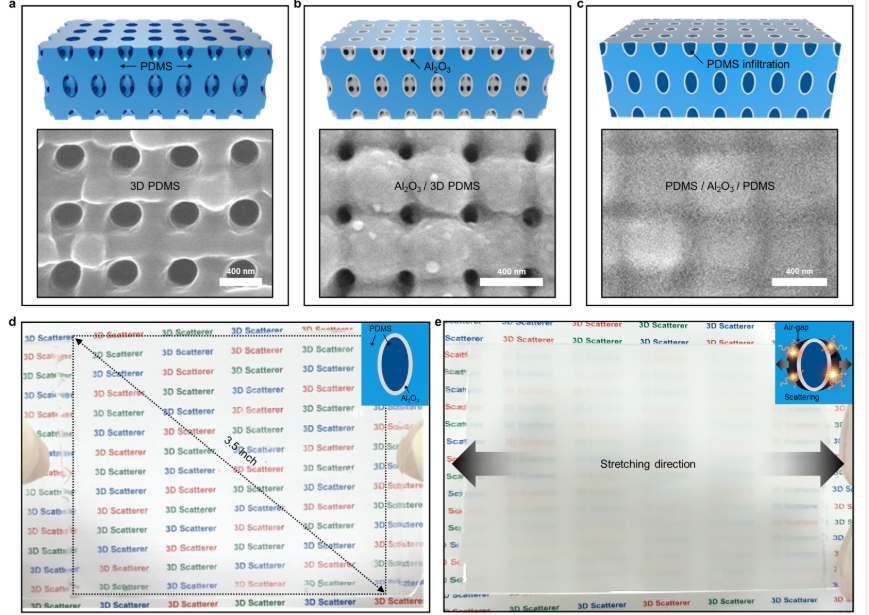
Design concept of and fabrication procedures for the 3D scatterer

Researchers have developed a new easy-to-use smart optical film technology that allows smart window devices to autonomously switch between transparent and opaque states in response to the surrounding light conditions.

The proposed 3D hybrid nanocomposite film with a highly periodic network structure has empirically demonstrated its high speed and performance, enabling the smart window to quantify and self-regulate its high-contrast optical transmittance. As a proof of concept, a mobile-app-enabled smart window device for Internet of Things (IoT) applications has been realized using the proposed smart optical film with successful expansion to the 3-by-3-inch scale...

Read More

Citizen scientists spot closest Young Brown Dwarf Disk yet

Researchers at MIT, the University of Oklahoma, and elsewhere, with the help of citizen scientists, have identified a brown dwarf with a disk that is the youngest of its kind within about 100 parsecs of Earth. The brown dwarf, named W1200-7845 and depicted in this image, appears to have the kind of disk that could form planets.
Image Credit: NASA/William Pendrill

Brown dwarfs are the middle child of astronomy, too big to be a planet yet not big enough to be a star. Like their stellar siblings, these objects form from the gravitational collapse of gas and dust. But rather than condensing into a star’s fiery hot nuclear core, brown dwarfs find a more zen-like equilibrium, somehow reaching a stable, milder state compared to fusion-powered stars.

Brown dwarfs are considered to be the mis...

Read More