



T-ray Camera Speed Boosted a Hundred Times over

Optical set up for single pixel transmission imaging of object R.

Scientists are a step closer to developing a fast and cost effective camera that utilises terahertz radiation, potentially opening the opportunity for them to be used in non-invasive security and medical screening.

A research team led by Professor Emma Pickwell-Macpherson from the University of Warwick Department of Physics and involving Rayko Ivanov Stantchev and scientists from the Department of Electronic Engineering at The Chinese University of Hong Kong has reached a crucial milestone towards developing single-pixel terahertz imaging technology for use in biomedical and industrial applications.

Their single-pixel terahertz camera reached 100 times faster acquisition than the previous state-of-the-art without a...

Read More
Scientists propose plan to determine if Planet Nine is a Primordial Black Hole

Artist’s conception of accretion flares resulting from the encounter of an Oort-cloud comet and a hypothesized black hole in the outer solar system..
Credit: M. Weiss

Scientists at Harvard University and the Black Hole Initiative (BHI) have developed a new method to find black holes in the outer solar system, and along with it, determine once-and-for-all the true nature of the hypothesized Planet Nine. The paper, accepted to The Astrophysical Journal Letters, highlights the ability of the future Legacy Survey of Space and Time (LSST) mission to observe accretion flares, the presence of which could prove or rule out Planet Nine as a black hole.

Dr. Avi Loeb, Frank B. Baird Jr...

Read More

Study finds Fatty Acid that Kills Cancer Cells

Credit: Unsplash/CC0 Public Domain

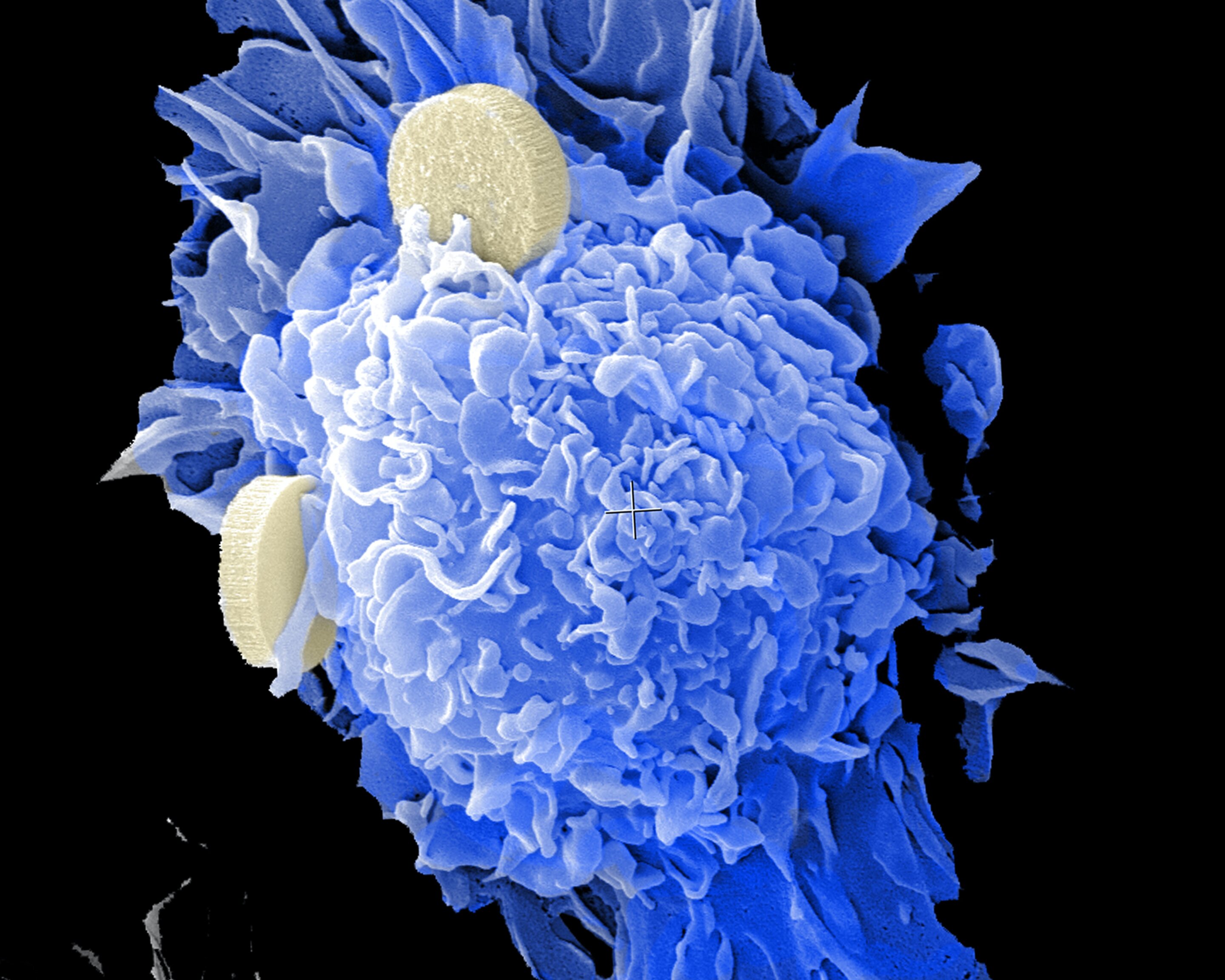
Researchers have demonstrated that a fatty acid called dihomogamma-linolenic acid, or DGLA, can kill human cancer cells. DGLA can induce ferroptosis in an animal model and in actual human cancer cells. Ferroptosis is an iron-dependent type of cell death that was discovered in recent years and has become a focal point for disease research as it is closely related to many disease processes.

Jennifer Watts, a Washington State University associate professor and corresponding author on the paper, said this discovery has many implications, including a step toward a potential treatment for cancer.

“If you could deliver DGLA precisely to a cancer cell, it could promote ferroptosis and lead to tumor cell death,” Watts said...

Read More

Two bizarre Brown Dwarfs found with Citizen Scientists’ help

This is an illustration of a brown dwarf. Despite their name, brown dwarfs would appear magenta or orange-red to the human eye if seen close up. Credits: William Pendrill

With the help of citizen scientists, astronomers have discovered two highly unusual brown dwarfs, balls of gas that are not massive enough to power themselves the way stars do.

Participants in the NASA-funded Backyard Worlds: Planet 9 project helped lead scientists to these bizarre objects, using data from NASA’s Near-Earth Object Wide-Field Infrared Survey Explorer (NEOWISE) satellite along with all-sky observations collected between 2009 and 2011 under its previous moniker, WISE...

Read More