Sulfur ‘Spices’ Alien Atmospheres

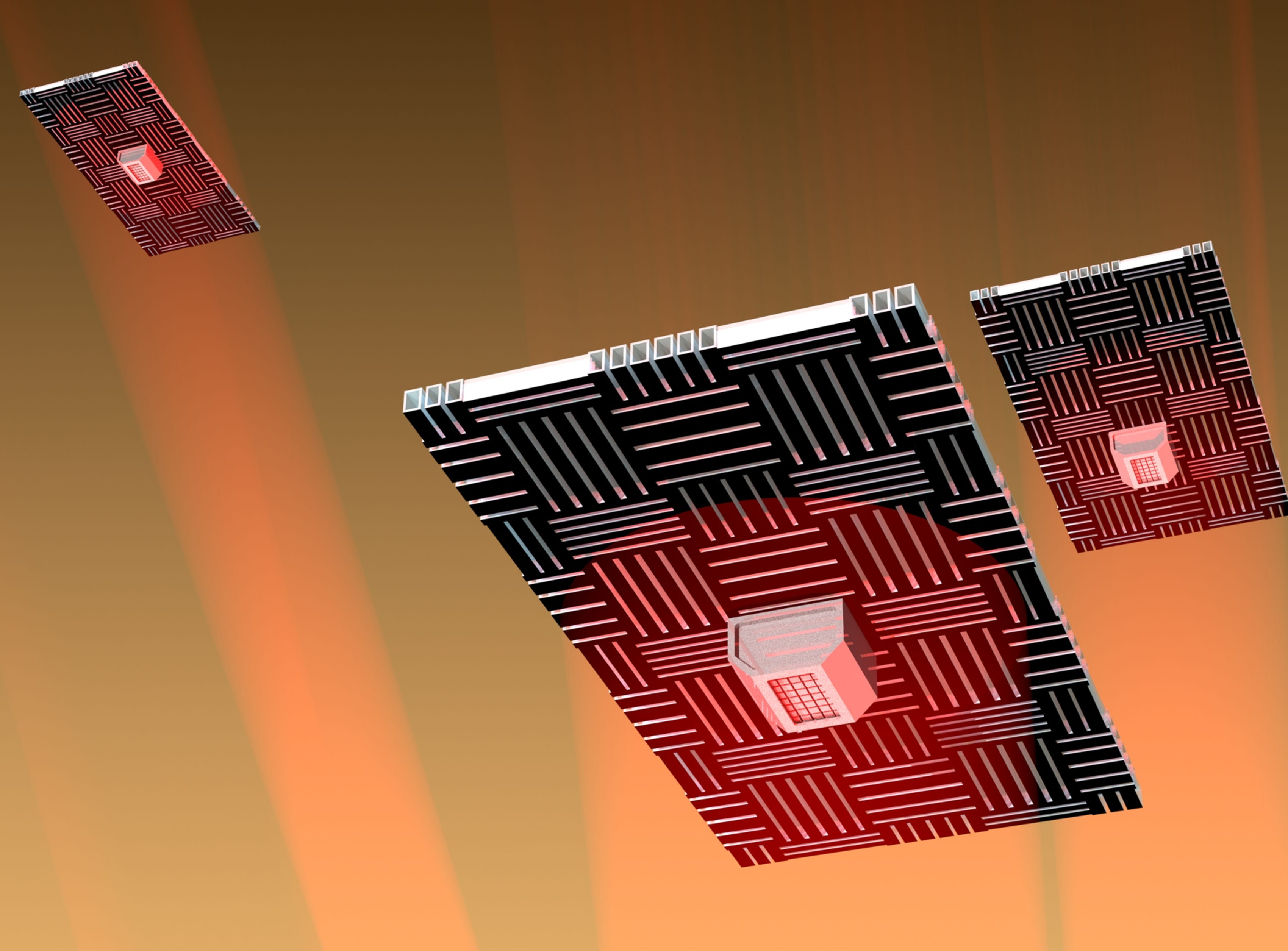
Credit: Will Kirk/Johns Hopkins University

They say variety is the spice of life, and now new discoveries from Johns Hopkins researchers suggest that a certain elemental ‘variety’ – sulfur – is indeed a ‘spice’ that can perhaps point to signs of life.

These findings from the researchers’ lab simulations reveal that sulfur can significantly impact observations of far-flung planets beyond the solar system; the results have implications for the use of sulfur as a sign for extraterrestrial life, as well as affect how researchers should interpret data about planetary atmospheres.

A report of the findings was published today in Nature Astronomy...

Read More

Brown Fat can Burn Energy in an unexpected way

FGF6 and FGF9 regulate UCP1 expression independent of brown adipogenesisNature Communications, 2020; 11 (1) DOI: 10.1038/s41467-020-15055-9

Researchers have discovered an unexpected biological pathway by which brown fat cells can translate energy into heat. When we are exposed to sufficient cold or exercise, small clusters of brown fat cells in our bodies begin to burn up energy. Since 2009, when researchers at Joslin Diabetes Center and other institutions discovered that this helpful form of fat can be active in adults, scientists have sought to turn up the heat from these cells to treat obesity, diabetes and other metabolic conditions.

Researchers in the lab of Joslin’s Yu-Hua Tseng, PhD, a Senior Investigator in the Section on Integrative Physiology and Metabolism, now have dis...

Read More

Vermont team invents Emergency Ventilator

A commercial ventilator can have 1500 parts supplied from more than a dozen countries. UVM engineer Carl Silver built the first prototype of an emergency ventilator in one day with parts he found in his house and UVM’s IMF Lab. He’s part of a Vermont team seeking emergency review from the FDA to make the ventilator available for hospitals overwhelmed with COVID-19 patients. They’ll be sharing the innovative design—and looking for support and manufacturing partners. Credit: Ian Thomas Jansen-Lonnquist

Over the last three weeks, a team of scientists, engineers and doctors at the University of Vermont have developed a new design—and built a working model—for a simple, inexpensive ventilator.

“We think these could be rolled out very quickly and be effective on an emergency b...

Read More

The Milky Way’s satellites help reveal link between Dark Matter Halos and Galaxy Formation

A still image from a simulation of the formation of dark matter structures from the early universe until today. Gravity makes dark matter clump into dense halos, indicated by bright patches, where galaxies form. In this simulation, a halo like the one that hosts the Milky Way forms, and a smaller halo resembling the Large Magellanic Cloud falls toward it. SLAC and Stanford researchers, working with collaborators from the Dark Energy Survey, have used simulations like these to better understand the connection between dark matter and galaxy formation. Credit: Ralf Kaehler/SLAC National Accelerator Laboratory

Just as the sun has planets and the planets have moons, our galaxy has satellite galaxies, and some of those might have smaller satellite galaxies of their own...

Read More