Earth-size, Habitable-zone Planet found hidden in early NASA Kepler data

This artist’s concept shows what exoplanet Kepler-1649c could look like on its surface. The planet is the closest to Earth in size and temperature found yet in data from the Kepler space telescope. Credit: NASA/Ames Research Center/Daniel Rutter

While the star it orbits is much smaller than our Sun, it gets about 75 percent of the sunlight Earth does. A team of transatlantic scientists, using reanalyzed data from NASA’s Kepler space telescope, has discovered an Earth-size exoplanet orbiting in its star’s habitable zone, the area around a star where a rocky planet could support liquid water.

Scientists discovered this planet, called Kepler-1649c, when looking through old observations from Kepler, which the agency retired in 2018...

Read More

How Probiotic Bifidobacteria could help Celiac Disease patients

041520-bifidobacteria-and-celiac
Researchers are exploring how probiotic Bifidobacteria could help those suffering from celiac disease.

Gluten is enemy No. 1 for those with celiac disease, and it’s hard to avoid. Episodes of this chronic autoimmune illness can be triggered by ingesting gluten, a key protein in wheat and some other grains. Researchers have been exploring how gut bacteria, especially Bifidobacteria, could be used as a treatment. Now, scientists publishing the results of laboratory experiments in ACS’ Journal of Agricultural and Food Chemistry report how specific types of Bifidobacteria work.

Humans have many types of bacteria living in their digestive systems, but those with celiac disease have altered levels of “beneficial” and “harmful” gut bacteria...

Read More

Speeding-up Quantum Computing using giant Atomic Ions

An international team of researchers have found a new way to speed up quantum computing that could pave the way for huge leaps forward in computer processing power. Scientists from the University of Nottingham and University of Stockholm have sped-up trapped ion quantum computing using a new experimental approach – trapped Rydberg ions; their results have just been published in Nature.

In conventional digital computers, logic gates consist of operational bits that are silicon based electronic devices. Information is encoded in two classical states (“0” and “1”) of a bit. This means that capacities of a classical computer increase linearly with the number of bits. To deal with emerging scientific and industrial problems, large computing facilities or supercomputers are built.

A quantum ...

Read More

Why the Solar Wind is Hotter than Expected

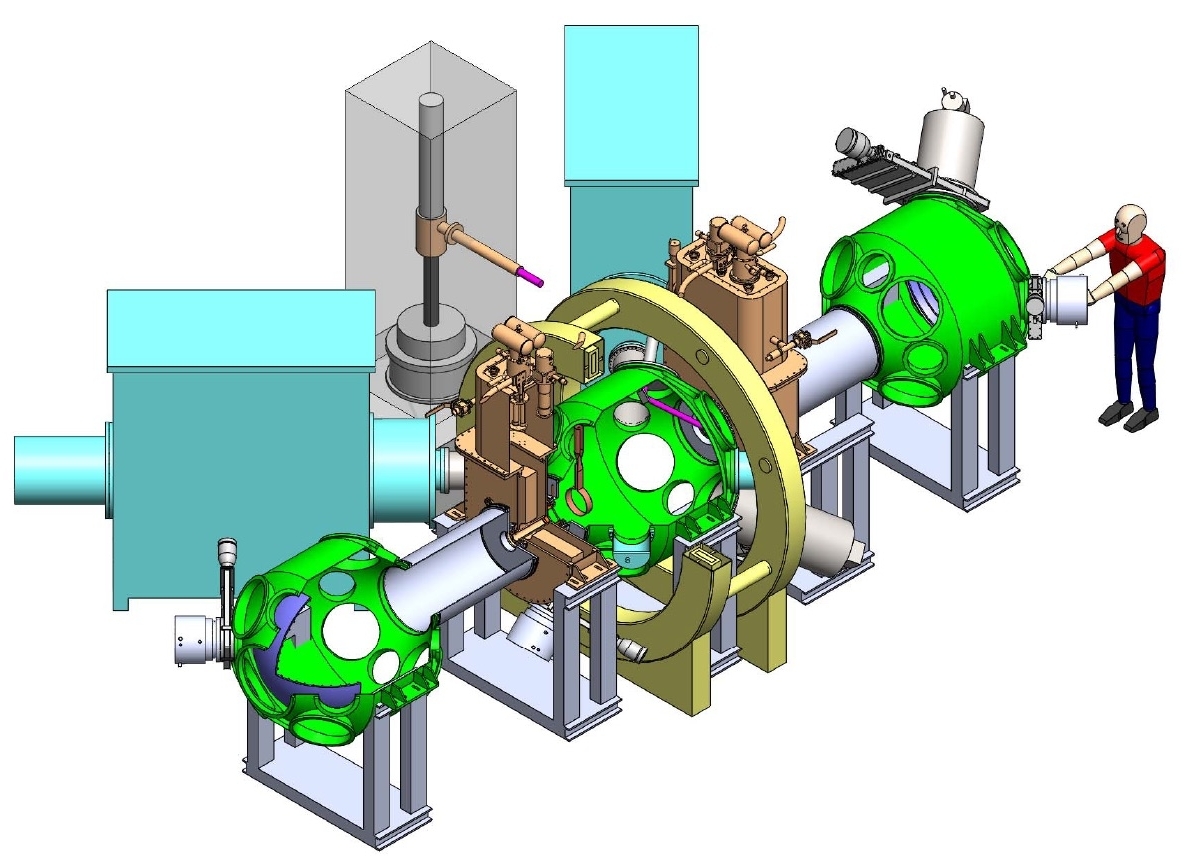
A mirror machine is a linear fusion reactor. It allows scientists to apply research in the machines to an understanding of solar wind phenomena. COURTESY OF CARY FOREST

When the sun expels plasma, the solar wind cools as it expands through space – but not as much as the laws of physics would predict. Physicists now know the reason. University of Wisconsin-Madison physicists provide an explanation for the discrepancy in solar wind temperature. Their findings suggest ways to study solar wind phenomena in research labs and learn about solar wind properties in other star systems.

“People have been studying the solar wind since its discovery in 1959, but there are many important properties of this plasma which are still not well understood,” says Stas Boldyrev, professor of physics and lea...

Read More