






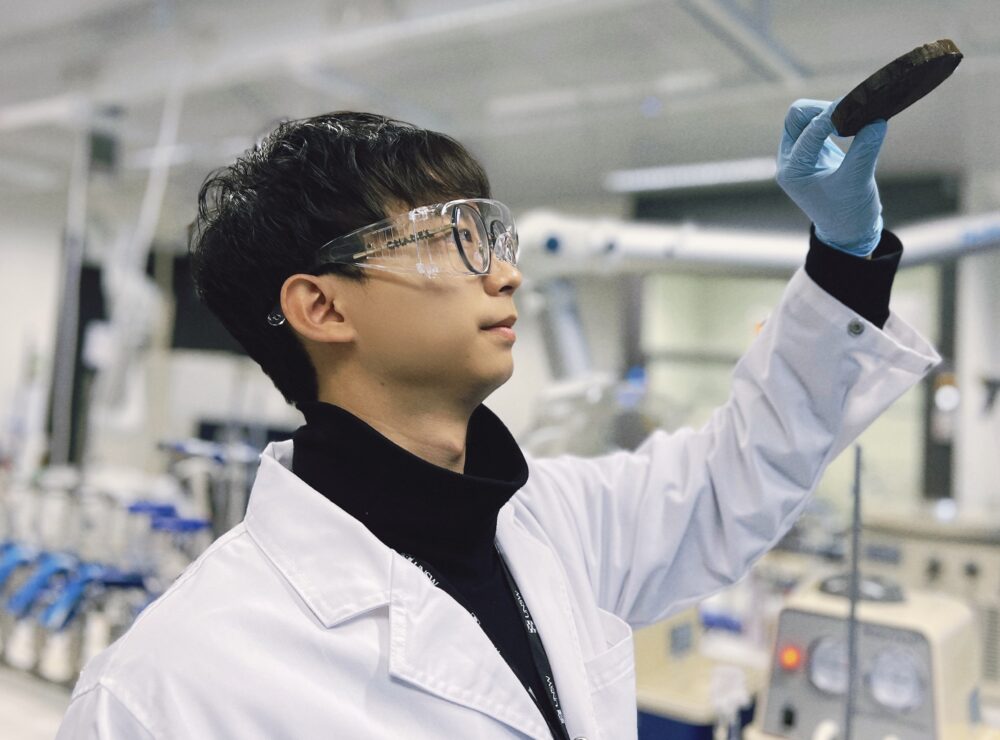
Light-as-a-feather nanomaterial extracts drinking water from air

An international scientific collaboration has developed a novel nanomaterial to efficiently harvest clean drinking water from water vapor in the air. The nanomaterial can hold more than three times its weight in water and can achieve this far quicker than existing commercial technologies, features that enable its potential in direct applications for producing potable water from the air.

The collaboration is led by the Australian Research Council Center of Excellence for Carbon Science and Innovation (ARC COE-CSI) UNSW Associate Professor Rakesh Joshi and Nobel Laureate Professor Sir Kostya Novoselov. Prof Joshi is based at the School of Materials Science and Engineering, University of New South Wales (UNSW). Prof Novoselov is based at the National University of Singapore.

A Unit...

Read More

Super-resolution imaging reveals the first step of planet formation after star birth

Super-resolution imaging reveals the first step of planet formation after star birth
New high-resolution images of protoplanetary disks in the Ophiuchus star-forming region, created with improved analysis. The resolution is shown by the white ellipse in the lower left of each panel, with a smaller ellipse indicating higher resolution. The white line in the lower right of each panel indicates a scale of 30 au. The evolution stage of the central stars progresses from left to right, and from top to bottom in the same row. Credit: ALMA(ESO/NAOJ/NRAO), A. Shoshi et al.

Identifying the formation period of planetary systems, such as our solar system, could be the beginning of the journey to discover the origin of life. The key to this is the unique substructures found in protoplanetary disks—the sites of planet formation.

A protoplanetary disk is composed of low-temperat...

Read More

Scale of how chronic fatigue syndrome affects patients’ blood shown for first time

Scale of how myalgic encephalomyelitis/chronic fatigue syndrome affects patients' blood shown for first time
Study design and overview of results. Credit: EMBO Molecular Medicine (2025). DOI: 10.1038/s44321-025-00258-8

People with ME/CFS (myalgic encephalomyelitis/chronic fatigue syndrome) have significant differences in their blood compared with healthy individuals, a new study reveals, suggesting a path toward more reliable diagnosis of the long-term debilitating illness. The paper is published in the journal EMBO Molecular Medicine.

The largest ever biological study of ME/CFS has identified consistent blood differences associated with chronic inflammation, insulin resistance, and liver disease.

Significantly, the results were mostly unaffected by patients’ activity levels, as low activity levels can sometimes hide the biological signs of illness, experts say.

The volume and cons...

Read More

Radio signal from the very early universe offers clues about the first stars

The image shows a deep galaxy field, featuring thousands of galaxies of various shapes and sizes

Understanding how the universe transitioned from darkness to light with the formation of the first stars and galaxies is a key turning point in the universe’s development, known as the Cosmic Dawn. However, even with the most powerful telescopes, we can’t directly observe these earliest stars, so determining their properties is one of the biggest challenges in astronomy.

Now, an international group of astronomers led by the University of Cambridge has shown that we will be able to learn about the masses of the earliest stars by studying a specific radio signal—created by hydrogen atoms filling the gaps between star-forming regions—originating just a hundred million years after the Big Bang.

By studying how the first stars and their remnants affected this signal, called the 2...

Read More
