Earth’s Mantle, not its core, may have generated planet’s early Magnetic Field

Illustration: Naeblys/istockphoto

New research lends credence to an unorthodox retelling of the story of early Earth first proposed by a geophysicist at Scripps Institution of Oceanography at UC San Diego.

In a study appearing March 15 in the journal Earth and Planetary Science Letters, Scripps Oceanography researchers Dave Stegman, Leah Ziegler, and Nicolas Blanc provide new estimates for the thermodynamics of magnetic field generation within the liquid portion of the early Earth’s mantle and show how long that field was available.

The paper provides a “door-opening opportunity” to resolve inconsistencies in the narrative of the planet’s early days...

Read More

How Stem Cells Repair Damage from Heart Attacks

regenerative medicine researcher pipetting stem cells
Cardiopoietic stem cell therapy restores infarction-altered cardiac proteome
D. Kent ArrellChristian S. RosenowSatsuki YamadaAtta Behfar &  Andre Terzic 
npj Regenerative Medicine volume 5, Article number: 5 (2020) 

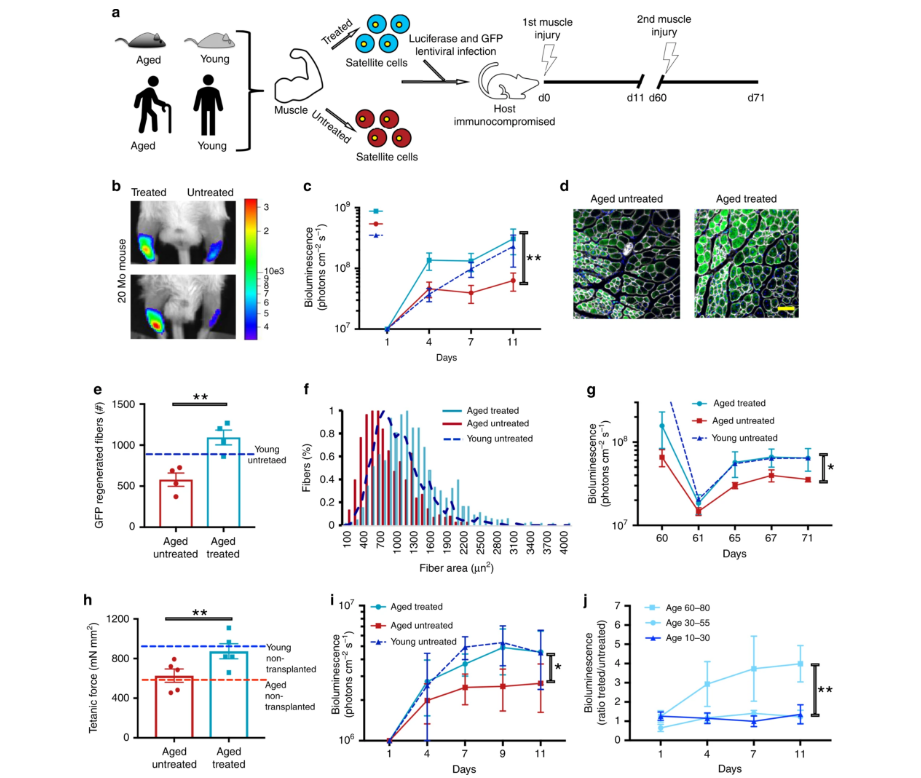
Mayo Clinic researchers have uncovered stem cell-activated mechanisms of healing after a heart attack. Stem cells restored cardiac muscle back to its condition before the heart attack, in turn providing a blueprint of how stem cells may work.

The study, published in NPJ Regenerative Medicine, finds that human cardiopoietic cells zero in on damaged proteins to reverse complex changes caused by a heart attack. Cardiopoietic cells are derived from adult stem cell sources of bone marrow.

“The extent of change caused by a heart attack is too great for the heart to...

Read More

New Type of Pulsating Star discovered

An artist’s impression of the star with its tidally locked red dwarf companion. Credit: Gabriel Pérez Díaz (IAC)

Astronomers find one-sided pulsator with citizen scientists providing crucial clue. A star that pulsates on just one side has been discovered in the Milky Way about 1500 light years from Earth. It is the first of its kind to be found and scientists expect to find many more similar systems as technology to listen inside the beating hearts of stars improves.

“What first caught my attention was the fact it was a chemically peculiar star,” said co-author Dr Simon Murphy from the Sydney Institute for Astronomy at the University of Sydney. “Stars like this are usually fairly rich with metals – but this is metal poor, making it a rare type of hot star.”

Dr Murphy shared t...

Read More

Experts discover Toolkit to Repair DNA Breaks linked to Aging, Cancer and MND

A human cell showing sites of DNA breaks repaired by TEX246

A new ‘toolkit’ to repair damaged DNA that can lead to ageing, cancer and Motor Neurone Disease (MND) has been discovered by scientists at the Universities of Sheffield and Oxford.

Published in Nature Communications, the research shows that a protein called TEX264, together with other enzymes, is able to recognise and ‘eat’ toxic proteins that can stick to DNA and cause it to become damaged. An accumulation of broken, damaged DNA can cause cellular ageing, cancer and neurological diseases such as MND.

Until now, ways of repairing this sort of DNA damage have been poorly understood, but scientists hope to exploit this novel repair toolkit of proteins to protect us from ageing, cancer and neurological disease.

The fin...

Read More