Crumpled Graphene makes Ultra-Sensitive Cancer DNA detector

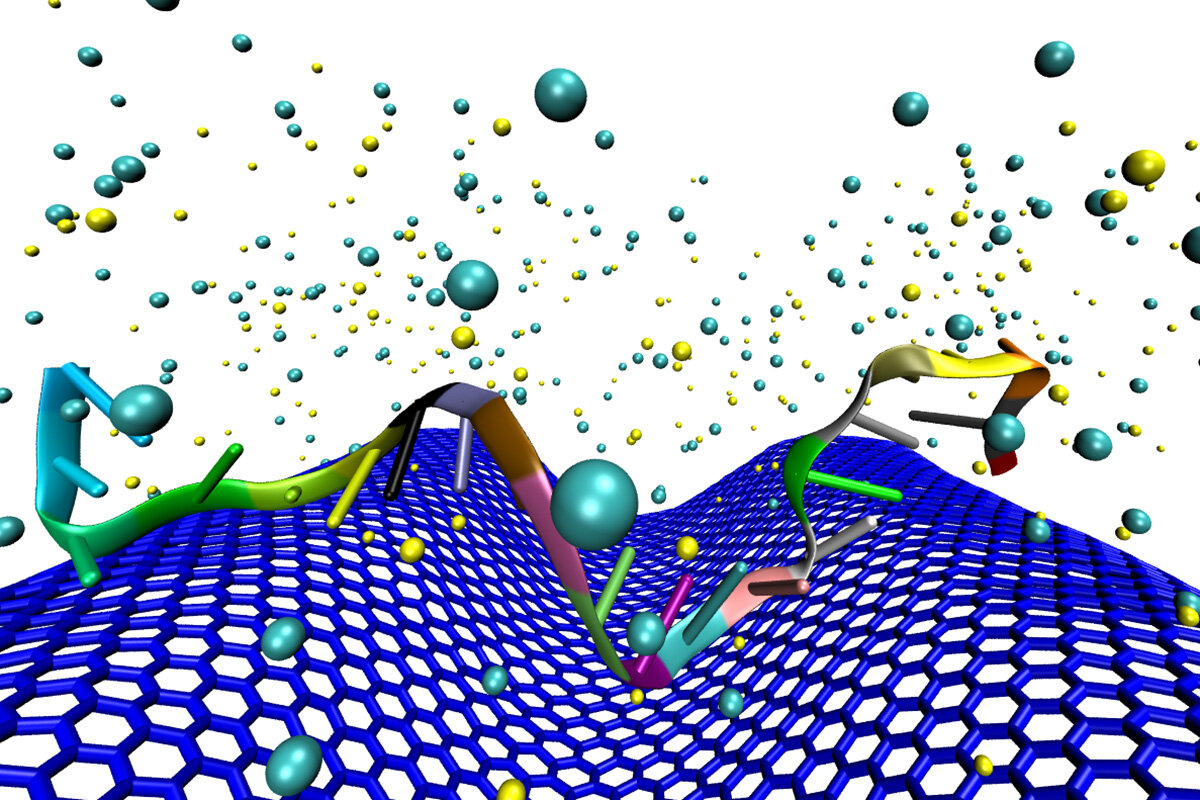
Illinois researchers found that crumpling graphene in DNA sensors made it tens of thousands of times more sensitive, making it a feasible platform for liquid biopsy. Credit: Mohammad Heiranian

Graphene-based biosensors could usher in an era of liquid biopsy, detecting DNA cancer markers circulating in a patient’s blood or serum. But current designs need a lot of DNA. In a new study, crumpling graphene makes it more than ten thousand times more sensitive to DNA by creating electrical “hot spots,” researchers at the University of Illinois at Urbana-Champaign found.

Crumpled graphene could be used in a wide array of biosensing applications for rapid diagnosis, the researchers said. They published their results in the journal Nature Communications.

“This sensor can detect ultra-low...

Read More
Precision Mirrors poised to Improve Sensitivity of Gravitational Wave Detectors

The illustration shows the cross-section of a thermal bimorph mirror and its constituents. Controlling the temperature of the mirror changes the curvature of the reflected wavefront. Overlaid on the cross-section is the simulated radial stress, showing a concentration of stress at the boundary of the two layers, where the adhesive holds the structure together.
Credit: Huy Tuong Cao, University of Adelaide

Improved deformable mirrors could help scientists detect new sources of gravitational waves from deep in space. Researchers have developed a new type of deformable mirror that could increase the sensitivity of ground-based gravitational wave detectors such as the Advanced Laser Interferometer Gravitational-Wave Observatory (LIGO)...

Read More

Coronavirus Patients, Doctors seem to be temporarily Losing their sense of Taste and Smell — here’s why

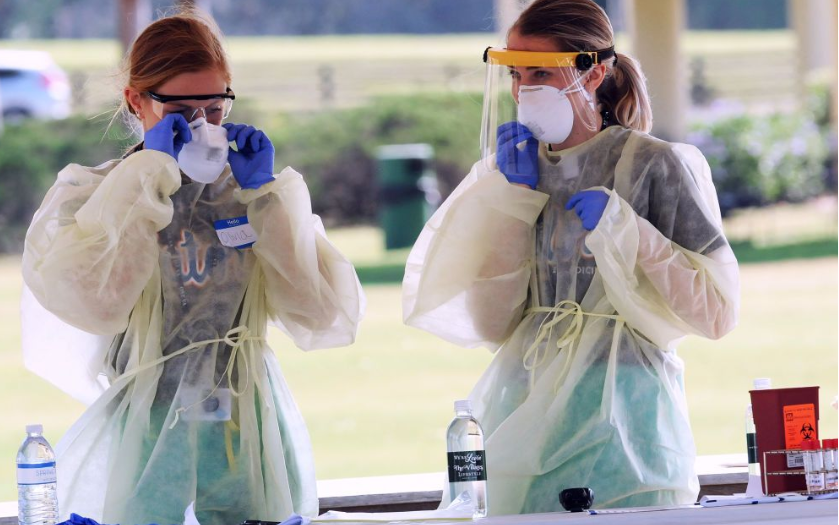
Healthcare workers wait for people to arrive at a COVID-19 mobile testing site in Florida. New reports from the UK show that both doctors and patients with exposure to the coronavirus are temporarily losing their sense of smell and taste. (Photo: Paul Hennessy/NurPhoto via Getty Images)

As COVID-19 continues to spread, now topping 370,000 cases worldwide, mentions of a previously unknown symptom of COVID-19 — loss of smell — are gaining traction. “Haven’t been able to smell anything for the last 4 days,” tweeted Rudy Gobert, a player of the Utah Jazz who was the first NBA player to test positive for the coronavirus 11 days ago. “Anyone experiencing the same thing?

According to a paper published Friday by Claire Hopkins, PhD, a professor of rhinology at King’s College Londo...

Read More

A doctor is 3D-Printing Face Masks to help meet the desperate need for protective gear + A NY couple is printing 100s of Face Shields

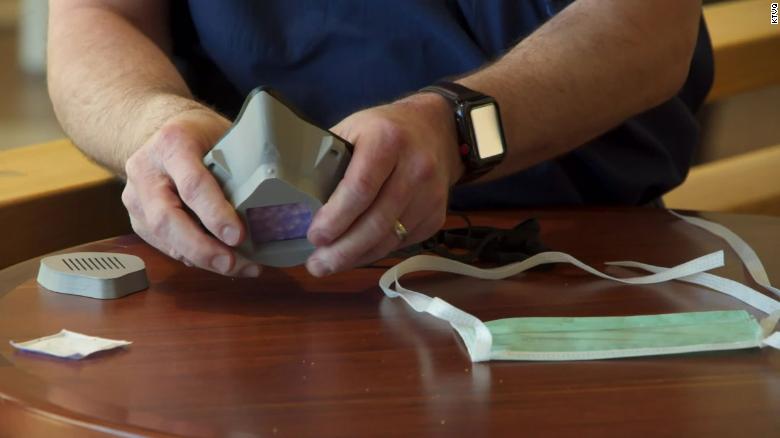
The plastic mask uses a small square of a surgical mask as a filter.

In Billings, Montana, some healthcare professionals are using 3D printers to make reusable plastic face masks. The masks are then fitted with pieces of surgical masks which can be swapped out as needed.

The surgical masks are cut into smaller squares that can be clipped into the plastic mask to serve as a filter, Dusty Richardson, a neurosurgeon at the Billings Clinic told CNN.
“The filter can be used for a day and you can change it out the next day, but I do wash my mask out frequently,” Richardson said.

The plastic can be cleaned with soap and water, bleach and other disinfecting products. Richardson estimates healthcare workers can get 6 to 10 uses out of a single surgical mask...

Read More