





World’s first 3D Simulations of Superluminous Supernovae


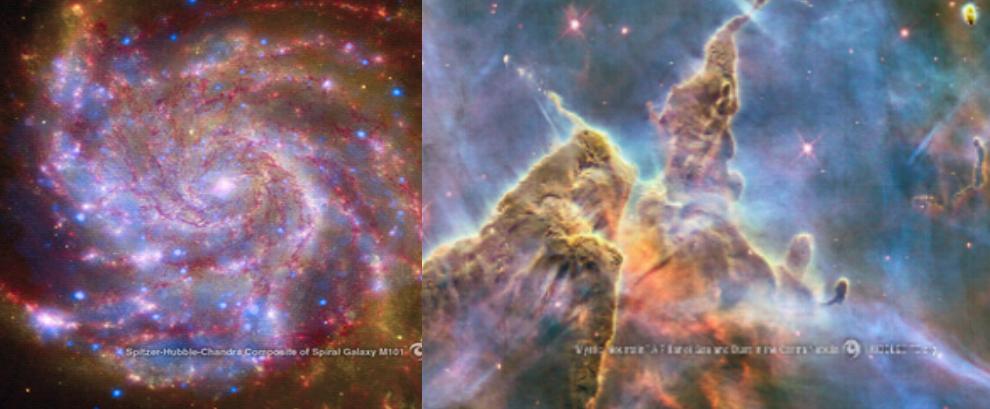
The nebula phase of the magnetar-powered super-luminous supernova from our 3D simulation. At the moment, the supernova ejecta has expanded to a size similar to the solar system. Large scale mixing appears at the outer and inner region of ejecta. The resulting light curves and spectra are sensitive to the mixing that depends on stellar structure and the physical properties of magnetar. Credit: Ken Chen

For most of the 20th century, astronomers have scoured the skies for supernovae—the explosive deaths of massive stars—and their remnants in search of clues about the progenitor, the mechanisms that caused it to explode, and the heavy elements created in the process. In fact, these events create most of the cosmic elements that go on to form new stars, galaxies, and life.

Because no...

Read More

Researchers use ‘Hot Jupiter’ data to Mine Exoplanet Chemistry

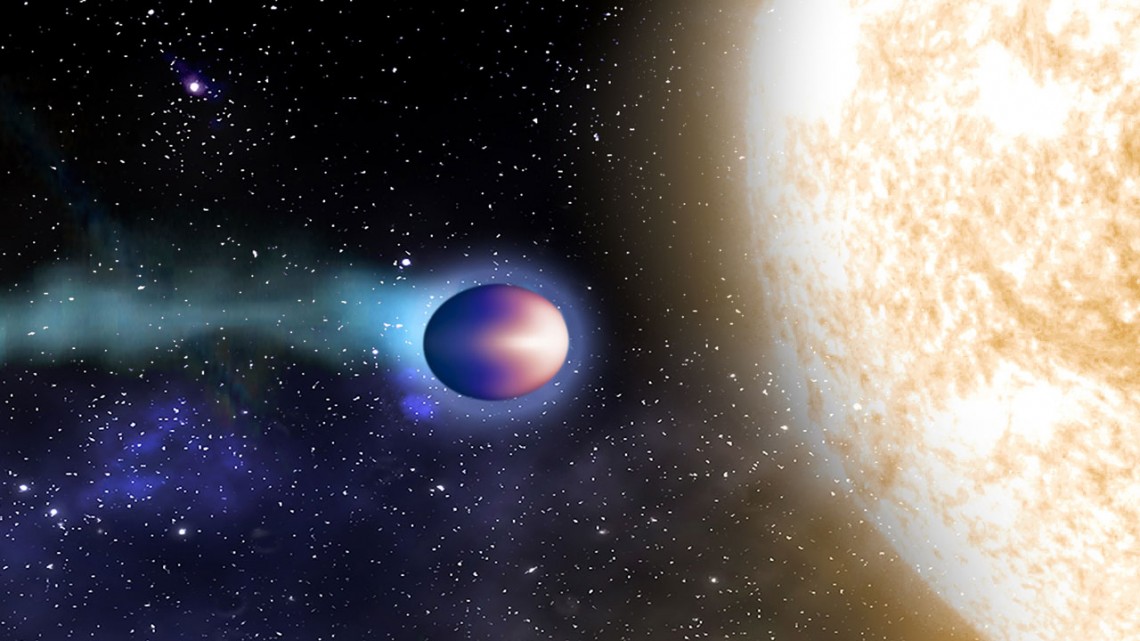
Atmospheric gases recede from a “hot Jupiter,” which is a Jupiter-size, egg-shaped planet that orbits close to its own sun, in this artistic rendering. Cornell astronomers have developed a new mathematical model for determining temperatures on different parts of exoplanets, rather than averaging a planet’s temperature. Matthew Fondeur/Cornell University

After spotting a curious pattern in scientific papers – they described exoplanets as being cooler than expected – Cornell University astronomers have improved a mathematical model to accurately gauge the temperatures of planets from solar systems hundreds of light-years away.

This new model allows scientists to gather data on an exoplanet’s molecular chemistry and gain insight on the cosmos’ planetary beginnings, according to research...

Read More

The best material for Homemade Face Masks may be a combination of 2 Fabrics

Researchers report that a combination of cotton with natural silk or chiffon can effectively filter out aerosol particles – if the fit is good.

In the wake of the COVID-19 pandemic, the U.S. Centers for Disease Control and Prevention recommends that people wear masks in public. Because N95 and surgical masks are scarce and should be reserved for health care workers, many people are making their own coverings. Now, researchers report in ACS Nano that a combination of cotton with natural silk or chiffon can effectively filter out aerosol particles – if the fit is good.

SARS-CoV-2, the new coronavirus that causes COVID-19, is thought to spread mainly through respiratory droplets when an infected person coughs, sneezes, speaks or breathes...

Read More

A New Way to Cool Down Electronic Devices, recover Waste Heat

042220-heat-conversion
A hydrogel can cool off electronics and generate electricity from their waste heat. Scale bar, 2 cm.
Credit: Adapted from Nano Letters 2020, DOI: 10.1021/acs.nanolett.0c00800

Using electronic devices for too long can cause them to overheat, which might slow them down, damage their components or even make them explode or catch fire. Now, researchers reporting in ACS’ Nano Letters have developed a hydrogel that can both cool down electronics, such as cellphone batteries, and convert their waste heat into electricity.

Some components of electronic devices, including batteries, light-emitting diodes (known as LEDs) and computer microprocessors, generate heat during operation. Overheating can reduce the efficiency, reliability and lifespan of devices, in addition to wasting energy...

Read More