Novel Communication between Intestinal Microbes and developing Immune Cells in the Thymus

Early life entero-thymic communication: Complex interplay between intestinal microbes, host TLR2, pDCs and developing cells in the thymus 

Regulation of thymic immune development by intestinal microbes in early life. Researchers discover microbes regulate the development of specialized immune cells in the thymus that play a critical role in mucosal tolerance.

Newborns face unique immunological challenges immediately after birth. As they depart a relatively sterile fetal environment, they are abruptly exposed to a multitude of foreign antigens, the major burden of which is in the form of the microbiota newly colonizing the gastrointestinal tract...

Read More

On the way to Quantum Networks

Picture of the single atom trap. In the ultra-high vacuum glass cell a single Rubidium atom is captured, which later will be entangled with a photon. Photo: C. Olesinski/LMU

Physicists at LMU, together with colleagues at Saarland University, have successfully demonstrated the transport of an entangled state between an atom and a photon via an optic fiber over a distance of up to 20 km – thus setting a new record.

‘Entanglement’ describes a very particular type of quantum state which is not attributed to a single particle alone, but which is shared between two different particles. It irrevocably links their subsequent fates together – no matter how far apart they are – which famously led Albert Einstein to call the phenomenon as “spooky action at a distance”...

Read More

For Hottest Planet, a Major Meltdown, study shows

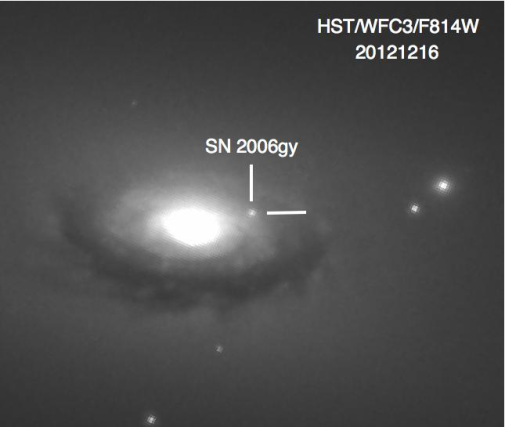
Artist’s rendering of a “hot Jupiter” called KELT-9b, the hottest known exoplanet – so hot, a new paper finds, that even molecules in its atmosphere are torn to shreds. Credit: NASA/JPL-Caltech

In the scorching atmosphere of exoplanet KELT-9b, even molecules are torn to shreds. Massive gas giants called “hot Jupiters”—planets that orbit too close to their stars to sustain life—are some of the strangest worlds found beyond our solar system. New observations show that the hottest of them all is stranger still, prone to planetwide meltdowns so severe they tear apart the molecules that make up its atmosphere.

Called KELT-9b, the planet is an ultra-hot Jupiter, one of several varieties of exoplanets—planets around other stars—found in our galaxy...

Read More

‘Jumping Genes’ help Stabilize DNA Folding Patterns

Fig. 2
Contribution of TEs to the conservation landscape of human and mouse loops. a Flowchart describing the methodology used to annotate loop orthology. b Venn diagram representing the various classes of chromatin loops based on their orthology and bar plots showing the contribution of REs to anchor CTCFs of each class of loops. c Age distribution and age of individual TEs that contribute loop anchor CTCF sites (black dots for orthologous loops; gold dots for non-orthologous loops) (left), total contribution to loop anchor CTCF sites (middle), distribution of orthologous and non-orthologous loops (right) derived from the top 13 TE subfamilies in mouse and d humans. Estimated primate/rodent divergence time (82 million years ago) is from Meredith et al. [47]. e Contact maps representing a conse...
Read More