Supercharged Light Pulverizes Asteroids

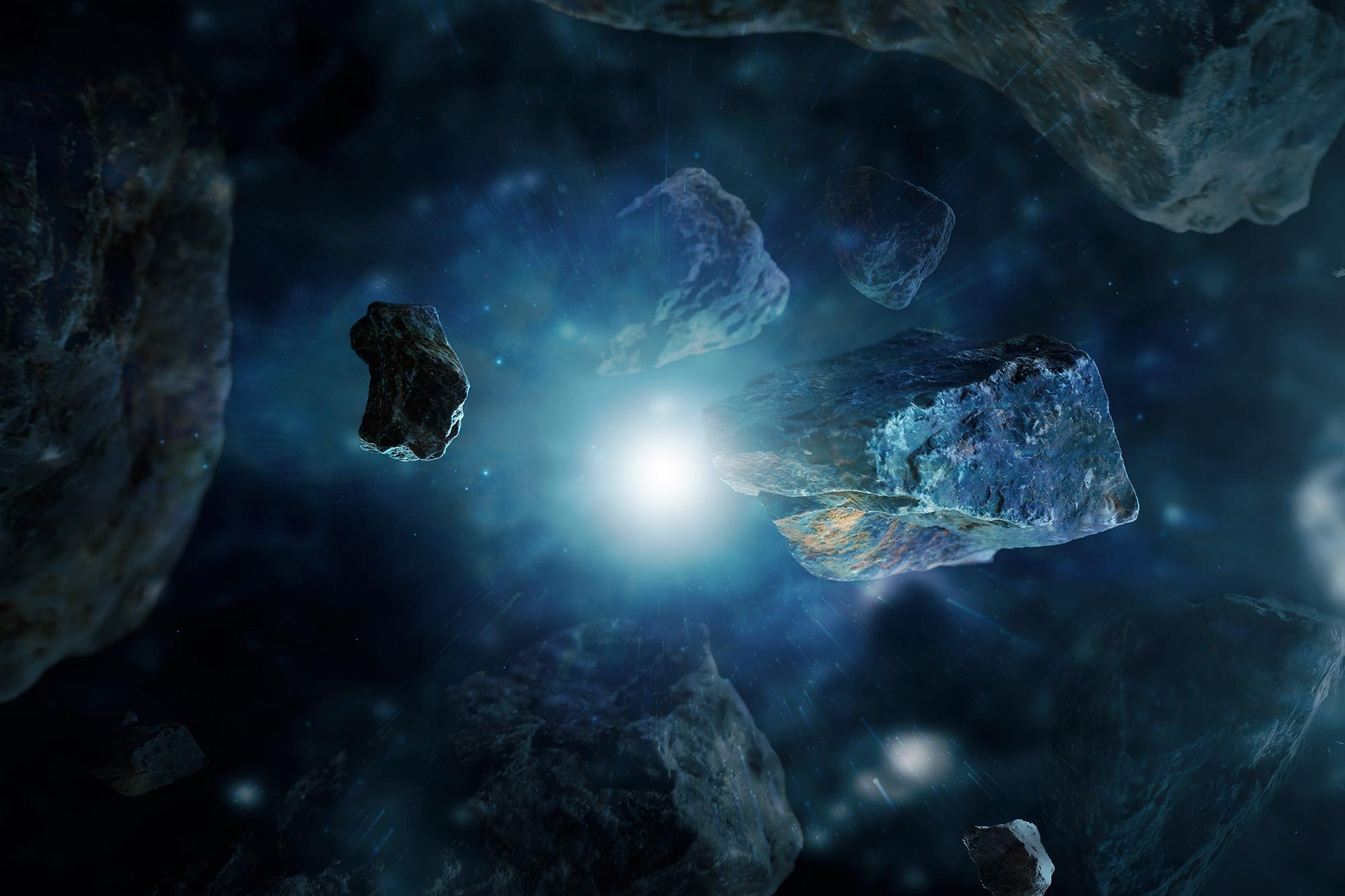
The majority of stars in the universe will become luminous enough to blast surrounding asteroids into successively smaller fragments using their light alone, according to a University of Warwick astronomer.

The majority of stars in the universe will become luminous enough to blast surrounding asteroids into successively smaller fragments using their light alone, according to a University of Warwick astronomer.

Electromagnetic radiation from stars at the end of their ‘giant branch’ phase – lasting just a few million years before they collapse into white dwarfs – would be strong enough to spin even distant asteroids at high speed until they tear themselves apart again and again. As a result, even our own asteroid belt will be easily pulverized by our Sun billions of years from now.

...Read More

Natural Compound in Vegetables Helps fight Fatty Liver Disease

New research shows how indole can reduce inflammation, fatty deposits. A new study led by Texas A&M AgriLife Research scientists shows how a natural compound found in many well-known and widely consumed vegetables can also be used to fight fatty liver disease.

The study demonstrates how non-alcoholic fatty liver disease, or NAFLD, can be controlled by indole, a natural compound found in gut bacteria – and in cruciferous vegetables such as cabbage, kale, cauliflower and Brussels sprouts. It also addresses how this natural compound may lead to new treatments or preventive measures for NAFLD.

The study was recently published in Hepatology...

Read More

Exotic new Topological State discovered in Dirac Semimetals

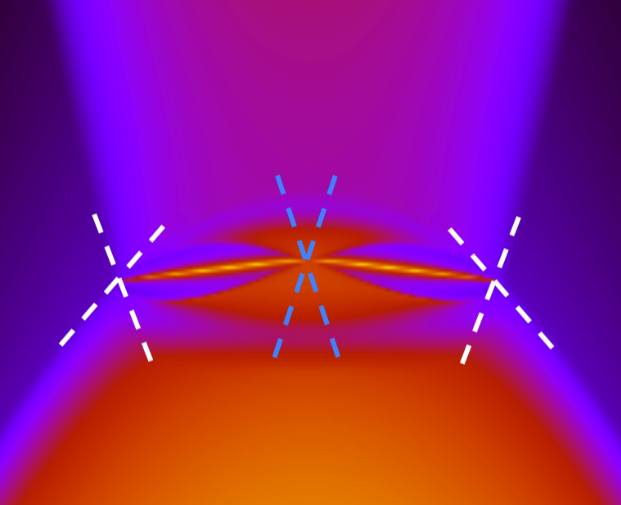
Spectrum of electronic states in a nanorod of cadmium arsenide (Cd3As2), a Dirac semi-metal. The newly predicted ‘hinge arc’ surface states can be seen connecting the surface projections of the bulk and surface Dirac fermion states (dashed lines). Credit: Zhijun Wang, Institute of Physics Chinese Academy of Sciences in Beijing

Protected surface states are akin to corner states of higher-order topological insulators. An international team of scientists has discovered an exotic new form of topological state in a large class of 3D semi-metallic crystals called Dirac semimetals...

Read More

Surfing Space Dust Bunnies Spawn Interplanetary Magnetic fields

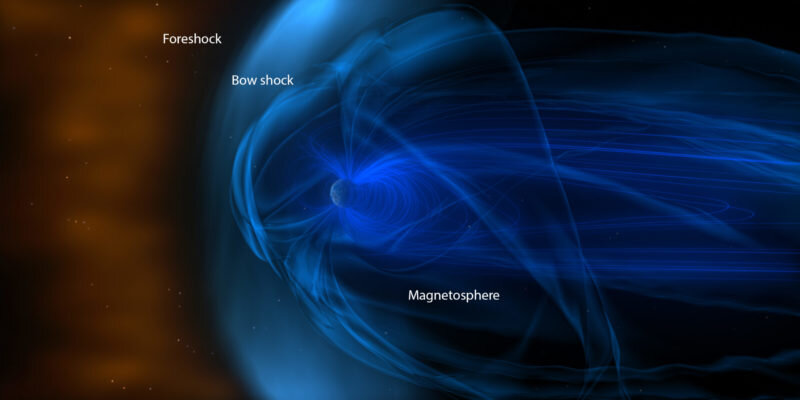
Illustration of Earth’s magnetospheric bow shock. Satellites both in front of (to the left) and behind the bow shock (to the right) detected telltale magnetic signatures that suggest clouds of space dust were passing them. Credit: NASA

A 40-year-old enigma about ghostly magnetic fields in interplanetary space may have finally been solved by new data from a constellation of 12 satellites in near-Earth space.

New research in the AGU journal Geophysical Research Letters finds that fine dust from pulverized space rocks is riding the solar wind past the spacecraft, which detected the cloud of fine debris as a temporary change in the local magnetic field.

If the discovery is correct, it points to a new way to study the little-understood intersection between the realms of the ve...

Read More