Hydrogels Control Inflammation to Help Healing

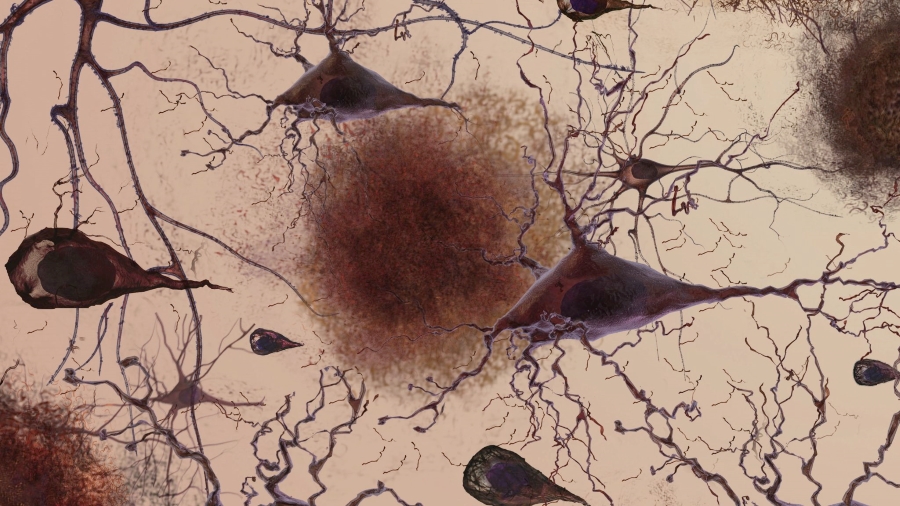
An illustration shows how effective a selection of custom-designed peptide hydrogels are in controlling inflammation. The gels developed at Rice University serve as scaffolds for new tissue and show promise for treating wounds and cancer and for delivering drugs. The hydrogels are designed to dissolve in the body as they are replaced by natural, functional tissue. Illustration by Tania Lopez-Silva

Scientists model how synthetic gels can tune body’s inflammatory response. Hydrogels for healing, synthesized from the molecules up by Rice University bioengineers, are a few steps closer to the clinic.

Rice researchers and collaborators at Texas Heart Institute (THI) have established a baseline set of injectable hydrogels that promise to help heal wounds, deliver drugs and treat cancer...

Read More

Finding a Killer Electron Hot Spot in Earth’s Van Allen Radiation Belts

Image: Multi-point satellite observations by JAXA/Arase and NASA/Van Allen Probes
      Electrons detected at Van Allen Probes position (left) drift to the Arase position (right)
      Credit:  ERG Science Team

JAXA and NASA satellite observations show where killer electrons are generated in the Van Allen radiation belts surrounding Earth. The finding, published in the journal Geophysical Research Letters, could help scientists more accurately forecast when these killer (relativistic) electrons will form.

Professor Yoshizumi Miyoshi of the Institute for Space-Earth Environmental Research at Nagoya University and colleagues compared data from two satellites situated on opposite sides of the Earth: the Arase satellite, developed by the Japanese Aerospace Exploration Agency (JAXA)...

Read More

Mitochondria are the ‘Canary in the Coal Mine’ for Cellular Stress

Pictured are mitochondria (red), cell nuclei (blue) and mtDNA (white dots).
Credit: Salk Institute/Waitt Advanced Biophotonics Center

How some cancers resist chemotherapy…
Mitochondria, tiny structures present in most cells, are known for their energy-generating machinery. Now, Salk researchers have discovered a new function of mitochondria: they set off molecular alarms when cells are exposed to stress or chemicals that can damage DNA, such as chemotherapy. The results, published online in Nature Metabolism on December 9, 2019, could lead to new cancer treatments that prevent tumors from becoming resistant to chemotherapy.

“Mitochondria are acting as a first line of defense in sensing DNA stress...

Read More

Creating a Nanoscale On-Off Switch for Heat

Microscopic view of a highly-ordered crystalline structure
Source: College of Engineering
Research assistant Wei Gong, master’s student Xiao Luo, and Associate Professor Sheng Shen of the Department of Mechanical Engineering at Carnegie Mellon University.

Researchers create a polymer thermal regulator that can quickly transform from a conductor to an insulator, and back again. This control of heat flow at the nanoscale opens up new possibilities in developing switchable thermal devices, solid-state refrigeration, waste heat scavenging, thermal circuits, and computing. This is the first time that this work has been demonstrated experimentally.

Polymers are used to develop various materials, such as plastics, nylons, and rubbers...

Read More