For CRISPR, Tweaking DNA fragments before Inserting yields Highest Efficiency Rates yet

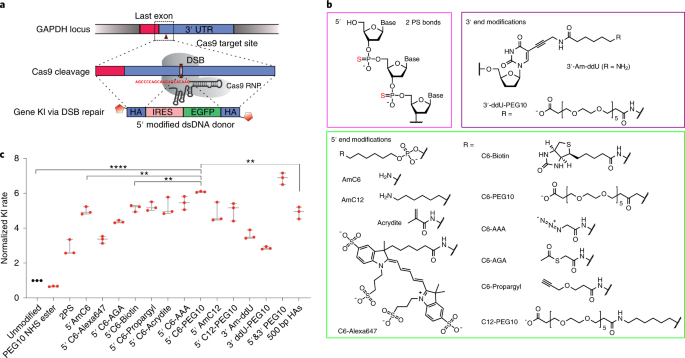
Image result for Gene KI strategy using Cas9 RNP and end-modified dsDNA donors.
Gene KI strategy using Cas9 RNP and end-modified dsDNA donors.

University of Illinois researchers achieved the highest reported rates of inserting genes into human cells with the CRISPR-Cas9 gene-editing system, a necessary step for harnessing CRISPR for clinical gene-therapy applications.

By chemically tweaking the ends of the DNA to be inserted, the new technique is up to five times more efficient than current approaches. The researchers saw improvements at various genetic locations tested in a human kidney cell line, even seeing 65% insertion at one site where the previous high had been 15%.

Led by chemical and biomolecular engineering professor Huimin Zhao, the researchers published their work in the journal Nature Chemical Biology...

Read More
First Chip-to-Chip Quantum Teleportation harnessing Silicon Photonic Chip Fabrication

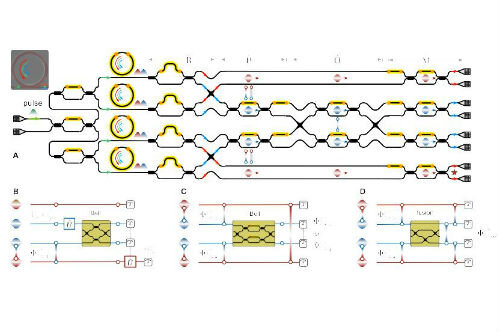
A. Chip Schematic. Black lines represent single mode waveguides for the single photons, red and blue pulses represent the photon energy in each path. Yellow bars represent external phase control. B. Teleportation setup. C. Entanglement swapping setup. D. 4-photon GHZ state preparation. Credit: University of Bristol

The development of technologies which can process information based on the laws of quantum physics are predicted to have profound impacts on modern society. For example, quantum computers may hold the key to solving problems that are too complex for today’s most powerful supercomputers, and a quantum internet could ultimately protect the worlds information from malicious attacks...

Read More

Researchers make new discoveries set to reveal the Geology of Planets Outside our Solar System

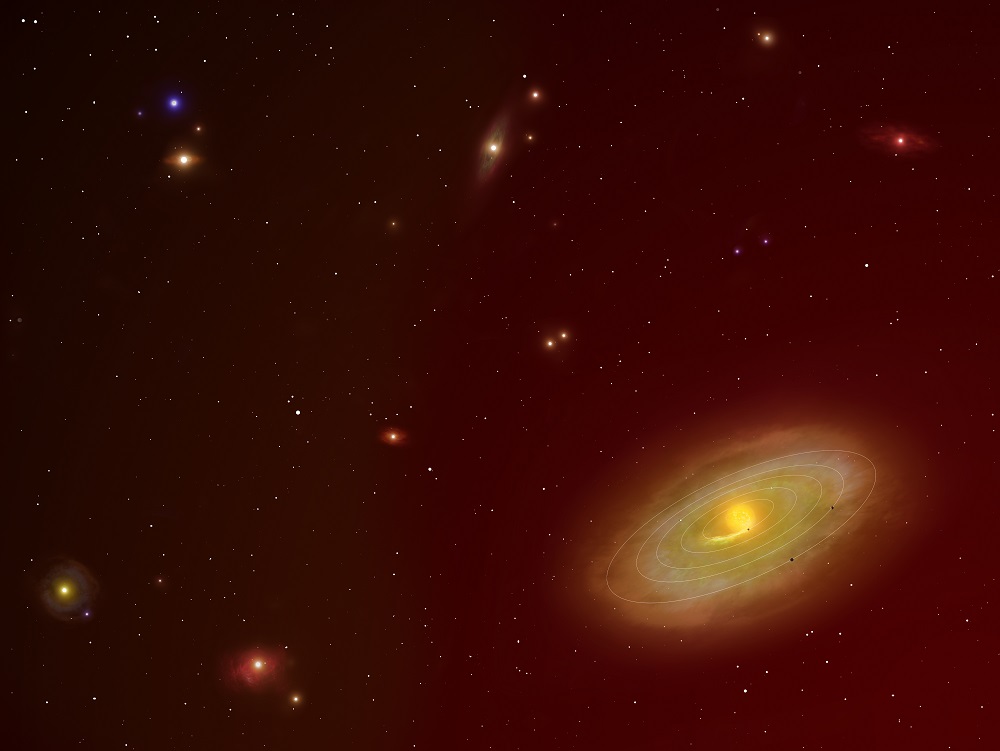
Dispersed Matter Planet Project target selection area

Three OU astronomers today announced groundbreaking discoveries allowing scientists to understand planets outside the solar system. Professor Carole Haswell, Dr. Daniel Staab and Dr. John Barnes discovered three, new, nearby planetary systems. Research led by Professor Haswell found the exoplanets—planets outside the solar system—as part of the Dispersed Matter Planet Project (DMPP).

The project was funded by the UK Science and Technology Facilities Council and includes an international team of researchers. The project team used the High Accuracy Radial Velocity Planet Searcher (HARPS), a high-precision planet-finding spectrograph, on the European Southern Observatory’s 3...

Read More

Caffeine may Offset some Health Risks of Diets High in Fat, Sugar

A new study in rats suggests that caffeine may offset some of the negative effects of an obesogenic diet by reducing the storage of lipids in fat cells and limiting weight gain and the production of triglycerides.

Rats that consumed the caffeine extracted from mate tea gained 16% less weight and accumulated 22% less body fat than rats that consumed decaffeinated mate tea, scientists at the University of Illinois found in a new study. The effects were similar with synthetic caffeine and that extracted from coffee.

Mate tea is an herbal beverage rich in phytochemicals, flavonoids and amino acids that’s consumed as a stimulant by people in southeastern Latin American countries...

Read More