To raise new questions, new possibilities, to regard old problems from a new angle, requires creative imagination and marks real advance in science.
~Albert Einstein
Read More
Old Newtonian physics claimed that things have an objective reality separate from our perception of them. Quantum physics, and particularly Heisenberg's Uncertainty Principle, reveal that, as our perception of an object changes, the object itself literally changes.
~Marianne Williamson
Read More
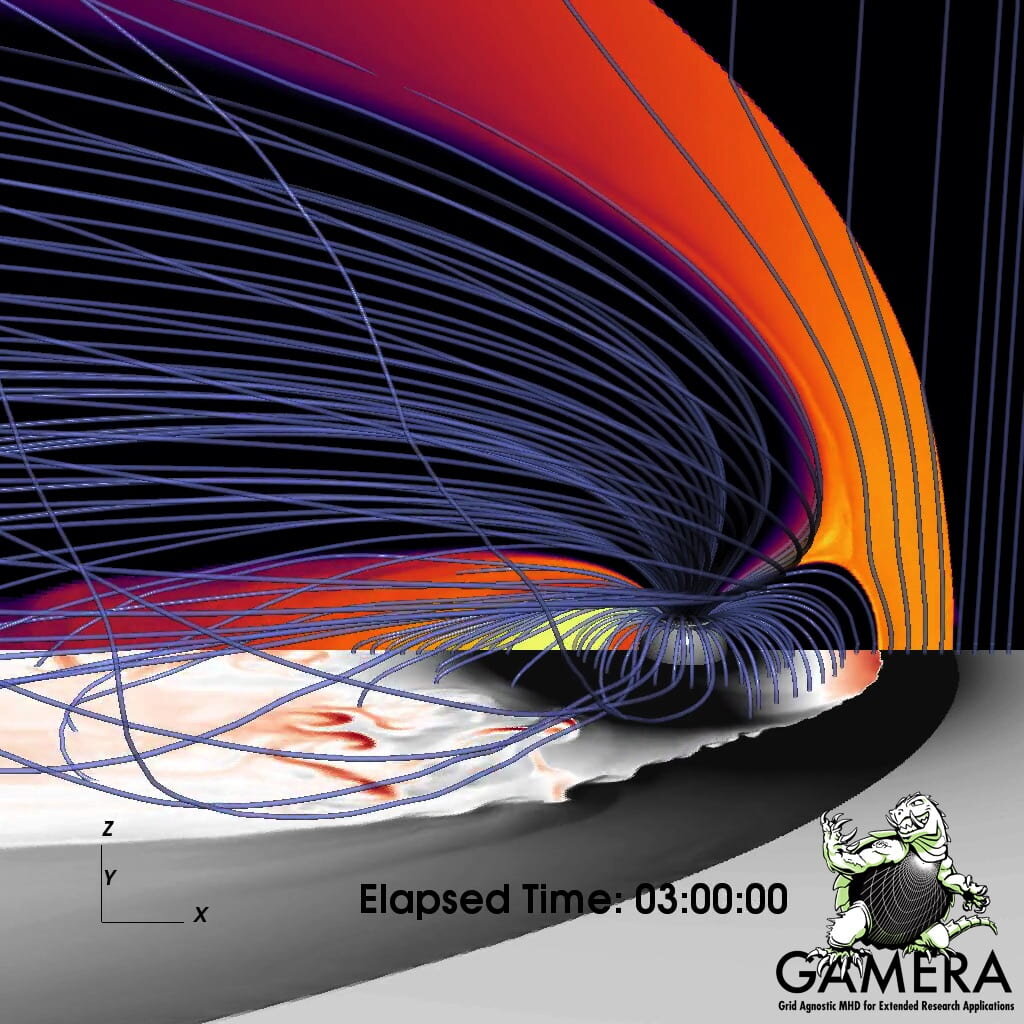
An image from a magnetohydrodynamic simulation by the Gamera project at the Johns Hopkins Applied Physics Laboratory shows bursty flows (in red and brown) in the plasma sheet. Rice University space plasma physicists developed algorithms to measure the buoyancy waves that appear in thin filaments of magnetic flux on Earth’s nightside. Credit: K. Sorathia/JHUAPL
Physicists extend Rice Convection Model with details of magnetospheric buoyancy waves. The solar wind that pummels the Earth’s dayside magnetosphere causes turbulence, like air over a wing. Physicists at Rice University have developed new methods to characterize how that influences space weather on the nightside.
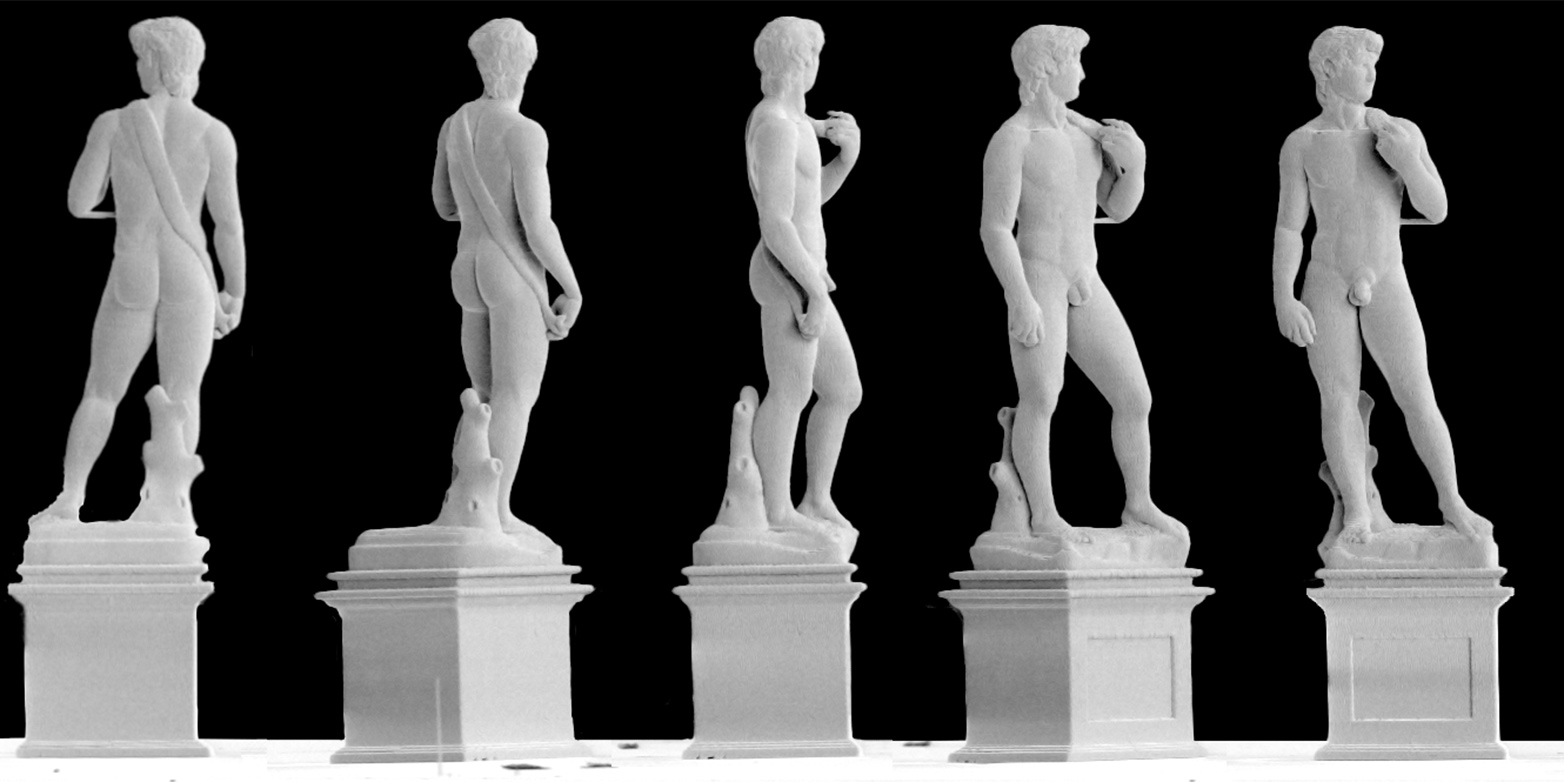
Different views of the 3D-printed miniature David (1 mm high) made of pure copper. (Image: Giorgio Ercolano, Exaddon)
Researchers have reproduced Michelangelo’s David as a miniature in metal. Their achievement highlights the potential of a special 3D printing method. There he is, standing upon his pedestal: David by Michelangelo. A world-famous statue that nearly every child can recognise. But this David is just 1 millimeter tall, pedestal included, and is made not of marble like the 5.17-meter original, but of pure copper.
It was created using 3D printing by Giorgio Ercolano from Exaddon, an offshoot of ETH spin-off Cytosurge, together with the team led by ETH Professor Tomaso Zambelli from the Laboratory of Biosensors and Bioelectronics...
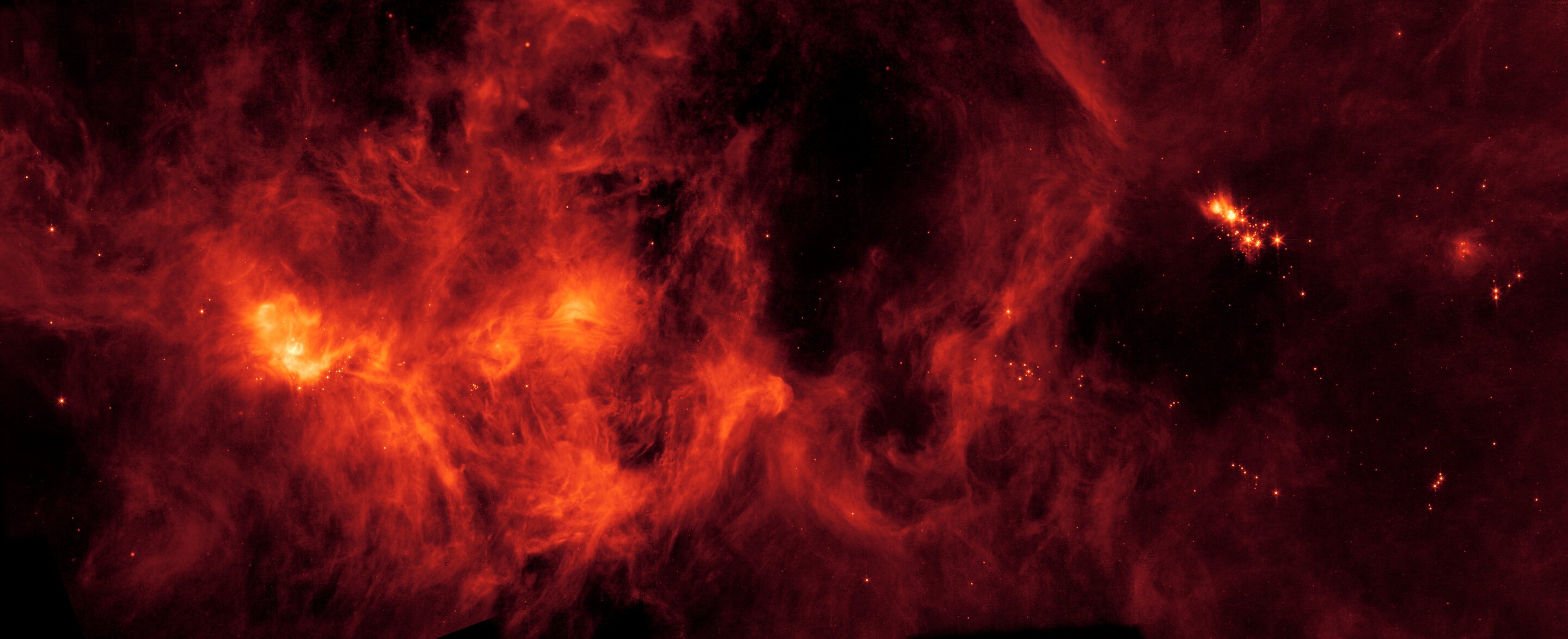
A collection of gas and dust over 500 light-years across, the Perseus Molecular Cloud hosts an abundance of young stars. It was imaged here by the NASA’s Spitzer Space Telescope. Credit: NASA/JPL-Caltech
This image from NASA’s Spitzer Space Telescope shows the Perseus Molecular Cloud, a massive collection of gas and dust that stretches over 500 light-years across. Home to an abundance of young stars, it has drawn the attention of astronomers for decades.
Spitzer’s Multiband Imaging Photometer (MIPS) instrument took this image during Spitzer’s “cold mission,” which ran from the spacecraft’s launch in 2003 until 2009, when the space telescope exhausted its supply of liquid helium coolant. (This marked the beginning of Spitzer’s “warm mission...
Point-of-Care Serodiagnostic Test for Early-Stage Lyme Disease Using a Multiplexed Paper-Based Immunoassay and Machine Learning
After a day hiking in the forest, the last thing a person wants to discover is a tick burrowing into their skin. Days after plucking off the bloodsucking insect, the hiker might develop a rash resembling a bull’s-eye, a tell-tale sign of Lyme disease. Yet not everybody who contracts Lyme disease gets the rash. Now, researchers reporting in ACS Nano have devised a blood test that quickly and sensitively diagnoses the disease at early stages.
About 300,000 cases of Lyme disease, which is caused by the tick-borne bacteria Borrelia burgdorferi, are diagnosed in the U.S. each year, according to the U.S. Centers for Disease Control and Prevention...












Recent Comments