To raise new questions, new possibilities, to regard old problems from a new angle, requires creative imagination and marks real advance in science.
~Albert Einstein
Read More
Old Newtonian physics claimed that things have an objective reality separate from our perception of them. Quantum physics, and particularly Heisenberg's Uncertainty Principle, reveal that, as our perception of an object changes, the object itself literally changes.
~Marianne Williamson
Read More
This view of asteroid Bennu ejecting particles from its surface on January 6 was created by combining two images taken by the NavCam 1 imager onboard NASA’s OSIRIS-REx spacecraft: a short exposure image (1.4 ms), which shows the asteroid clearly, and a long exposure image (5 sec), which shows the particles clearly. Other image processing techniques were also applied, such as cropping and adjusting the brightness and contrast of each layer. Credits: NASA/Goddard/University of Arizona/Lockheed Martin
Shortly after NASA’s OSIRIS-REx spacecraft arrived at asteroid Bennu, an unexpected discovery by the mission’s science team revealed that the asteroid could be active, or consistently discharging particles into space...
Ten-Hour Time-Restricted Eating Reduces Weight, Blood Pressure, and Atherogenic Lipids in Patients with Metabolic Syndrome. Cell Metabolism, 2019; DOI: 10.1016/j.cmet.2019.11.004
Researchers have found that a 10-hour time-restricted eating intervention, when combined with traditional medications, resulted in weight loss, reduced abdominal fat, lower BP and cholesterol for participants. The pilot study could lead to a new treatment option for metabolic syndrome patients who are at risk for developing life-altering and costly medical conditions such as diabetes.
Metabolic syndrome affects nearly 30% of the U.S. population, and increases the risk for type 2 diabetes, heart disease and stroke...
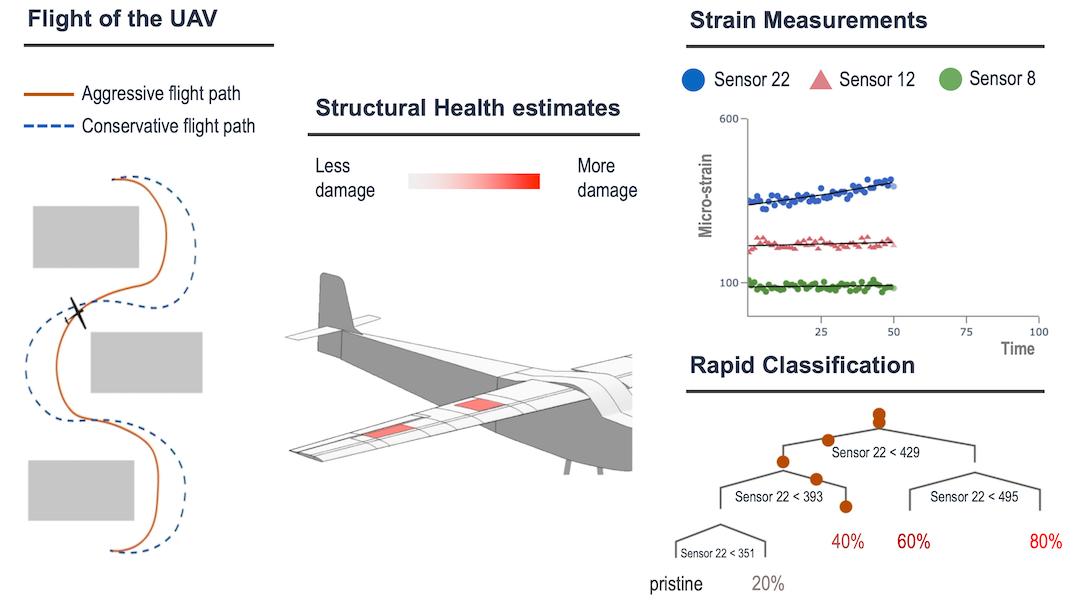
In the case of the digital twin UAV, Willcox’s system is able to capture and communicate the evolving changes in the health of the UAV. It can also explain what sensor readings are indicating declining health and driving the predictions.
Researchers create virtual UAVs that can predict vehicle health, enable autonomous decision-making. In the not too distant future, we can expect to see our skies filled with unmanned aerial vehicles (UAVs) delivering packages, maybe even people, from location to location.
In such a world, there will also be a digital twin for each UAV in the fleet: a virtual model that will follow the UAV through its existence, evolving with time...
Archaeon can crunch meteorite and feed on it. Chemolithotrophic microorganisms derive their energy from inorganic sources. Research into the physiological processes of these organisms – which are grown on meteorite – provides new insights into the potential of extraterrestrial materials as a source of accessible nutrients and energy for microorganisms of the early Earth. Meteorites may have delivered a variety of essential compounds facilitating the evolution of life, as we know it on Earth.
An international team around astrobiologist Tetyana Milojevic from the University of Vienna explored the physiology and metal-microbial interface of the extreme metallophilic archaeon Metallosphaera sedula...












Recent Comments