





Spitzer studies a Stellar Playground with a Long History

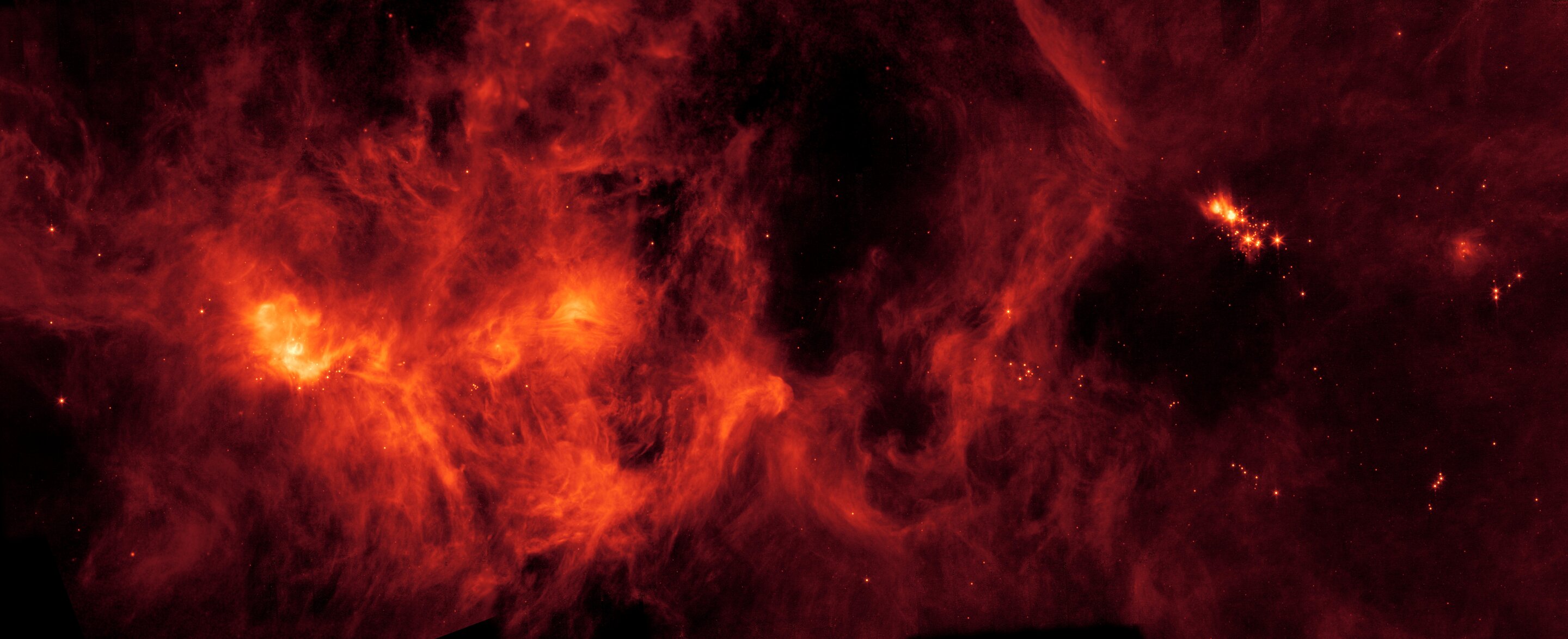
A collection of gas and dust over 500 light-years across, the Perseus Molecular Cloud hosts an abundance of young stars. It was imaged here by the NASA’s Spitzer Space Telescope. Credit: NASA/JPL-Caltech

This image from NASA’s Spitzer Space Telescope shows the Perseus Molecular Cloud, a massive collection of gas and dust that stretches over 500 light-years across. Home to an abundance of young stars, it has drawn the attention of astronomers for decades.

Spitzer’s Multiband Imaging Photometer (MIPS) instrument took this image during Spitzer’s “cold mission,” which ran from the spacecraft’s launch in 2003 until 2009, when the space telescope exhausted its supply of liquid helium coolant. (This marked the beginning of Spitzer’s “warm mission...

Read More
Paper-based Test could diagnose Lyme disease at early stages

Point-of-Care Serodiagnostic Test for Early-Stage Lyme Disease Using a Multiplexed Paper-Based Immunoassay and Machine Learning

After a day hiking in the forest, the last thing a person wants to discover is a tick burrowing into their skin. Days after plucking off the bloodsucking insect, the hiker might develop a rash resembling a bull’s-eye, a tell-tale sign of Lyme disease. Yet not everybody who contracts Lyme disease gets the rash. Now, researchers reporting in ACS Nano have devised a blood test that quickly and sensitively diagnoses the disease at early stages.

About 300,000 cases of Lyme disease, which is caused by the tick-borne bacteria Borrelia burgdorferi, are diagnosed in the U.S. each year, according to the U.S. Centers for Disease Control and Prevention...

Read More

Solar Power from ‘the dark side’ Unlocked by a new formula

alam-triangle
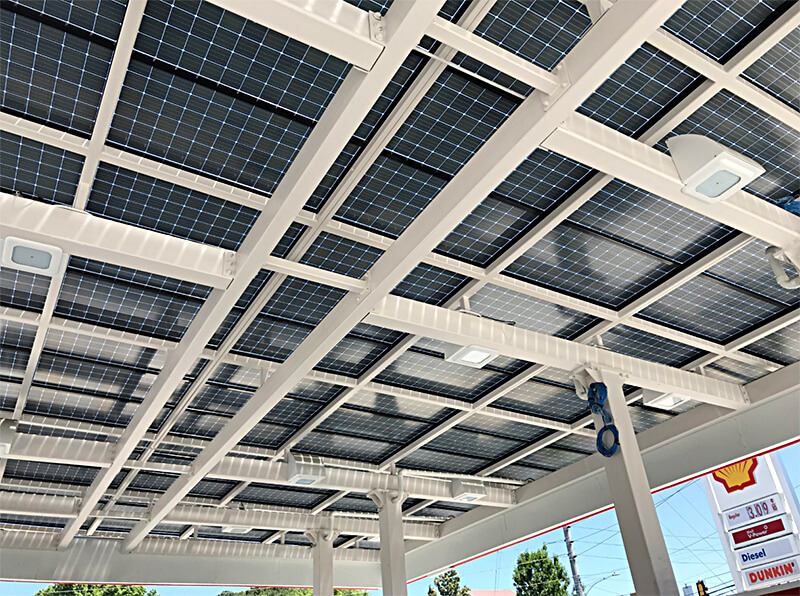
Companies are moving toward installing more double-sided solar panels, such as this one functioning as the canopy of a Shell gas station in Atlanta, Georgia. A new formula reveals exactly how much more electricity double-sided panels can generate compared to conventional single-sided panels, helping to better inform how the panels are designed. (Lumos Solar photo)

Engineers calculate the ultimate potential of next-generation solar panels. Most of today’s solar panels capture sunlight and convert it to electricity only from the side facing the sky. If the dark underside of a solar panel could also convert sunlight reflected off the ground, even more electricity might be generated.

Double-sided solar cells are already enabling panels to sit vertically on land or rooftops and even ho...

Read More

Nearby Pulsar’s Gamma-Ray ‘Halo’ linked to Antimatter Puzzle

a photon "squiggle" collides with an electron "dot"; there's a flash and the photon (now a higher-energy gamma ray) shoots away
Particles traveling near light speed can interact with starlight and boost it to gamma-ray energies. This animation shows the process, known as inverse Compton scattering. When light ranging from microwave to ultraviolet wavelengths collides with a fast-moving particle, the interaction boosts it to gamma rays, the most energetic form of light.
Credits: NASA’s Goddard Space Flight Center

NASA’s Fermi Gamma-ray Space Telescope has discovered a faint but sprawling glow of high-energy light around a nearby pulsar. If visible to the human eye, this gamma-ray “halo” would appear about 40 times bigger in the sky than a full Moon. This structure may provide the solution to a long-standing mystery about the amount of antimatter in our neighborhood.

“Our analysis suggests that this same puls...

Read More