


Cracking 60-year-old Mystery of Sun’s Magnetic Waves

Image result for "Doppler velocities and spectral energies of observed and simulated time series."
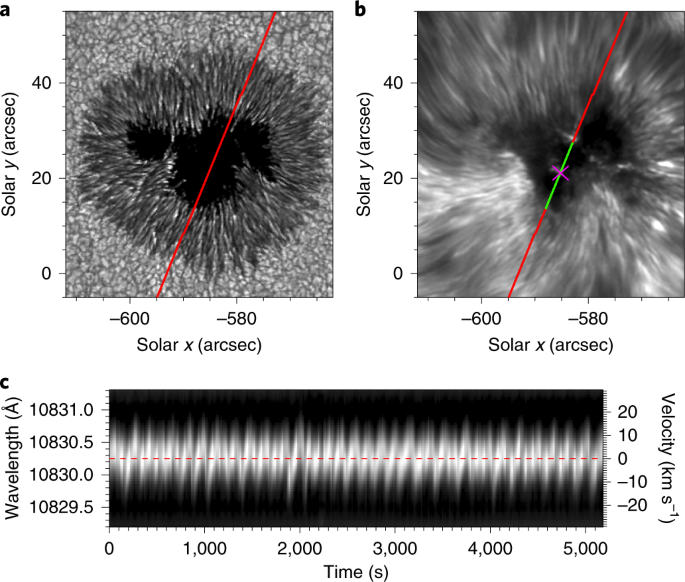
The velocity signatures of the magnetized sunspot atmosphere observed on 14 July 2016.

A Queen’s University Belfast scientist has led an international team to the ground-breaking discovery of why the Sun’s magnetic waves strengthen and grow as they emerge from its surface, which could help to solve the mystery of how the corona of the Sun maintains its multi-million degree temperatures.

For more than 60 years observations of the Sun have shown that as the magnetic waves leave the interior of the Sun they grow in strength but until now there has been no solid observational evidence as to why this was the case.

The corona’s high temperatures have also always been a mystery. Usually the closer we are to a heat source, the warmer we feel...

Read More

Home Urine Test for Prostate Cancer could revolutionize Diagnosis

The research team say that their findings could also help pioneer the development of home-collection tests for bladder or kidney cancer.

The research team say that their findings could also help pioneer the development of home-collection tests for bladder or kidney cancer.

A simple urine test under development for prostate cancer detection can now use urine samples collected at home – according to new research from University of East Anglia and the Norfolk and Norwich University Hospital.

Scientists pioneered the test which diagnoses aggressive prostate cancer and predicts whether patients will require treatment up to five years earlier than standard clinical methods.

Their latest study shows how the ‘PUR’ test (Prostate Urine Risk) could be performed on samples collecte...

Read More

More efficient Quantum Dots without Heavy Metals

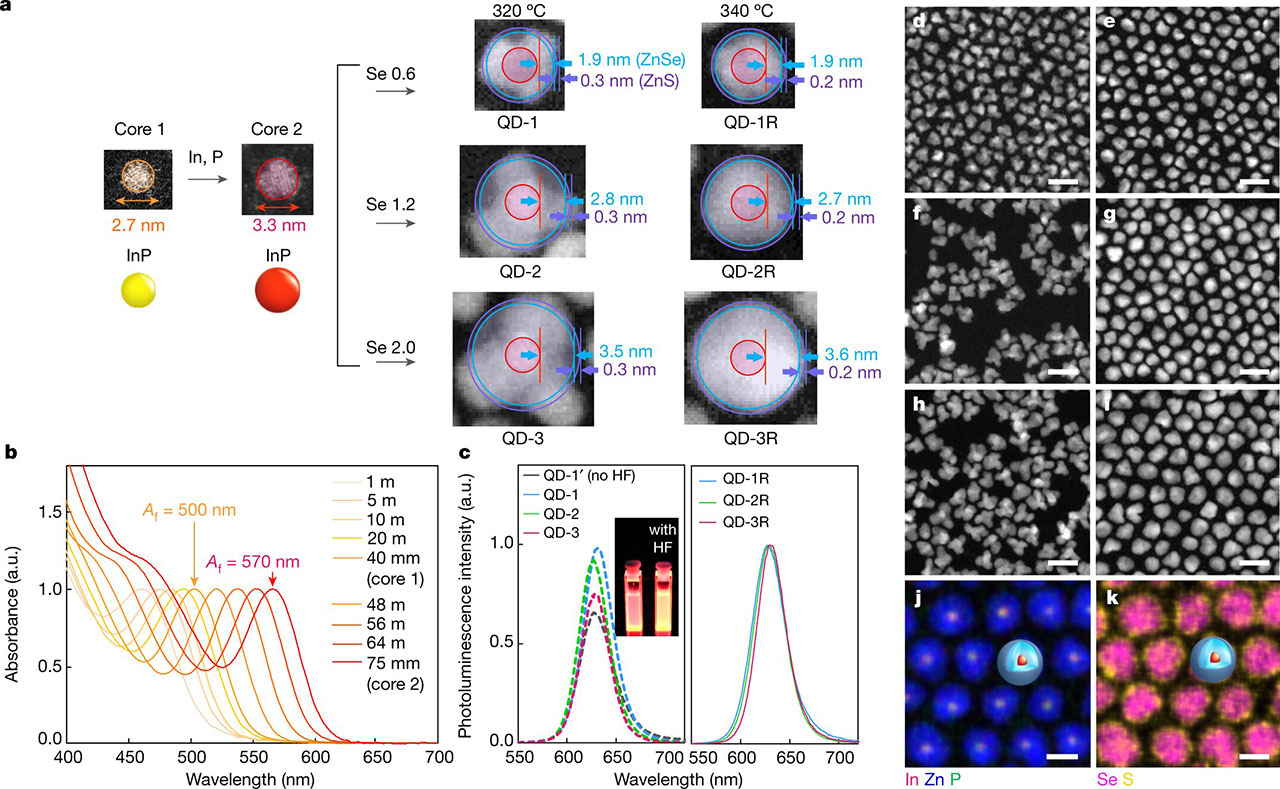
a, Preparation of InP cores and InP/ZnSe/ZnS QDs with different morphology and shell thickness. The amounts of Se precursor for QD-1, QD-2 and QD-3 were 0.6 mmol, 1.2 mmol and 2.0 mmol, respectively, per 10 ml of solvent. The estimated size, based on inductively coupled plasma-atomic emission spectroscopy (ICP-AES) data, was projected on the STEM image of each QD. b, Ultraviolet–visible absorption spectra of the aliquots, taken during the InP core synthesis. a.u., arbitrary units. c, Photoluminescence spectra of QD-1′ (prepared without HF addition), QD-1, QD-2, QD-3, QD-1R, QD-2R and QD-3R. Inset, photograph of QD-1′ (no HF) and QD-3 taken under 365 nm illumination. d–i, STEM images of QD-1, QD-1R, QD-2, QD-2R, QD-3 and QD-3R (scale bar, 20 nm)...
Read More

Mapping our Galaxy’s Magnetic Field

A representation of how our Galaxy would look in the sky if we could see magnetic fields. The plane of the Galaxy runs horizontally through the middle, and the Galactic centre direction is the middle of the map. Red–pink colours show increasing Galactic magnetic field strengths where the direction is pointing towards the Earth. Blue–purple colours show increasing Galactic magnetic field strengths where the direction is pointing away from the Earth. The background shows the signal reconstructed using sources outside our Galaxy. The points show the current measurements for pulsars. The squares show the measurements from this work using LOFAR pulsar observations. Credit: Freshscience

Astronomers from CSIRO and Curtin University have used pulsars to probe the Milky Way’s magnetic fie...

Read More