
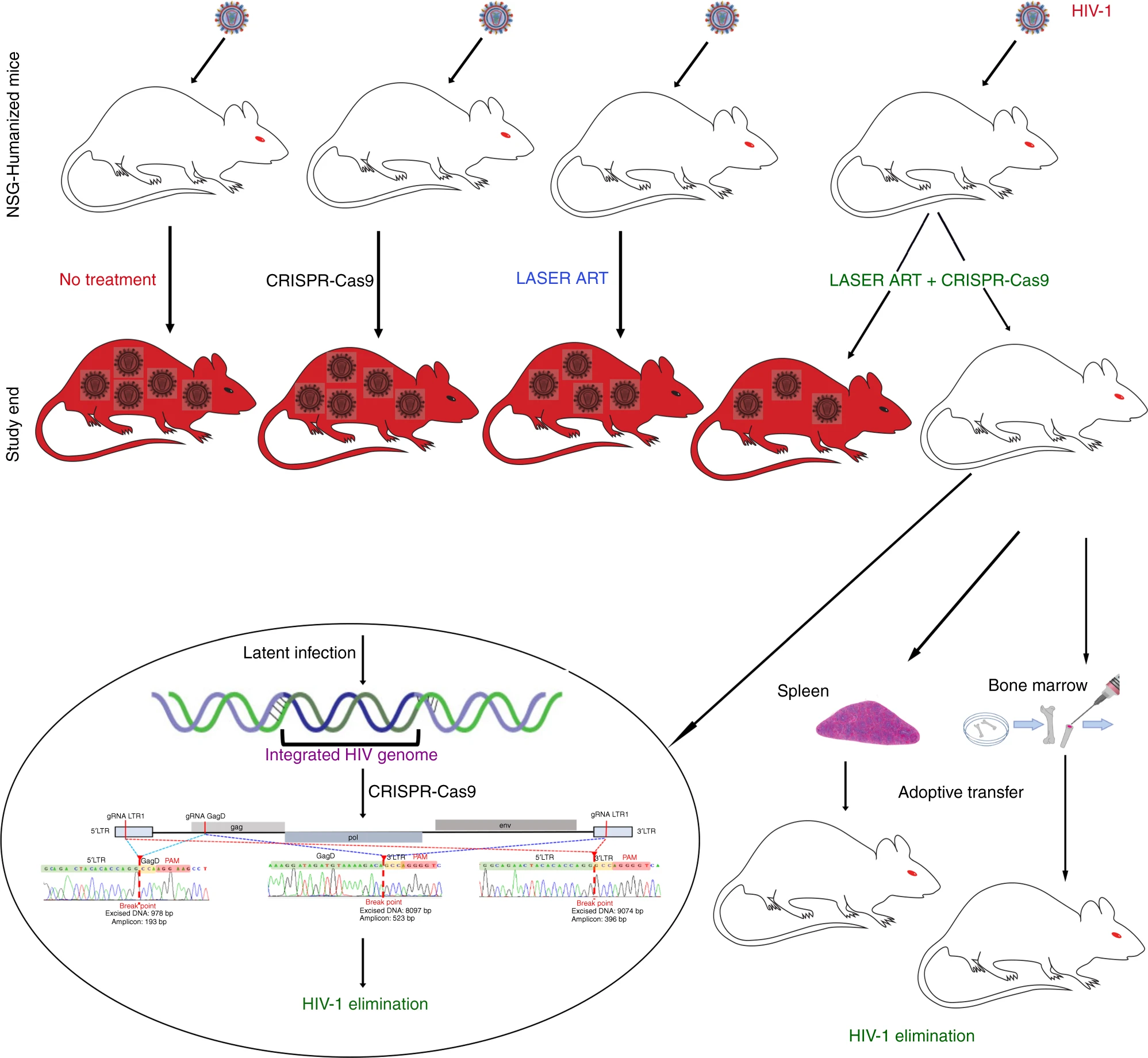
Researchers have for the first time eliminated replication-competent HIV-1 DNA – the virus responsible for AIDS – from the genomes of living animals...
Read More


Until we recognize the essential role of biology, our attempts to truly unify the universe will remain a train to nowhere. ~Robert Lanza Read More

Good health is not something we can buy. However, it can be an extremely valuable savings account. ~Anne Wilson Schaef Read More

The only way forward, if we are going to improve the quality of the environment, is to get everybody involved. ~Richard Rogers Read More

To raise new questions, new possibilities, to regard old problems from a new angle, requires creative imagination and marks real advance in science. ~Albert Einstein Read More

Old Newtonian physics claimed that things have an objective reality separate from our perception of them. Quantum physics, and particularly Heisenberg's Uncertainty Principle, reveal that, as our perception of an object changes, the object itself literally changes. ~Marianne Williamson Read More

Astronomy compels the soul to look upwards and leads us from this world to another. ~ Read More
July 5, 2019,
 Health/Medical, Biology/Biotechnology
Researchers have for the first time eliminated replication-competent HIV-1 DNA – the virus responsible for AIDS – from the genomes of living animals...
Read More
July 5, 2019,
Physics, Technology/Electronics, Biology/Biotechnology
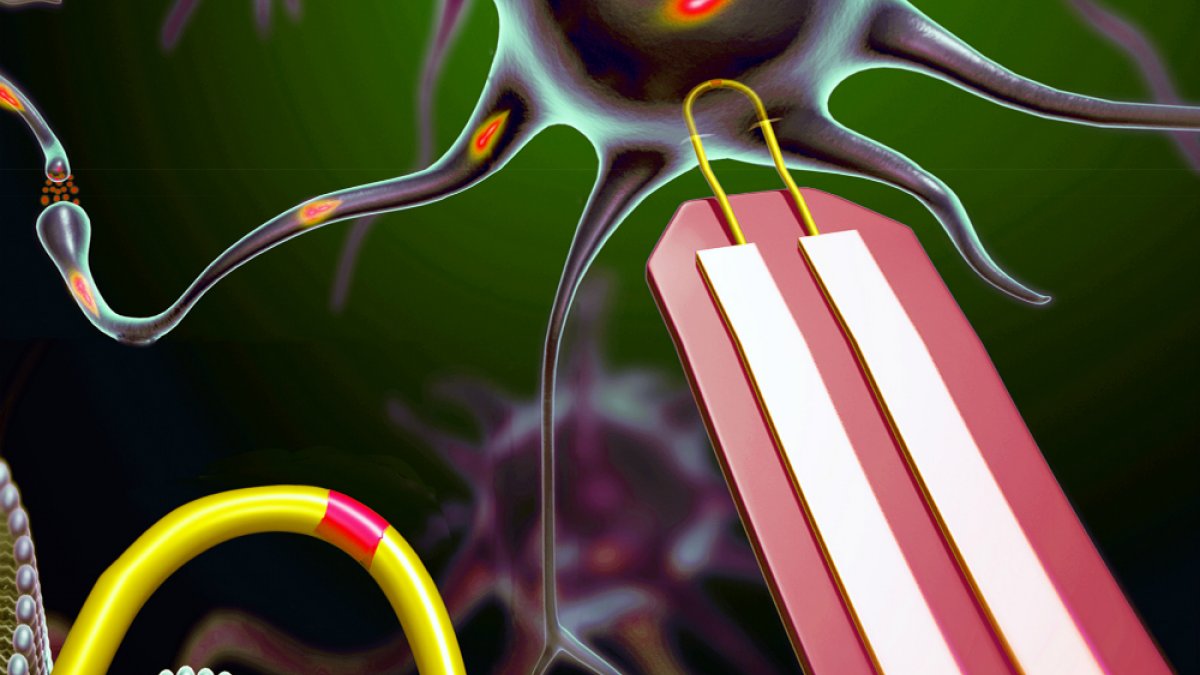
Machine enhanced humans – or cyborgs as they are known in science fiction – could be one step closer to becoming a reality, thanks to new research Lieber Group at Harvard University, as well as scientists from University of Surrey and Yonsei University.
Researchers have conquered the monumental task of manufacturing scalable nanoprobe arrays small enough to record the inner workings of human cardiac cells and primary neurons.
The ability to read electrical activities from cells is the foundation of many biomedical procedures, such as ...
Read More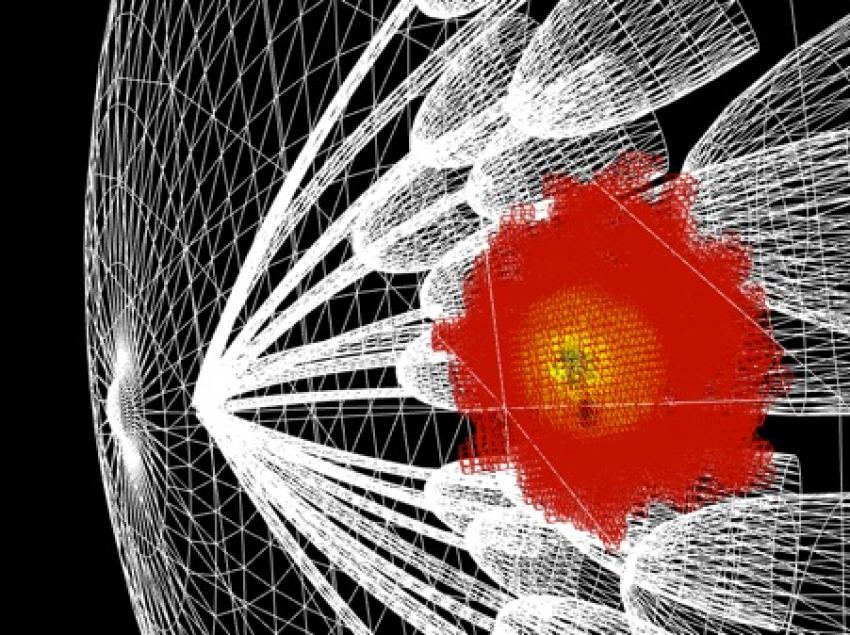
Techniques developed by astronomers could help in the fight against breast and skin cancer. A large part of astronomy depends on the detection and analysis of light. For example, scientists study the light scattered, absorbed and re-emitted in clouds of gas and dust, obtaining information on their interior.
Despite the vast differences in scale, the processes that light undergoes when travelling through the human body are very similar to those seen in space. And when things go wrong – when tissue becomes cancerous – that change should show up.
In the UK, nearly 60,000 women are diagnosed with breast cancer each year, and 12,000 die...
Read More
Cerebral organoids are artificially grown, 3D tissue cultures that resemble the human brain. Now, researchers from Japan report functional neural networks derived from these organoids in a study publishing June 27 in the journal Stem Cell Reports. Although the organoids aren’t actually “thinking,” the researchers’ new tool – which detects neural activity using organoids – could provide a method for understanding human brain function.
“Because they can mimic cerebral development, cerebral organoids can be used as a substitute for the human brain to study complex developmental and neurological disorders,” says corresponding author Jun Takahashi, a professor at Kyoto University.
However, these studies ar...
Read More
Recent Comments