





3D Printing the Human Heart

3D bioprinting of collagen to rebuild components of the human heart. Science, 2019; 365 (6452): 482 DOI: 10.1126/science.aav9051

A team of researchers from Carnegie Mellon University has published a paper in Science that details a new technique allowing anyone to 3D bioprint tissue scaffolds out of collagen, the major structural protein in the human body. This first-of-its-kind method brings the field of tissue engineering one step closer to being able to 3D print a full-sized, adult human heart.

The technique, known as Freeform Reversible Embedding of Suspended Hydrogels (FRESH), has allowed the researchers to overcome many challenges associated with existing 3D bioprinting methods, and to achieve unprecedented resolution and fidelity using soft and living materials.

Each of t...

Read More
A Wearable Device so Thin and Soft you Won’t Even Notice It

Yu wearable HMI
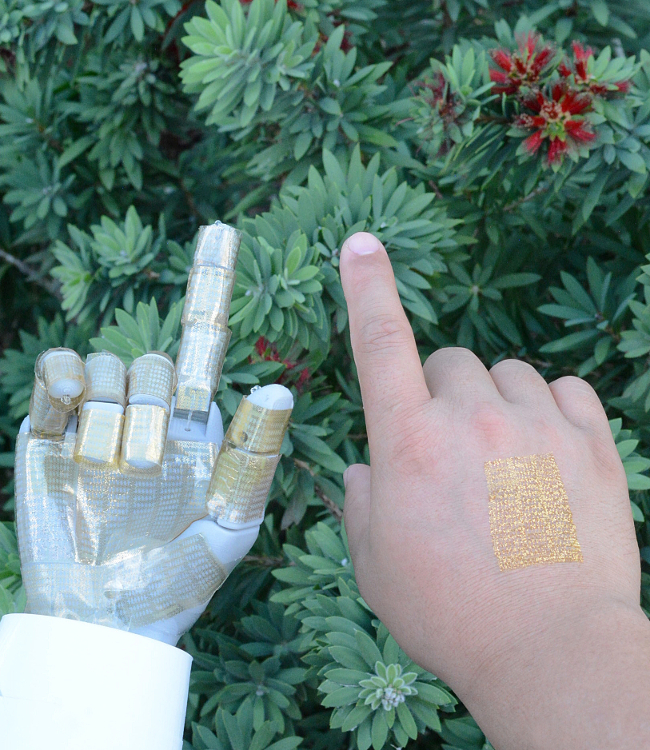
Cunjiang Yu, Bill D. Cook Associate Professor of Mechanical Engineering at UH, led a project to develop a multifunctional, ultra-thin wearable human-machine interface.

Device also can serve as robotic skin, relaying information back to the user. Wearable human-machine interfaces – devices that can collect and store important health information about the wearer, among other uses – have benefited from advances in electronics, materials and mechanical designs. But current models still can be bulky and uncomfortable, and they can’t always handle multiple functions at one time.

Researchers reported Friday, Aug. 2, the discovery of a multifunctional ultra-thin wearable electronic device that is imperceptible to the wearer.

The device allows the wearer to move naturally and is less no...

Read More

TESS Satellite uncovers its ‘First nearby Super-Earth’

Credit: © sdecoret / Adobe Stock

NASA’s Transiting Exoplanet Survey Satellite (TESS), a mission designed to comb the heavens for exoplanets, has discovered its first potentially habitable world outside of our own solar system – and an international team of astronomers has characterized the super-Earth, about 31 light-years away, named GJ 357 d.

“This is exciting, as this is TESS’s first discovery of a nearby super-Earth that could harbor life – TESS is a small, mighty mission with a huge reach,” said Kaltenegger, associate professor of astronomy, director of Cornell’s Carl Sagan Institute and a member of the TESS science team.

The exoplanet is more massive than our own blue planet, and Kaltenegger said the discovery will provide insight into Earth’s heavyweight planetary cousins...

Read More

Targeting a Blood Stem Cell subset shows lasting, Therapeutically Relevant Gene Editing

Microscopy image of blood stem cells that will go through CRISPR/Cas9 gene editing in a lab dish. Credit: Kiem lab / Fred Hutchinson Cancer Research Center

Researchers at Fred Hutchinson Cancer Research Center used CRISPR-Cas9 to edit long-lived blood stem cells to reverse the clinical symptoms observed with several blood disorders, including sickle cell disease and beta-thalassemia. It’s the first time that scientists have specifically edited the genetic makeup of a specialized subset of adult blood stem cells that are the source of all cells in the blood and immune system.

The proof-of-principle study suggests that efficient modification of targeted stem cells could reduce the costs of gene-editing treatments for blood disorders and other diseases while decreasing the risks of u...

Read More