






Urine Test could prevent Cervical Cancer, study finds

A comparison of the mean ct values for detection of the internal beta globin control and HR-HPV in urine, vaginal and cervical samples using the ART (A,B) and RC assays (C,D). ct, cycle threshold; HPV, human papillomavirus. 

Urine testing may be as effective as the smear test at preventing cervical cancer, according to new research by University of Manchester scientists. The study, led by Dr Emma Crosbie and published in BMJ Open, found that urine testing was just as good as the cervical smear at picking up high-risk human papillomavirus (HPV), the virus that causes cervical cancer.

The research team say a urine test could help increase the numbers of women who are screened for cervical cancer, which affects more than 3,000 women every year in the UK.
Urine testing could also have...
Read More

Record Solar Hydrogen production with concentrated Sunlight

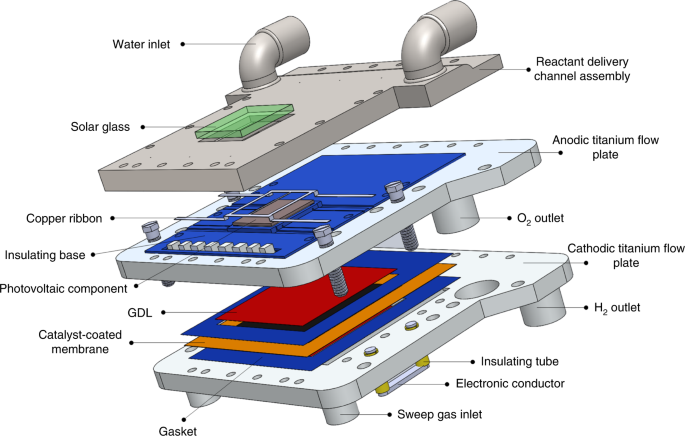
Figure 2

Illustration of the integrated PEC device.

Researchers have created a smart device capable of producing large amounts of clean hydrogen. By concentrating sunlight, their device uses a smaller amount of the rare, costly materials that are required to produce hydrogen, yet it still maintains a high solar-to-fuel efficiency. Their research has been taken to the next scale with a pilot facility installed on the EPFL campus.

Scientists at EPFL’s Laboratory of Renewable Energy Science and Engineering (LRESE) came up with the idea of concentrating solar irradiation to produce a larger amount of hydrogen over a given area at a lower cost...

Read More

Spinning Black Hole Sprays Light-Speed Plasma Clouds into Space

Artist’s impression of jet ejections in V404 Cygni. With our radio telescopes, we see individual bright clouds of plasma that have been ejected from the innermost regions, and redirected by the puffed-up inner accretion disk.
Credit: ICRAR

Astronomers have discovered rapidly swinging jets coming from a black hole almost 8000 light-years from Earth. The research shows jets from V404 Cygni’s black hole behaving in a way never seen before on such short timescales. The jets appear to be rapidly rotating with high-speed clouds of plasma – potentially just minutes apart – shooting out of the black hole in different directions.

Lead author Associate Professor James Miller-Jones, from the Curtin University node of the International Centre for Radio Astronomy Research (ICRAR), said black ho...

Read More

Magnets can help AI get closer to the efficiency of the human brain

Purdue University researchers have developed a process to use magnetics with brain-like networks to program and teach devices to better generalize about different objects.
Credit: Kaushik Roy/Purdue University

New brain-like networks could help robots approach human-like efficiency at object recognition tasks. Researchers have developed a process to use magnetics with brain-like networks to program and teach devices such as personal robots, self-driving cars and drones to better generalize about different objects.

Purdue University researchers and experts in brain-inspired computing think part of the answer may be found in magnets...

Read More