


Dental Fillings could Last Twice as Long

Carmem Pfeifer, D.D.S., Ph.D. from the OHSU School of Dentistry is working to develop a filling material that is two times more resistant to breakage than standard fillings.
Credit: OHSU/Kristyna Wentz-Graff

New material could mean fewer trips to the dentist’s office, scientists report. A compound used to make car bumpers strong and protect wood decks could prevent return visits to the dentist’s office. A team of researchers with the OHSU School of Dentistry in Portland, Oregon, have created a filling material that’s two times more resistant to breakage than standard fillings, according to a study published by the journal Scientific Reports. The new filling uses the additive thiourethane, which is also in protective coatings for cars and decks.

The team also has developed an adhesi...

Read More
Concept of the Laser can be Reversed

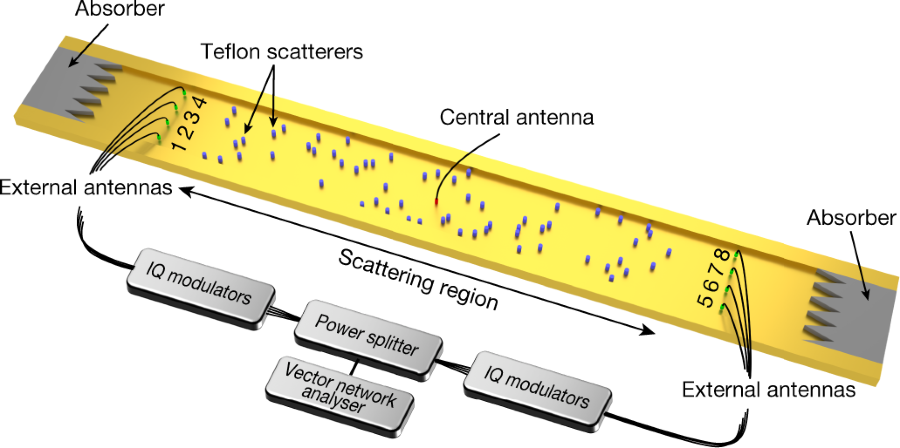
Fig. 1

Experimental setup of the random anti-laser.

Scientists have found a way to build the ‘opposite’ of a laser – a device that absorbs a specific light wave perfectly. This can be done even in complicated systems, in which waves are scattered randomly, and has many technological applications.

At TU Wien (Vienna), a method has now been developed to make use of this effect, even in very complicated systems in which light waves are randomly scattered in all directions. The method was developed in Vienna with the help of computer simulations, and confirmed by experiments in cooperation with the University of Nice. This opens up new possibilities for all technical disciplines that have to do with wave phenomena. The new method has now been published in the journal Nature.

“Every day we are de...

Read More

The Case of the Over-Tilting Exoplanets

Yale researchers have discovered a surprising link between the tilting of exoplanets and their orbit in space. The discovery may help explain a long-standing puzzle about exoplanetary orbital architectures.
Credit: NASA/JPL-Caltech, Sarah Millholland

For almost a decade, astronomers have tried to explain why so many pairs of planets outside our solar system have an odd configuration – their orbits seem to have been pushed apart by a powerful unknown mechanism. Yale researchers say they’ve found a possible answer, and it implies that the planets’ poles are majorly tilted.

The finding could have a big impact on how researchers estimate the structure, climate, and habitability of exoplanets as they try to identify planets that are similar to Earth...

Read More

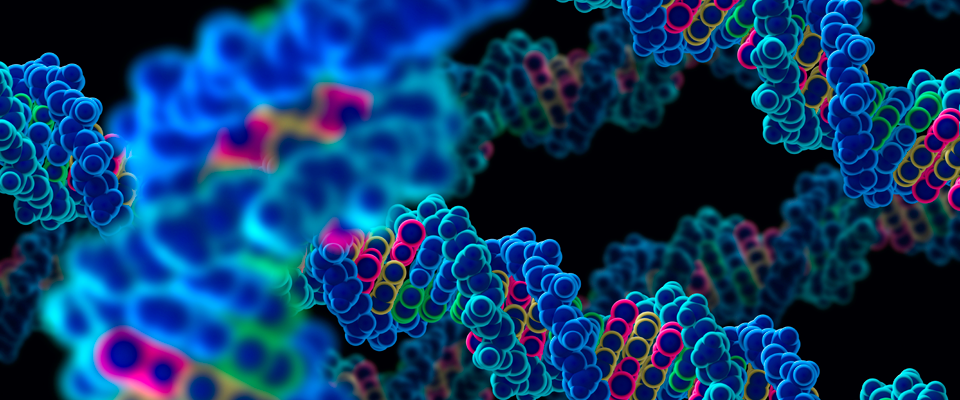
Graphite Offers up New Quantum Surprise

Graphite films

Dimensional reduction, quantum Hall effect and layer parity in graphite films. Nature Physics, 2019; DOI: 10.1038/s41567-019-0427-6

Researchers observe an unusual quantum Hall effect in the old 3D material. Researchers at The University of Manchester in the UK, led by Dr Artem Mishchenko, Prof Volodya Fal’ko and Prof Andre Geim, have discovered the quantum Hall effect in bulk graphite – a layered crystal consisting of stacked graphene layers. This is an unexpected result because the quantum Hall effect is possible only in so-called 2D systems where electrons’ motion is restricted to a plane and must be disallowed in the perpendicular direction...

Read More